Guide
Cyberpunk TCG is a two-player duelling card game from WeirdCo, made in collaboration with CD PROJEKT RED and set in Night City. You lead a crew of edgerunners anchored by three Legends, take Gigs off your Rival, and race to become a Night City legend. It arrived with the most-funded trading card game campaign in Kickstarter history, and its first set, Welcome to Night City, reaches hobby stores on November 6, 2026. That launch shape is what makes it interesting to collect: set one exists as two parallel runs, backer Beta and retail, and both are already catalogued card for card. This guide covers how the line is built, what is worth chasing, and how to keep a Cyberpunk TCG collection current from the first pack you open.
448 cards across 12 sets, catalogued and ready to track.
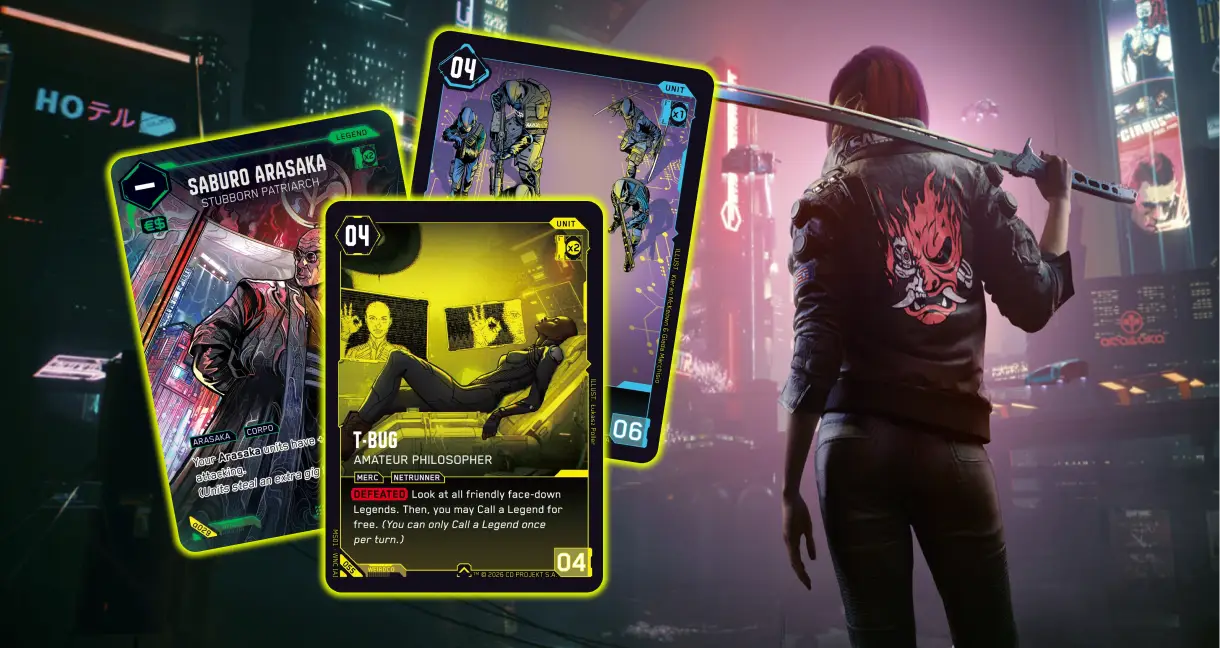
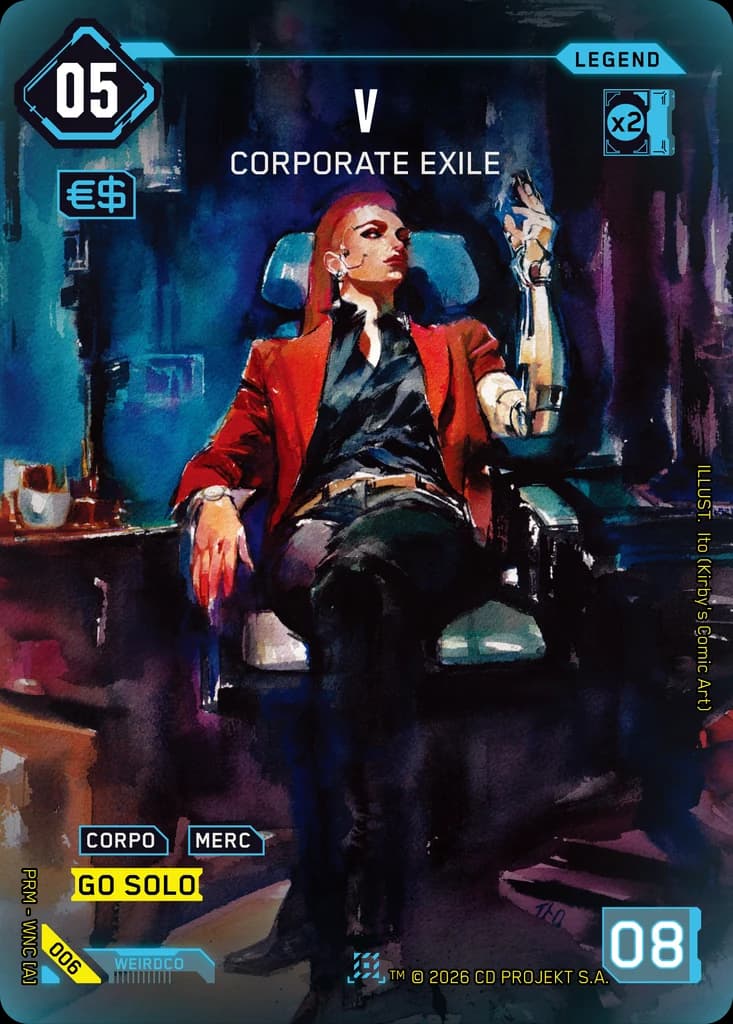
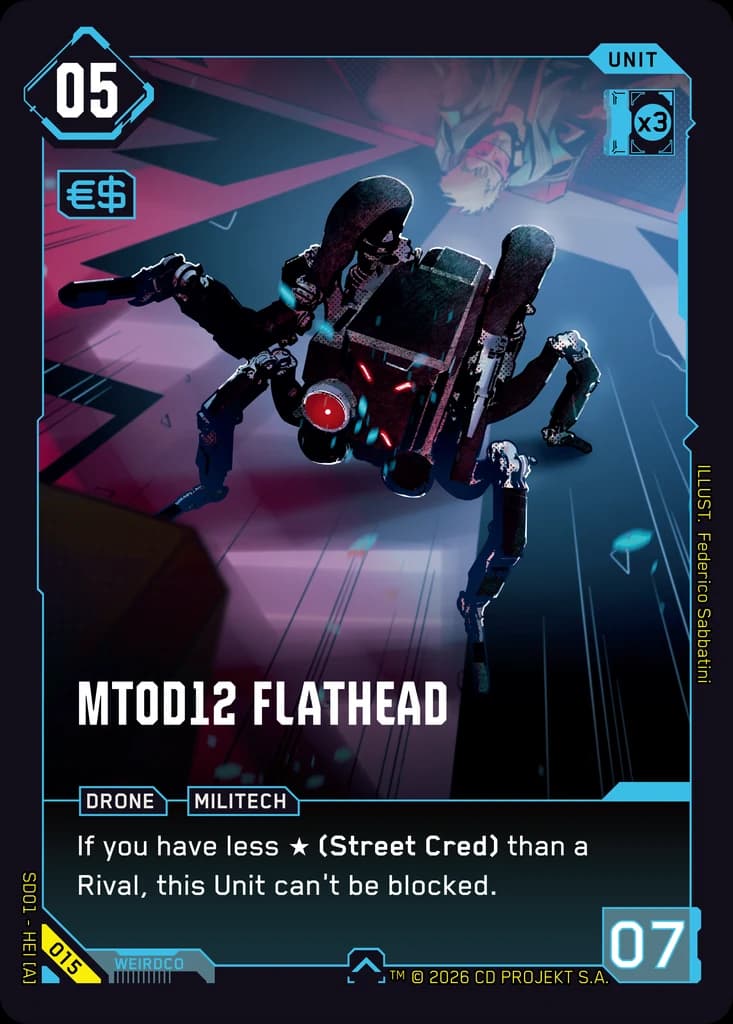
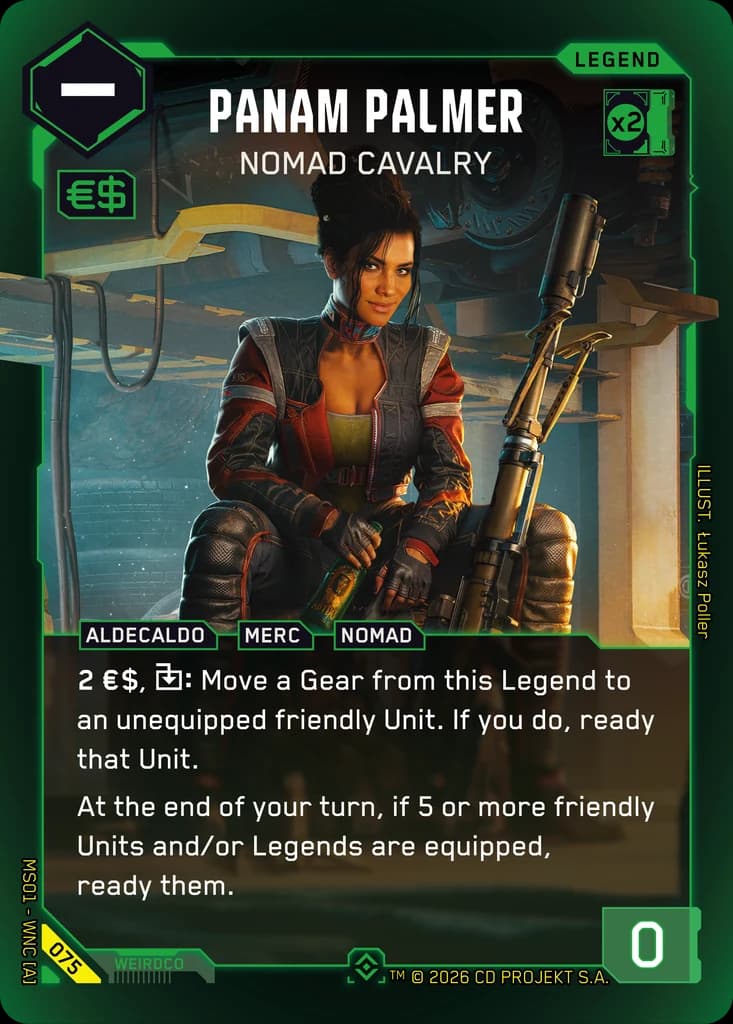
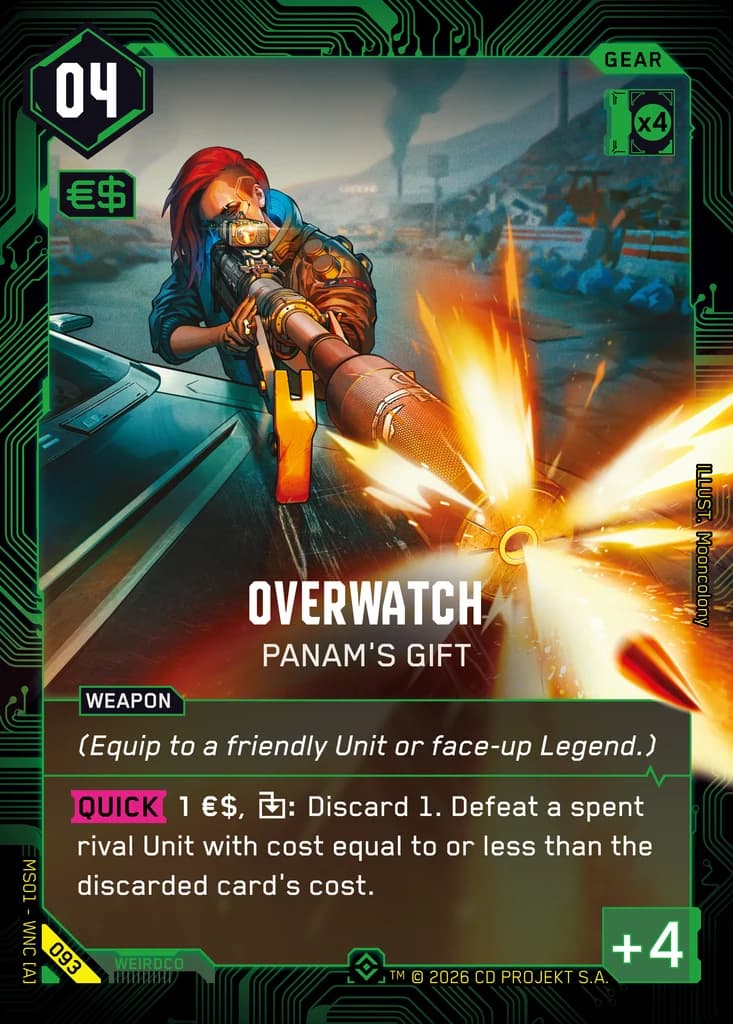
Every card belongs to one of four colours and one of four types: Legends anchor the deck, Units do the fighting, Gear bolts onto them, and Programs fire at the right moment. The art is original work made for the game rather than stills lifted from the source material, and the roster reaches across the whole franchise.
Welcome to Night City was printed twice. Kickstarter product carries a Beta symbol and post-campaign retail product does not, so the backer run and the hobby store run are two separate objects with the same card list. HoloHoard catalogues them as separate sets, card for card, with the Beta numbering carrying its own prefix. That means marking a retail copy leaves the Beta copy open on your list, and a collector who backed the campaign and then buys at retail can show both without one overwriting the other. The same split runs through the starter decks and the box toppers.
| Product | Kickstarter Beta | Retail |
|---|---|---|
| Welcome to Night City | Beta checklist | Retail checklist |
| Embracing Power starter deck | Beta checklist | Retail checklist |
| The Heist starter deck | Beta checklist | Retail checklist |
| Box toppers | Beta checklist | Retail checklist |
Packs run Common, Uncommon, Rare and Epic, with Secrets sitting at the top of the ladder. Welcome to Night City puts four of them in the set, and each one is a character card people would want on the art alone. Above and outside that ladder sit the Nova Rares, which do not come out of boosters at all: they arrive as box toppers, as promos, and as pre-release product. That is the part worth knowing before you start, because a complete Cyberpunk TCG collection is never just a booster box problem.
| No. | Card | Type |
|---|---|---|
| 003 | Johnny Silverhand: Rocking Renegade | Legend |
| 085 | Panam Palmer: Strength Through Family | Unit |
| 109 | Sasha Yakovleva: Won't Let You Down | Legend |
| 116 | Judy Álvarez: Nothing to Doubt | Unit |
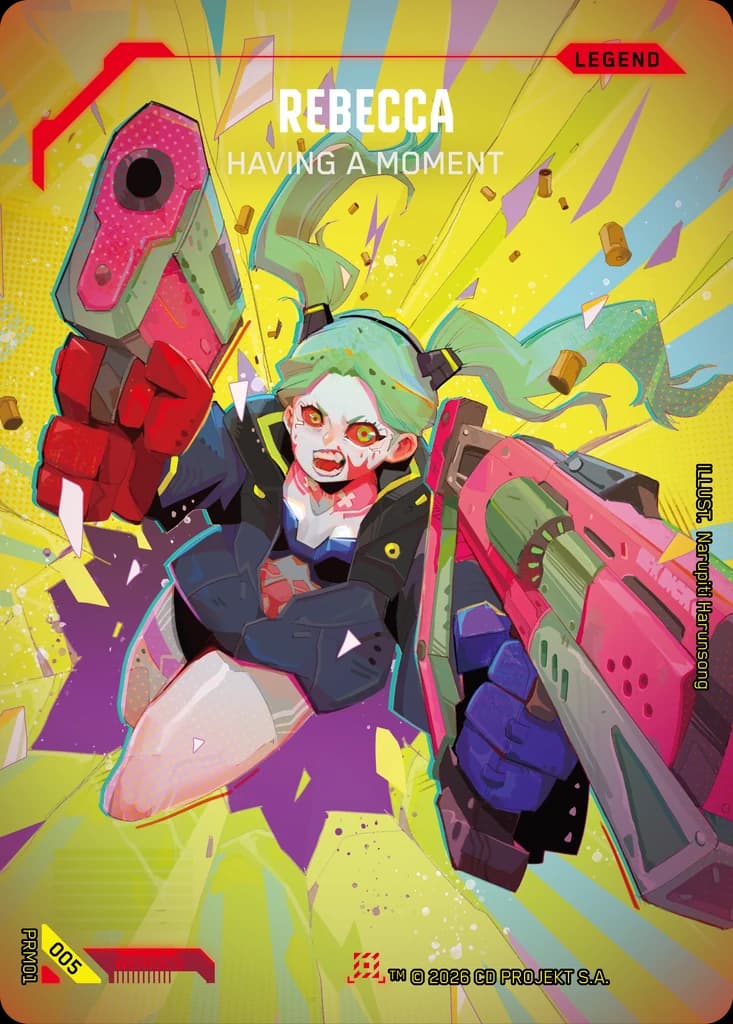
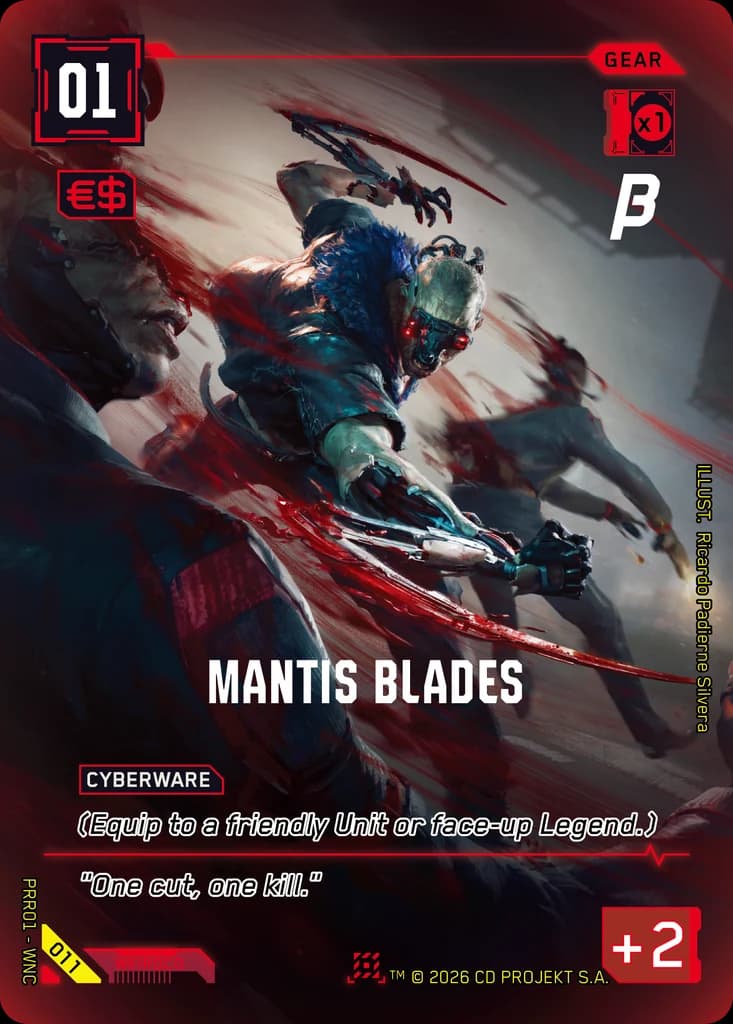
The Nova Rares are the cards that separate a good Cyberpunk TCG collection from a complete one, because each one has its own route into the world. Six of them are box topper Legends, one per Beta booster display and again at retail. Two more are promo cards, Rebecca: Having a Moment and Adam Smasher: Ender of Legends. A Nova Rare Mantis Blades came out of pre-release product. Every one of them is catalogued as its own entry, so they show up on your want list the same way a pack card does instead of living in a note somewhere.
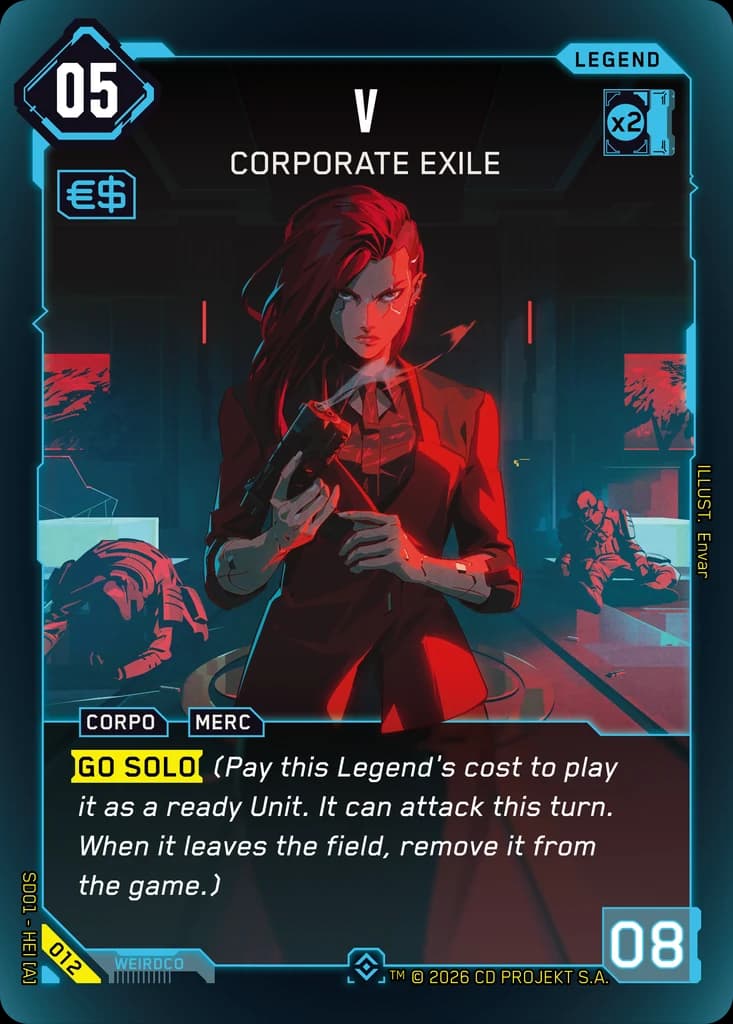
Embracing Power puts you behind the Arasaka Corporation with Saburo Arasaka, Yorinobu Arasaka and Goro Takemura leading it. The Heist takes the other side of the story with V, Jackie Welles and Viktor Vektor. Both are ready to play out of the box, and both carry cards printed for that deck and nowhere else, which makes them checklist entries rather than a shortcut into the game. Each deck is catalogued on its own so you can see exactly which cards it is the only source of.
WeirdCo has been unusually direct about supply, and it changes how this line reads to a collector. If a card becomes hard to get, the company has said it will reprint that card rather than print more booster packs, using promos, supplementary products and organized play prizing instead. Print runs are set from demand data, and WeirdCo says it will not reprint the same set or configuration again. Distribution runs through exclusive regional distributors, hobby stores first. There will be no second Kickstarter. Set one is a finite run on that basis, which is worth knowing while you decide how completely you want to chase it.
Every card is Red, Green, Blue or Yellow, and WeirdCo designs them against a model it calls the Color Tree. Shared ideas sit near the trunk, so every colour can draw a card, pressure a rival and remove a threat in its own way. Further out the branches separate, and that is where each colour gets the things only it can do. The colours are not lifted straight from the video game's attributes, but they take their cue from them, and knowing which is which tells you a lot about a card before you read its text.
| Colour | In three words | How it plays | Draws on |
|---|---|---|---|
| Red | Maximize, amass, overpower | Takes fights head on and wins through power, resilience and direct destruction. Wants Gig values high, rolls its big dice early, and pushes values up or steals high-value Gigs outright. | Body |
| Green | Align, gather, execute | Pairs Gigs of matching value, lines Gig values up with unit power, and holds its Street Cred odd or even. Leans on family and numbers, calls its Legends early, and strikes the moment things line up. | Reflexes |
| Blue | Minimize, hack, disable | Stays under the radar on low Street Cred, rolls its small dice first and drives Gig values down. Netrunning is its home ground, using programs and braindances to shrink or switch off whatever is in the way. | Intelligence |
| Yellow | Diverge, equip, repurpose | Nudges its Gig values apart so no two match and its Street Cred sits far from its rival's. The gear colour, with a taste for sacrificing its own resources and scavenging them back to strip away someone else's. | Technical Ability |
Colour is the cleanest way to cut this catalogue. A Legend's colour sets the RAM you can spend on that colour in a deck, so a Red Legend is the thing that lets you run expensive Red cards at all, and the Legends are also the cards most likely to be chased on art alone. It also explains the two starter decks: Embracing Power is a Red and Green Arasaka deck about going big and lining things up, The Heist is Yellow and Blue about gear and staying quiet. Pick the colour you enjoy and the collecting goal writes itself.
A Cyberpunk TCG deck is three Legends, 40 to 50 other cards, no more than three copies of anything, and it has to fit inside the RAM your Legends allow for each colour. Every Legend carries a colour and a RAM limit, and the three of them together set the ceiling for each colour in the deck, which is why a two-colour build needs Legends in both. That makes the small print on a card the interesting part, so the catalogue records it: colour, RAM, cost, power, card type, traits, keywords, and whether the card can be sold for an Eddie.
Knowing the win condition makes the card text read very differently. Gigs are dice: one enters play each turn, rolled out of your fixer area into your Gig area. Start a turn with seven of them and you win. Because each die counts as one Gig whatever it shows, two dice always beat one for winning, even when the numbers say otherwise. Those numbers still matter everywhere else, because your Street Cred is the total of your Gig dice and card after card keys off it. Attack your rival's Gig area to steal Gigs, and a Unit takes an extra one for every ten power it has. Overtime starts after the last player's seventh turn and hands the win to whoever holds the majority. Being asked to draw from an empty deck loses on the spot.
Four card types, each behaving differently enough to be worth knowing before you buy. Legends are the three centrepiece characters the deck is built around: they start face down in random order, and once a turn you spend an Eddie to Call one and flip it face up at random. Units do the fighting and the stealing, and cannot attack the turn they arrive. Gear equips to a friendly Unit or Legend and travels with it wherever it goes. Programs fire once and go straight to the trash. Eddies come out of your own deck rather than a separate resource card, by selling a card with a sell tag from your hand, which is why whether a card is sellable is a real property and not trivia.
The whole catalogue is already built, so starting a Cyberpunk TCG collection means marking what you own rather than typing cards in. Collections hold what is in your hands, set completion shows how close each printing is to done, and lists cover intent: a want list for the Secrets and Nova Rares you are still hunting, a trade list for the spares that come out of a booster box. Because Beta and retail are separate entries, completion reads honestly on both instead of averaging them into one number. Start with the Cyberpunk TCG card list.
Most people who collect this game also play it, and the two pull in different directions: the binder wants one of everything, the deck wants three of a few. Deck lists sit alongside your collection and can hold cards you have not picked up yet, so a build you are working toward stays connected to what you actually own. They share as a link when you want a second opinion on a crew.
Start your collection, free
No account needed to browse. Create one to track and value your cards.