Guide
The One Piece Card Game is Bandai's two-player card game built on Eiichiro Oda's One Piece. You build a crew of fifty cards around a single Leader, pay for everything with DON!! cards, and win by taking the opposing Leader's Life to zero and landing one more blow. The English edition launched with Romance Dawn in December 2022 and has since grown into one of the largest lines in the hobby, with a numbered booster every few months, Extra Boosters, Premium Boosters, dozens of starter decks and an event card for almost every release. HoloHoard has the whole English catalogue built with every one of the prints listed so you can track reprints, stamped cards and alternate arts, and this guide explains how the line fits together and how to keep a collection of it current.
7,197 cards across 86 sets, catalogued and ready to track.
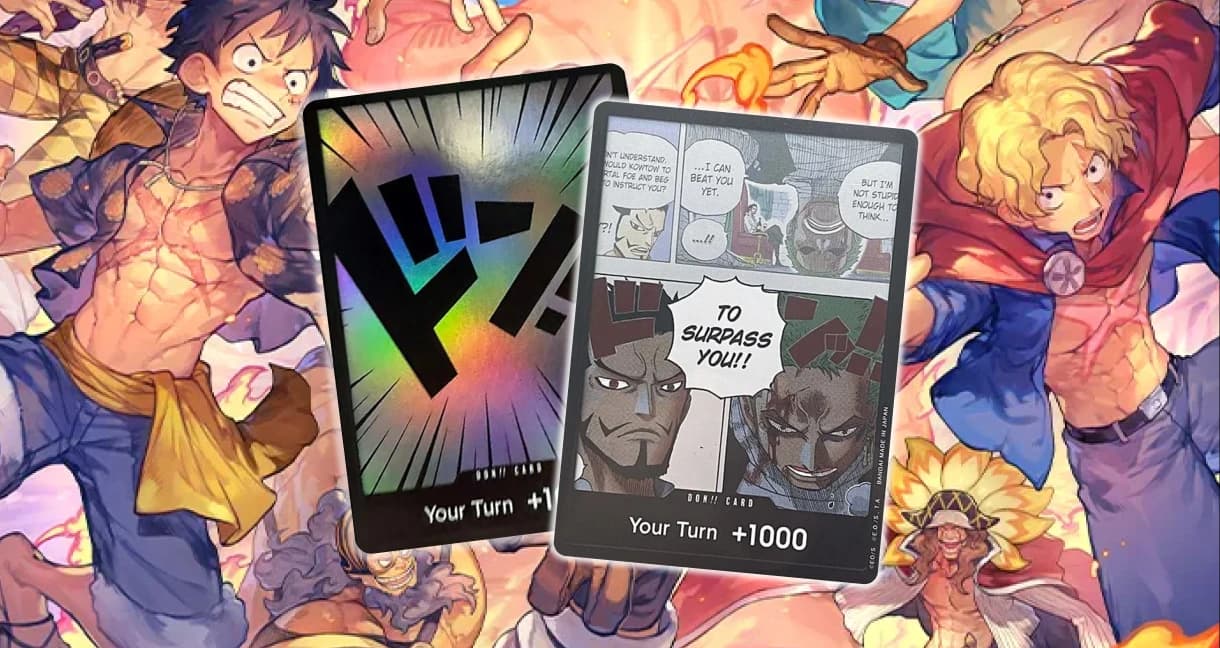
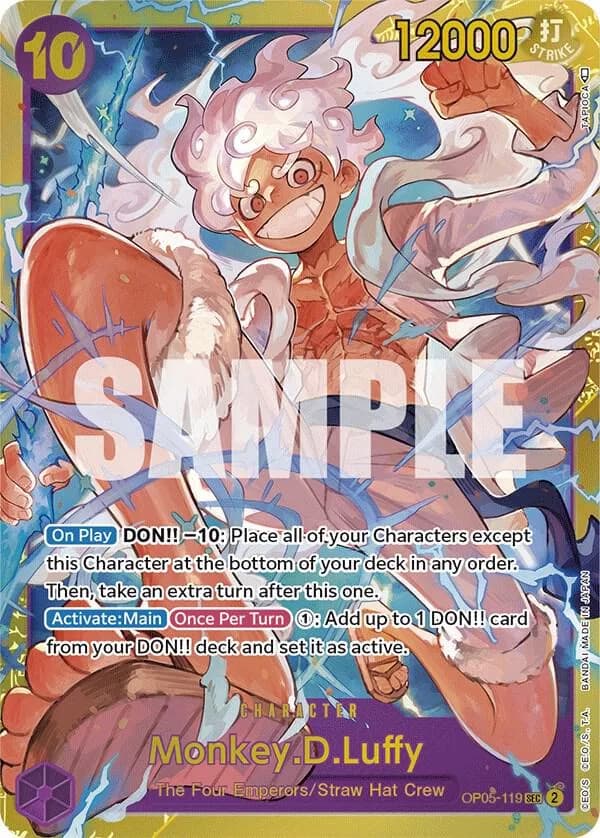
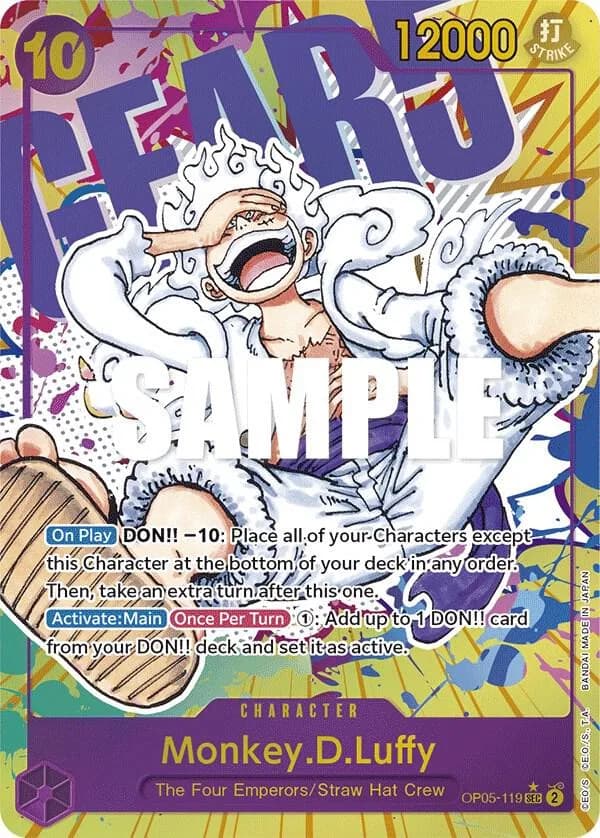
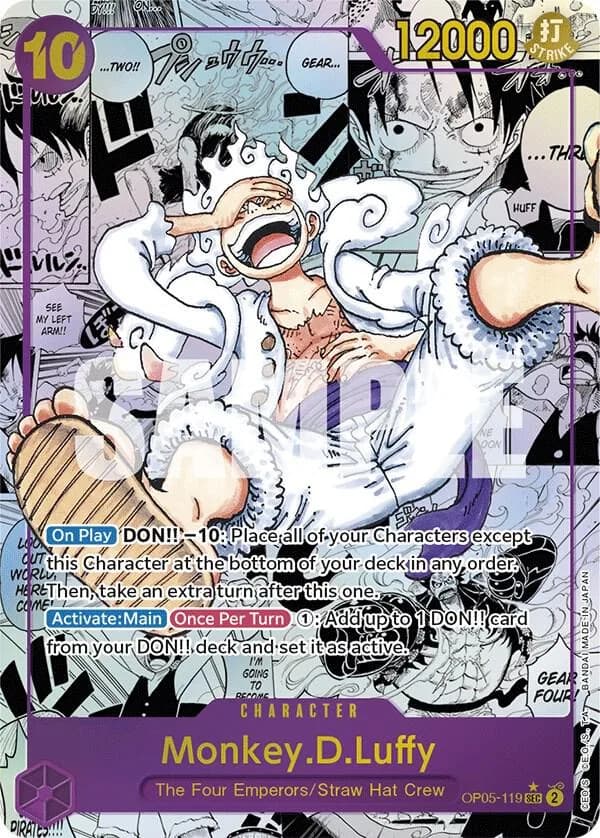
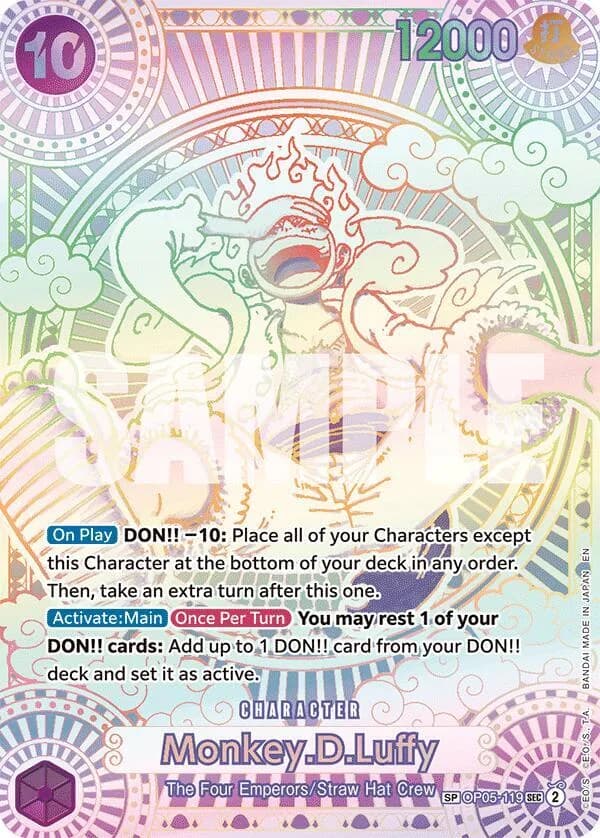
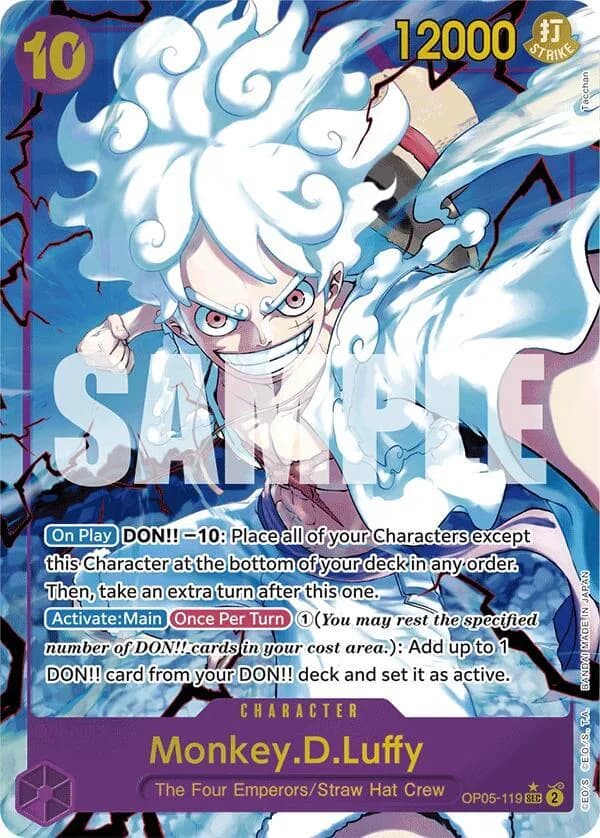
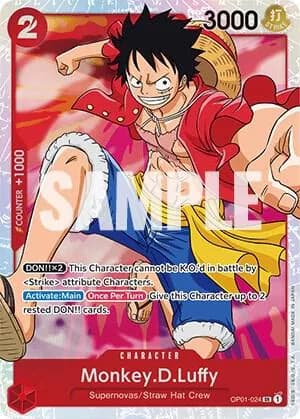
In the One Piece Card Game a card number is not one card. The same number can appear as several different illustrations, and each of them is something you can own. Monkey.D.Luffy is OP05-119 as the Secret Rare, as the Alternate Art and as the Manga print, and all three came out of Awakening of the New Era. Each is a different illustration, so HoloHoard lists each as its own card. That is the shape of the whole game.
The numbered boosters are the spine, OP-01 Romance Dawn onward, each built around an arc or a theme. Extra Boosters are smaller sets with a focus, such as the Heroines editions. Premium Boosters reprint staples from across the line with new foil treatments, almost entirely under their original numbers. Starter decks are numbered ST-01 upward, one Leader each, and a few of them arrived early as Super Pre-Release decks that are catalogued separately. Then there are the event cards: for most boosters a pre-release, release-event or anniversary tournament set that holds the booster's own cards by the same name and number, stamped for the occasion. HoloHoard lists everything cleanly so you can identify where each card came from, and your complete collection has one home. Browse every One Piece Card Game set.
| Part of the line | What it holds | Start here |
|---|---|---|
| Booster Packs | The numbered OP sets, OP-01 onward | Romance Dawn |
| Extra Boosters | Smaller themed sets, EB-01 onward | Heroines Edition Vol. 2 |
| Premium Boosters | Reprints of staples with new foils, under their original numbers | The Best |
| Starter Decks | ST-01 onward, one Leader each | Straw Hat Crew |
| Event Cards | Stamped pre-release, release-event and anniversary prints | OP-17 release event |
| Promos & Other | Promotion Cards, the Revision Pack, the Demo Deck | Promotion Cards |
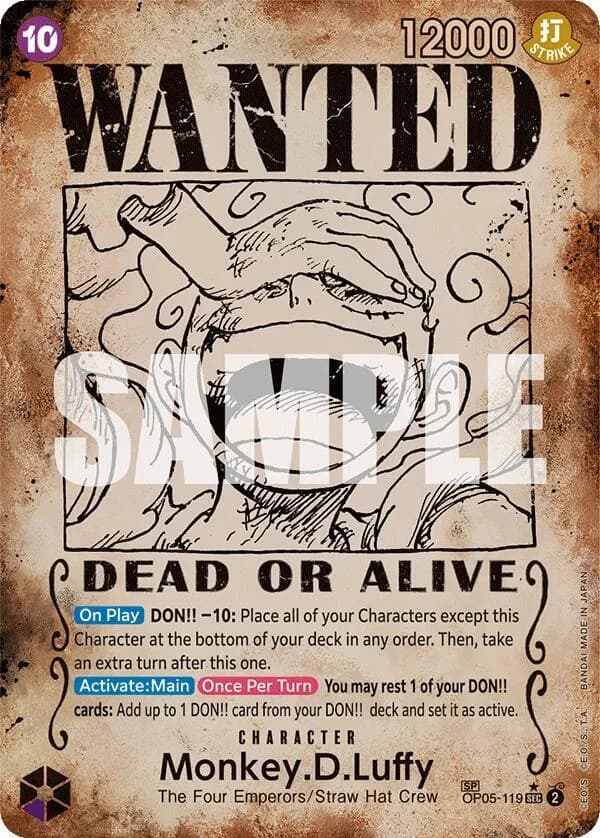
A One Piece reprint keeps the number it was first printed with, so the card you pulled in one booster can reappear two boosters later as a Wanted Poster, again as an SP card in a third, and again in a Premium Booster with a new foil. Luffy OP05-119 does exactly that below. Each printing is catalogued in the set that actually contains it, with its own value.
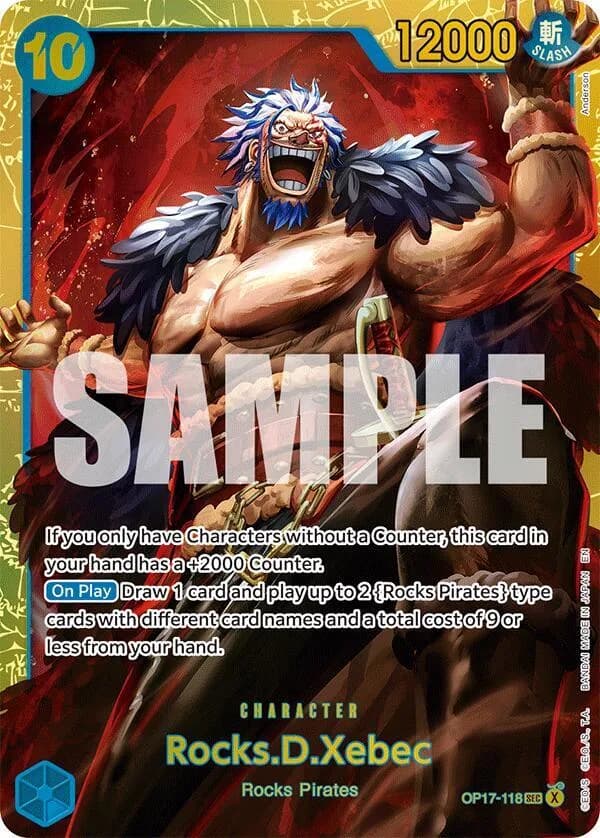
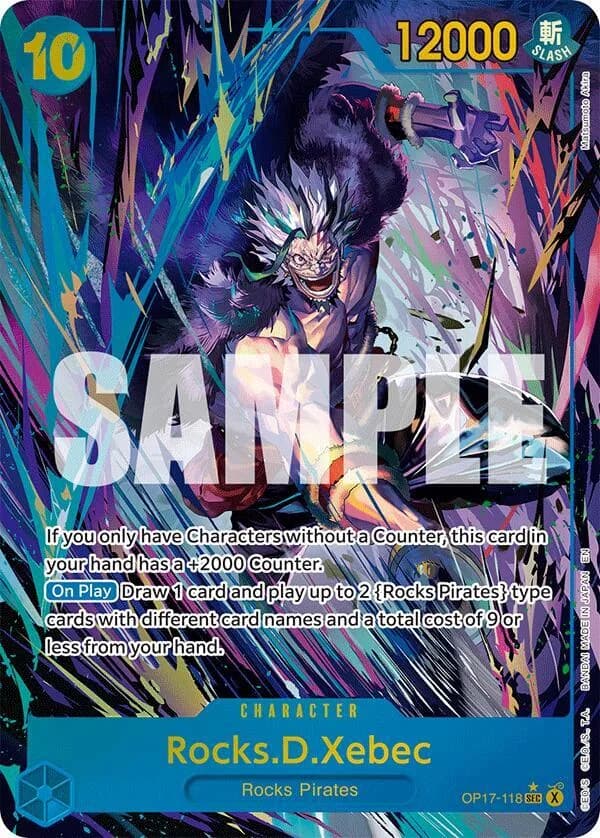
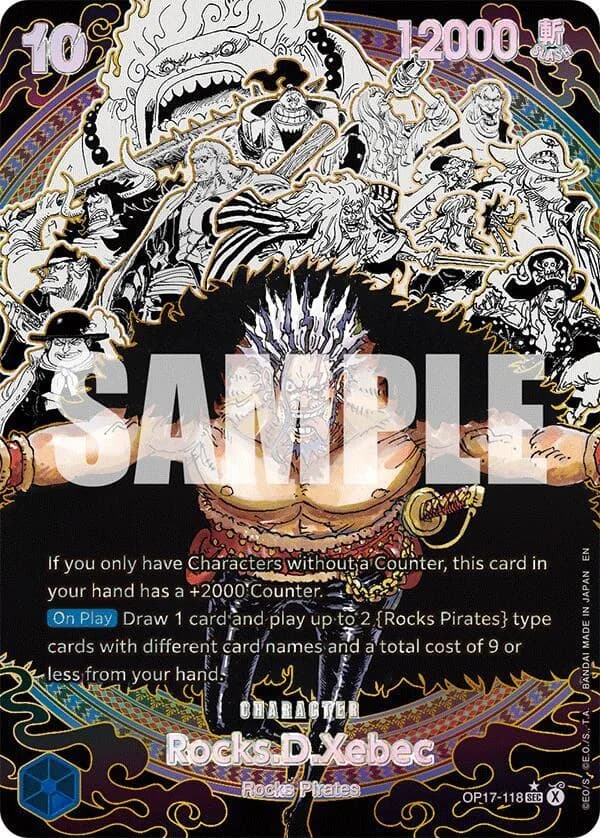
HoloHoard applies the following rule: a different illustration is a different card, a different finish on the same illustration is a variant. So Alternate Art, Parallel, SP, Manga, Full Art, Wanted Poster, Box Topper, Super Alternate Art and Treasure Rare prints are all their own cards, each with its own row on the checklist. Pirate Foil, Jolly Roger Foil and Textured Foil are the same picture with a different foil, so they are variants of the card, and you pick the finish you hold when you add it. Gold and Special Foil prints change more than the finish and stay cards of their own. Below is an example from The World's Strongest Warriors.
HoloHoard carries the official card list's printed codes: Common, Uncommon, Rare, Super Rare, Secret Rare, Leader, Promo, DON!! and, from Two Legends onward, Treasure Rare, which is one card per set, a reprint of an older card in a new frame that keeps its original number. The chase prints above are not rarities but prints of a rarity: a Secret Rare and its Manga print share a code and differ in the art.
| Code | Name | Note |
|---|---|---|
| C, UC, R | Common, Uncommon, Rare | The base checklist |
| SR | Super Rare | The upper run, with alternate arts |
| SEC | Secret Rare | The top of the booster, with Manga and SP prints |
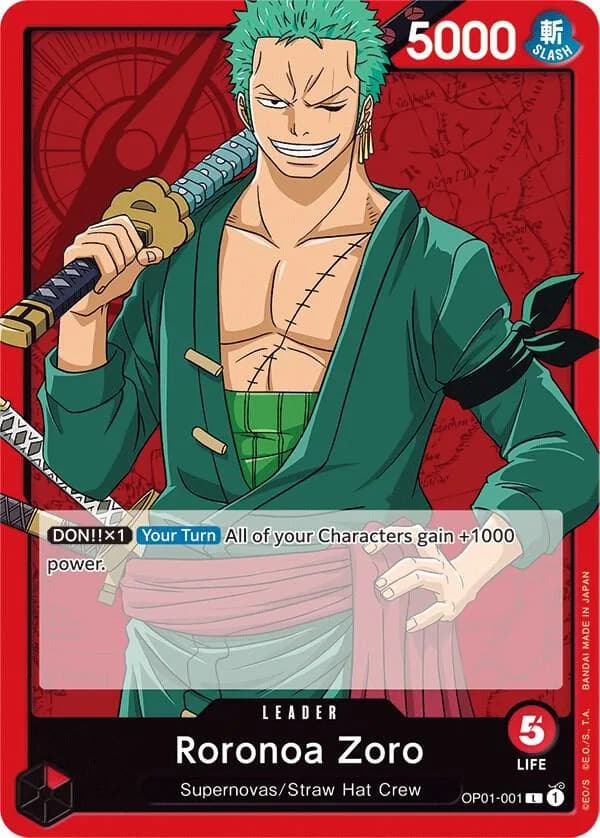
| L | Leader | One per deck; its own card back |
| TR | Treasure Rare | One per set from Two Legends on; a reprint keeping its original number |
| PR | Promo | Promotion Cards and event prints |
| DON!! | DON!! | The resource; no card number |
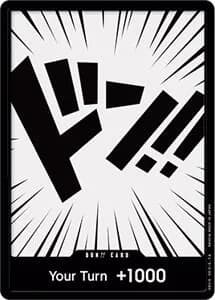
For those who go beyond collecting and play the game, here is the shape of a match, from the publisher's rule manual. Your Leader sits face up from the first turn and is never shuffled in. Your deck is fifty Characters, Events and Stages in the Leader's colours only, with up to four copies of a number, and ten DON!! cards sit in their own pile. Life is cards: at setup you draw as many as your Leader's Life value from the top of your deck, face down, and every hit on your Leader sends one to your hand, which is where a Trigger effect fires. DON!! pay costs, and a DON!! given to a Character or Leader adds a thousand power for the turn. You win by winning a battle against a Leader with no Life left, or when your opponent's deck runs out.
| Type | What it is | Own card back? |
|---|---|---|
| Leader | The crew's centre: Power, Attribute, Colour, Life, Types | Yes |
| Character | Played for its Cost: Power, Attribute, Counter, Trigger | Shared |
| Event | Activated for its Cost; an effect and a Trigger | Shared |
| Stage | Played for its Cost; one at a time | Shared |
| DON!! | The resource; ten per deck | Yes |
Every card carries a colour, red, green, blue, purple, black or yellow, and some carry two; colour is a deck-building rule, since a deck may only hold its Leader's colours. Leaders and Characters carry an attribute, Slash, Strike, Ranged, Special or Wisdom, and a Counter value for the defending step. The line collectors actually sort by is the type, the crew or affiliation printed under the name: Straw Hat Crew, Navy, Whitebeard Pirates, the Seven Warlords of the Sea and hundreds more. HoloHoard carries all of it on the card page, so a collection can be filtered by the crew you follow across every set it appears in.
For most boosters there is a pre-release set, a release-event set or an anniversary tournament set, each holding the booster's own cards by the same name and number with a stamp for the occasion. They are their own sets on HoloHoard, so a stamped Atmos from a release event and the Atmos from the booster are two cards, and a release-event collection can be completed on its own. Open the OP-17 release event cards.
Seven promo prints carry a serial number, and the run is printed on each card, so HoloHoard knows exactly how many exist and can track every one of them. Yamato from Extra Booster 02 is numbered out of 5,000; the Nami from the Championship Series celebration pack out of 1,200; the Championship 2023 Shanks, the Extra Booster 04 Luffy and Portgas.D.Ace out of 1,000 each; the first starter deck's Luffy out of 700; and the Roronoa Zoro from Legacy of the Master out of 600. Each run is its own variant on HoloHoard, so when you log one you record the serial number on your copy, and the tracker for that run shows which numbers have surfaced and which are still out there. If you pull one, post it.
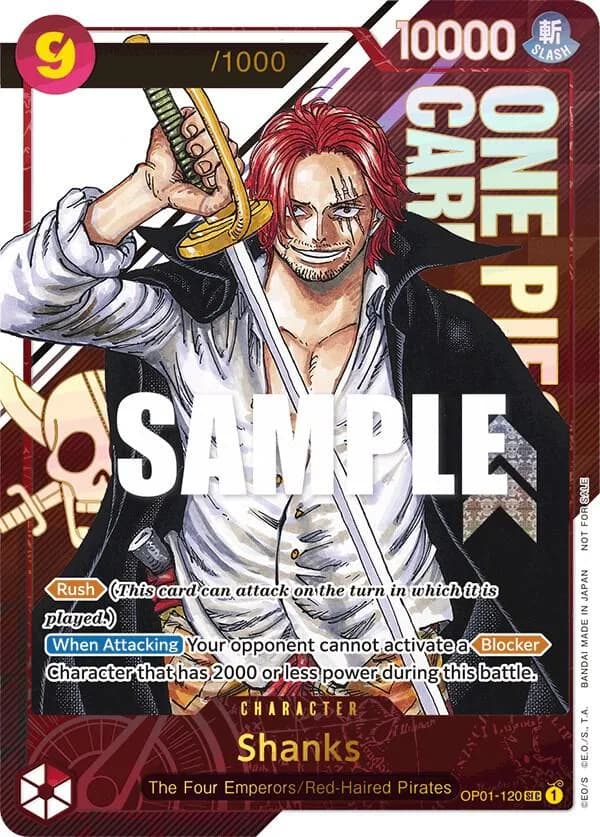
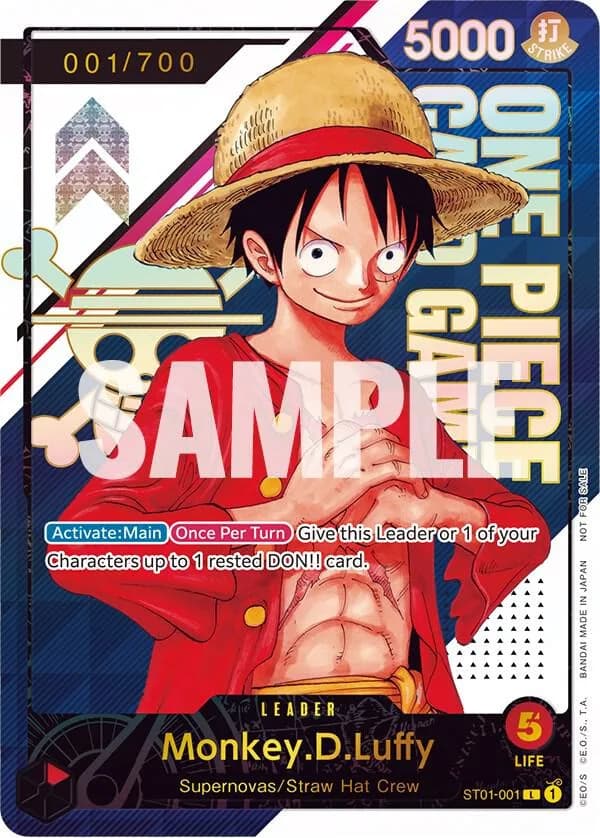
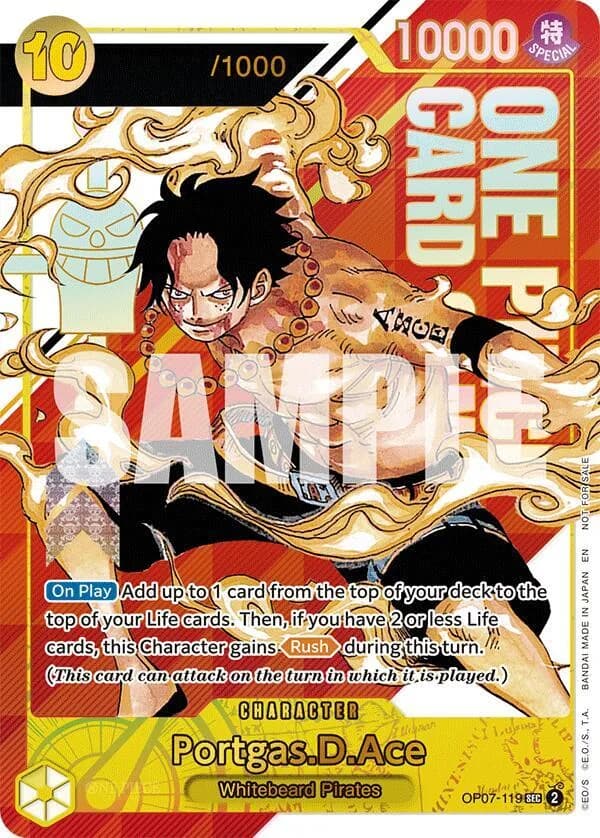
The whole English catalogue is already built, from Romance Dawn through the newest booster and the sets announced ahead of it, so starting means marking what you own rather than typing cards in. Because every alternate art is its own card, a collection shows the base print and its alt arts separately, and set completion counts the chase half honestly. Each set page has a printable checklist, one row per card, one column per foil. Lists carry intent: a want list for the alt arts you are still hunting, a trade list for the doubles a booster box produces, and the crew you follow can be a list that runs across every set. Start with the One Piece card list.
A fifty-card deck in the Leader's colours, with as many as four copies of any number, means most One Piece collections belong to someone who plays. What you own and what you need move constantly as a result. Deck lists sit alongside your collection and can hold cards you have not picked up yet, so a build you are working toward stays connected to what is actually in the binder, and they share as a link when you want another opinion on it.
Every print carries its own daily value estimate as it trades, so an alternate art and the base card under the same number show two figures rather than one, and a Jolly Roger Foil and the plain print of the same card are valued apart. Your collection totals from the same numbers, and the Market page ranks the most valuable cards in the game. See One Piece Card Game values.
Yes. HoloHoard tracks One Piece Card Game collections for free, with the full English catalogue already built in, so you mark the cards you own rather than entering them by hand. Every alternate art, Manga, SP and event print is its own card, so a base set and a master set are two separate completion figures. A free account covers collection tracking, wishlists and set completion; Premium adds collection values and higher limits.
Every English set is catalogued on HoloHoard, boosters, Extra Boosters, Premium Boosters, starter decks, event cards and promos, each with its own card list and a printable checklist. You can browse any set without an account.
Yes. An alternate art keeps the number of the base print but is a different illustration, so HoloHoard lists it as its own card, and so for Parallel, SP, Manga, Full Art, Wanted Poster, Box Topper, Super Alternate Art and Treasure Rare prints. Marking the base print leaves the alternate art open on your checklist.
No. Pirate Foil, Jolly Roger Foil and Textured Foil are the same illustration with a different foil, so on HoloHoard they are variants of the card: you pick the finish you hold when you add it, and each finish carries its own value. Gold and Special Foil prints change more than the finish and are listed as their own cards.
One card per booster from Two Legends onward: a reprint of an older card in a new frame that keeps its original number. It is a rarity code on the card, TR, and it is catalogued in the booster that contains it, as the reprint rule applies to every printing in the line.
HoloHoard shows a daily value estimate for cards with enough market activity behind them, per print and per foil, and totals your collection from those. Coverage grows as each set circulates. Values are estimates blended from real market activity, not appraisals.
Yes. The HoloHoard app is a free download on Google Play for Android. It is built for a line most people also play: a One Piece Card Game card you pick up at a shop or a pre-release goes into your collection and onto a deck list in the same tap, and both are on the desktop when you get home. The current store links are on the HoloHoard app page.
Start your collection, free
No account needed to browse. Create one to track and value your cards.