Guide
The Gundam Card Game is Bandai's official global card game for the Mobile Suit Gundam universe, and it launched in English, Japanese and Simplified Chinese at the same time rather than arriving in the West years later. Decks are 50 cards in up to two colours, built from Units, Pilots, Commands and Bases, and the mobile suits and pilots on them run across the whole franchise. For collectors the interesting part is what sits on top of each set: roughly a quarter of a booster is parallel versions of cards already in it, each one its own entry on a checklist. This guide covers how the line is built, what is worth chasing, and how to keep a collection of it current.
1,589 cards across 21 sets, catalogued and ready to track.
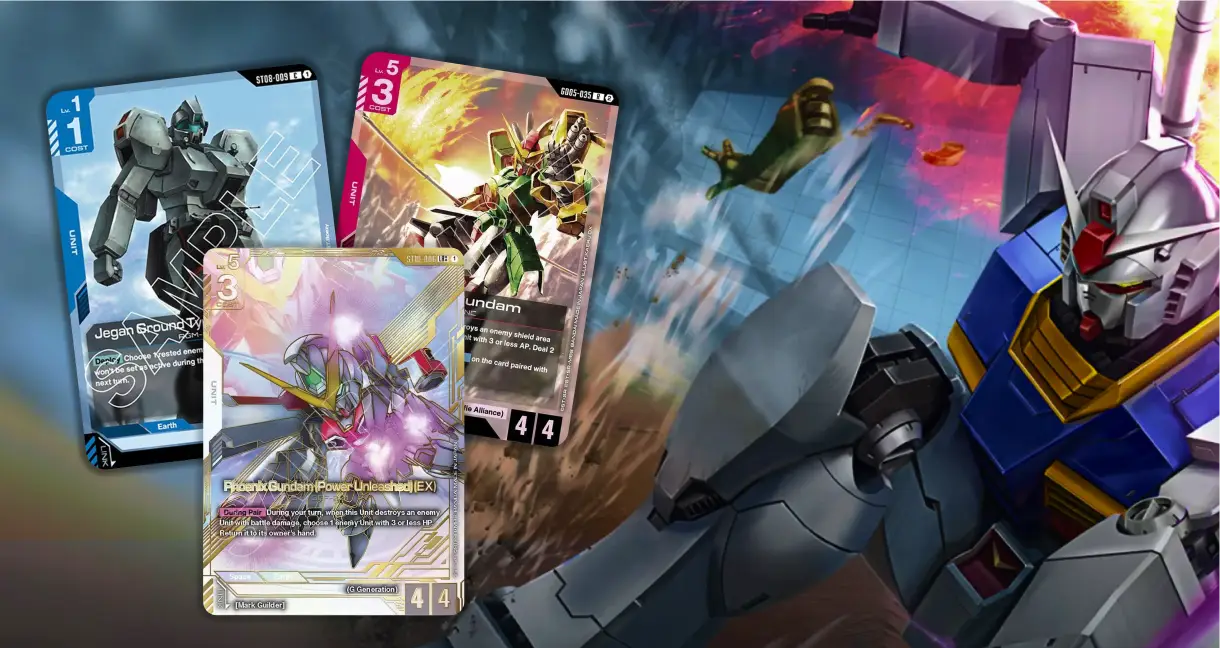
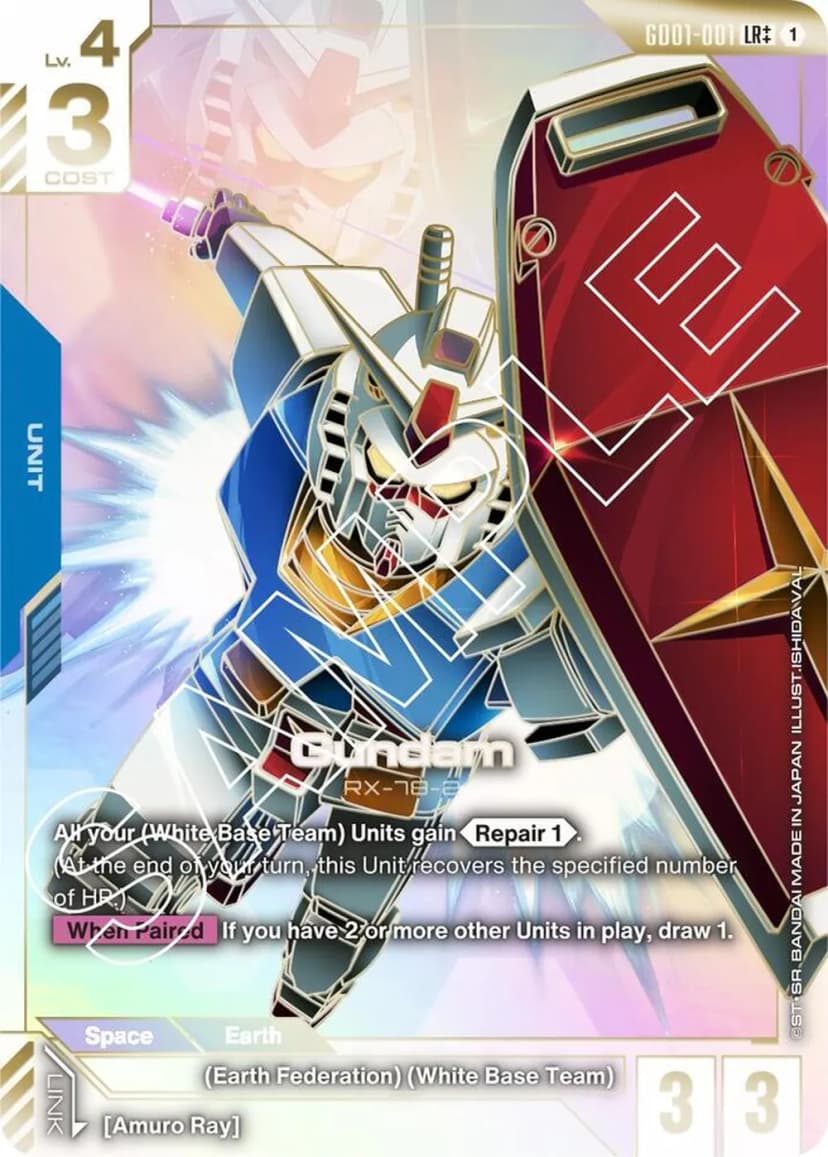
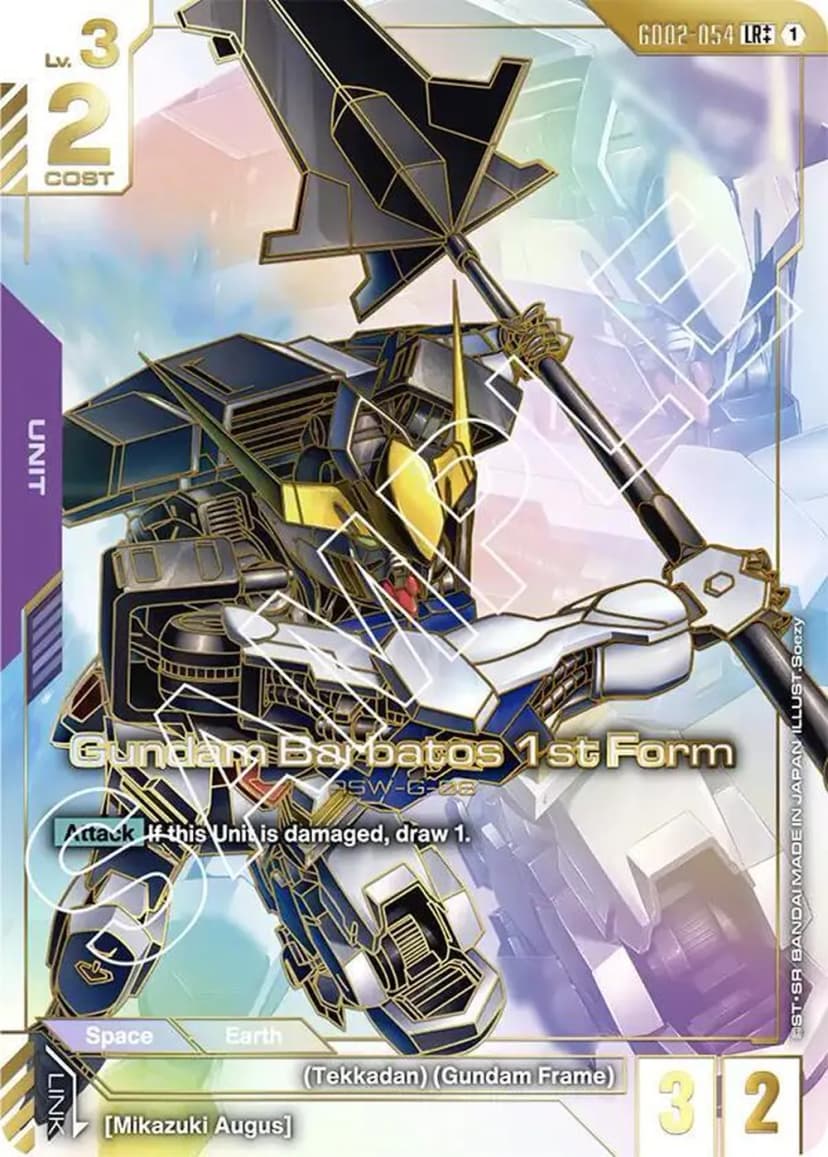
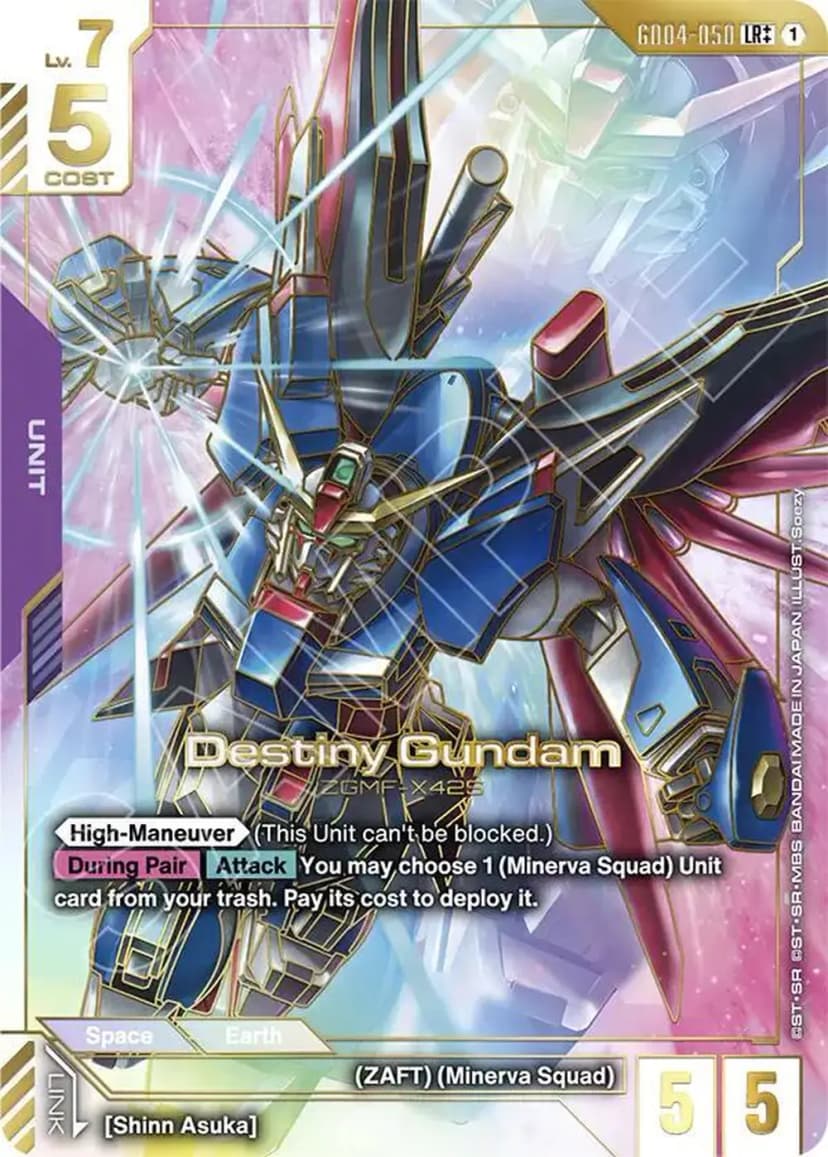
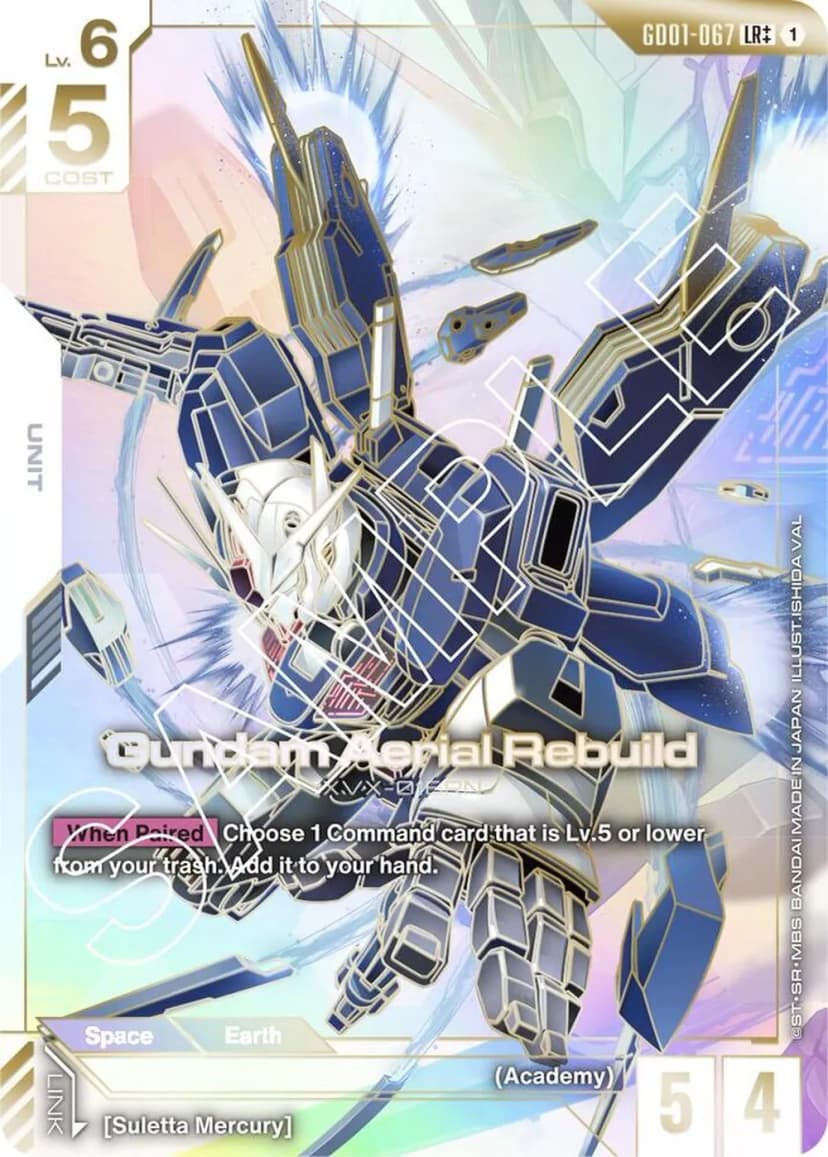
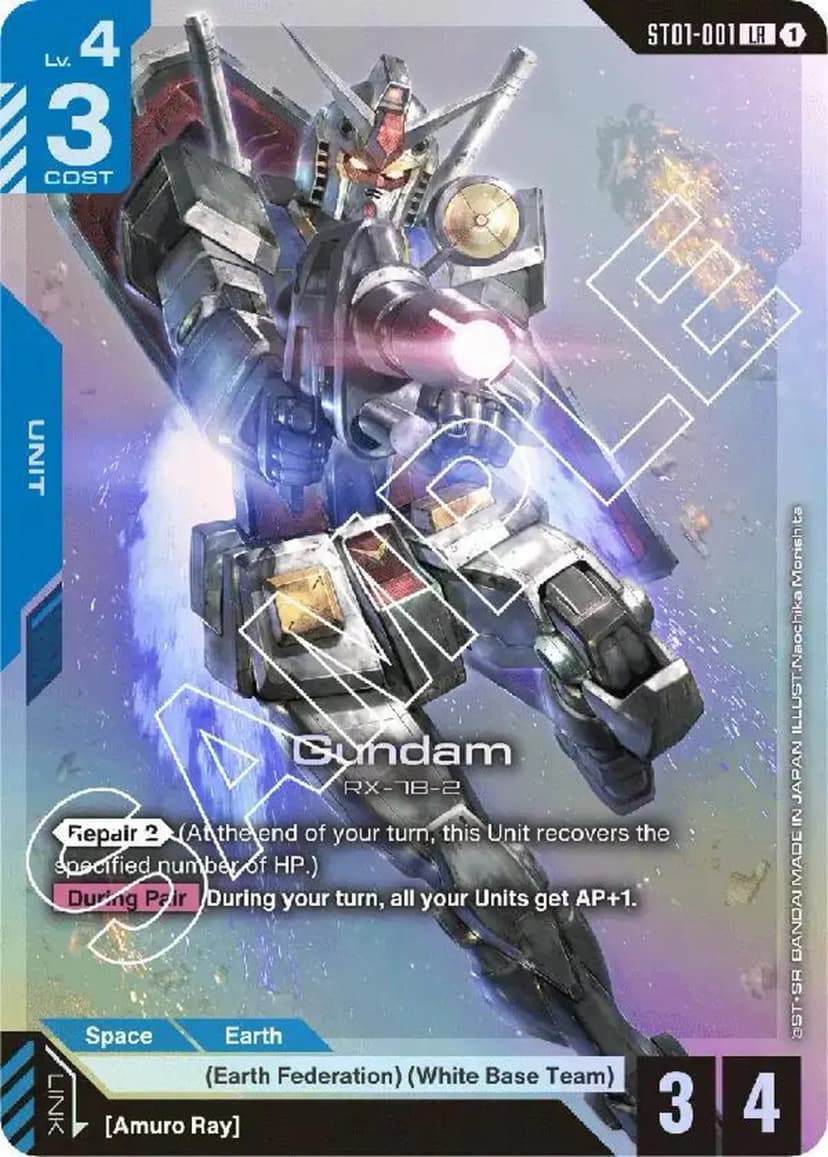
Every set is drawn from across the Gundam franchise rather than one series, so a single booster can put the original RX-78-2 next to suits from Wing, SEED, Iron-Blooded Orphans and the newest shows. That breadth is the reason the checklist reads like a tour of the whole universe.
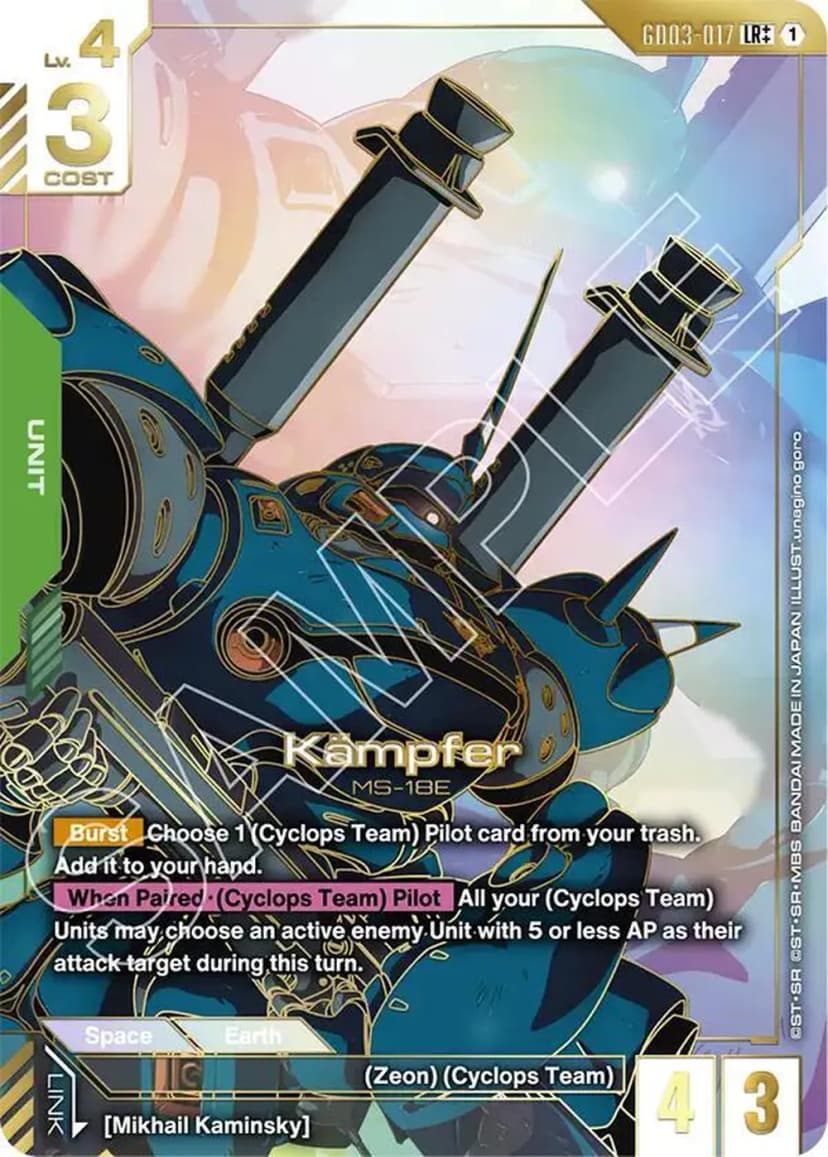
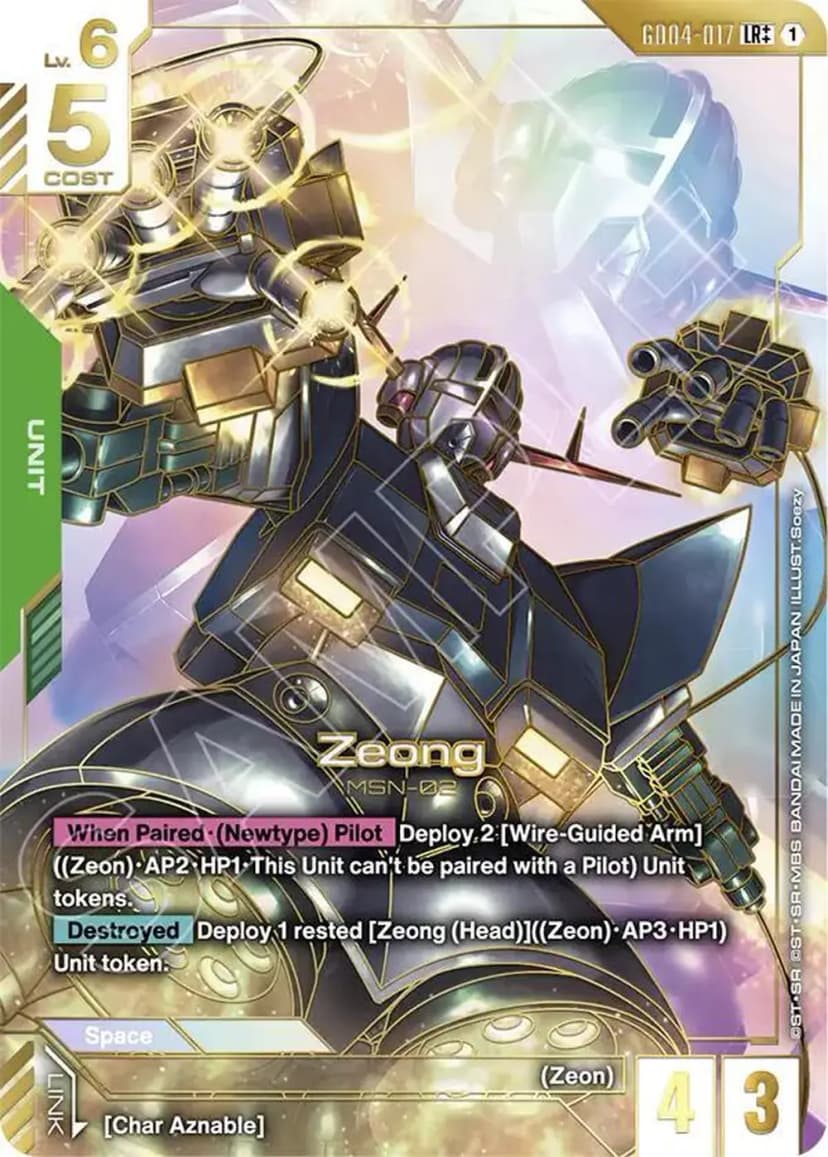
Boosters run Common, Uncommon, Rare and Legend Rare, and then the same cards come back as parallels marked with a plus. C+, U+, R+ and LR+ sit above their base versions, and a small number of cards go further to C++ and LR++. Each of those is catalogued as its own card rather than a checkbox on an existing one, which is what makes a master set a genuinely different goal from a base set. Promotional cards run their own Promo rarity outside the ladder entirely.
| Tier | What it is |
|---|---|
| Common, Uncommon, Rare | The base checklist, and most of a set |
| Legend Rare | The top of the base rarities |
| C+, U+, R+, LR+ | Parallel versions of cards already in the set |
| C++, LR++ | The scarcest tier, a handful of cards per set |
| Promo | Promotional cards, outside the booster ladder |
It is worth knowing before you start that the catalogue holds more Holofoil cards than Normal ones. The foil is not a thin layer of chase cards sitting on top of a plain base set, it is most of the run, and each finish is tracked as its own entry. So marking a Normal copy leaves the Holofoil still open on your list, and your completion percentage counts what is actually in your binder rather than rounding the two together.
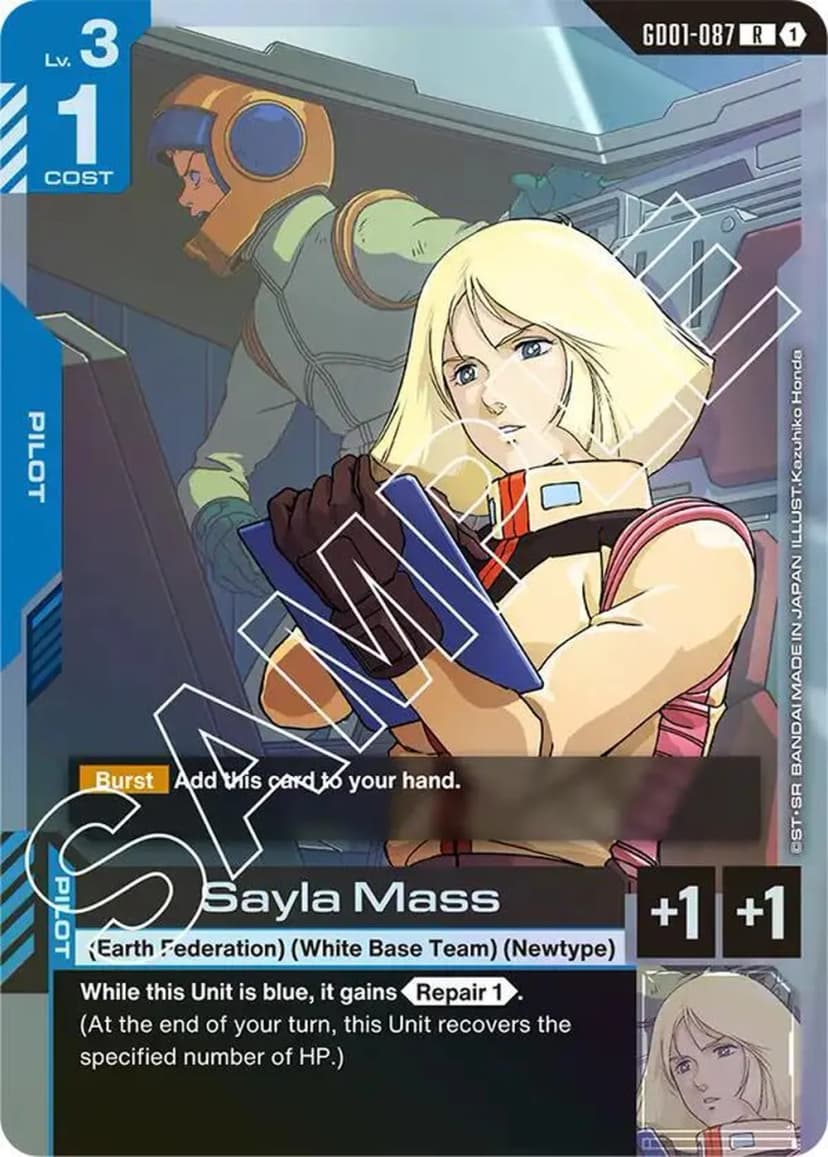
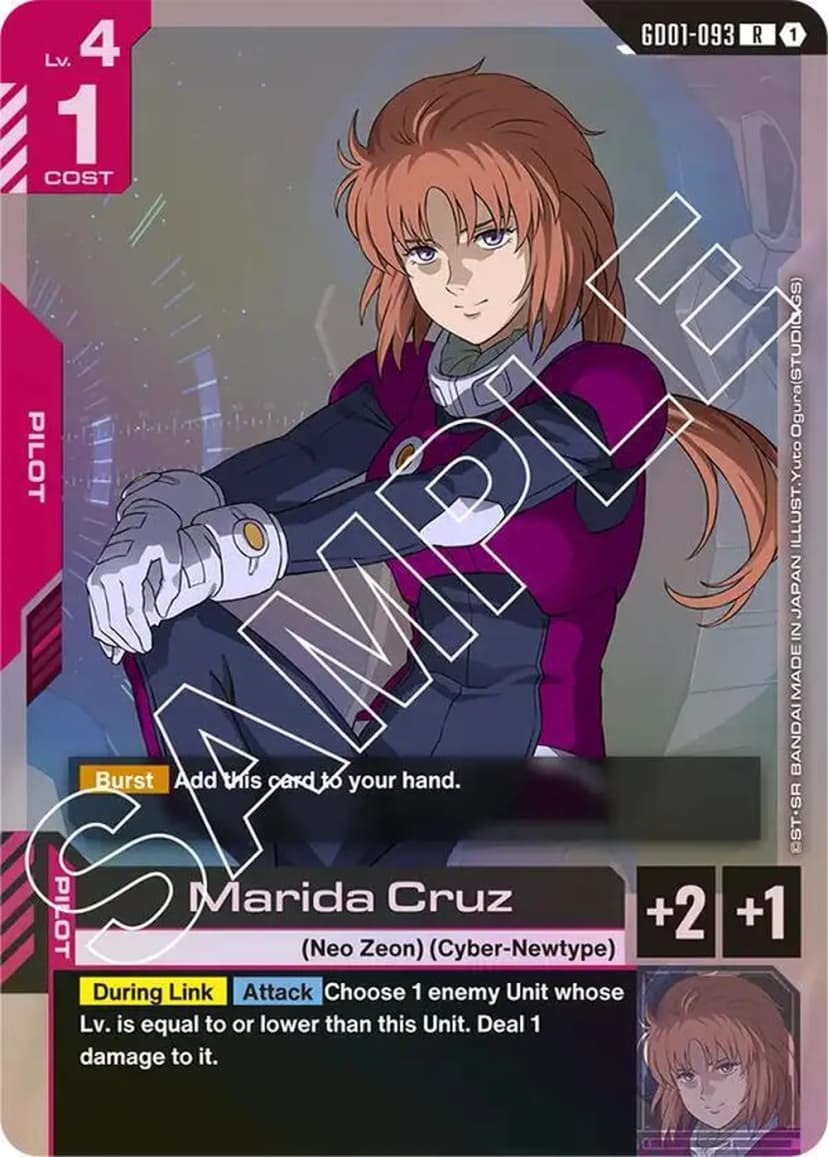
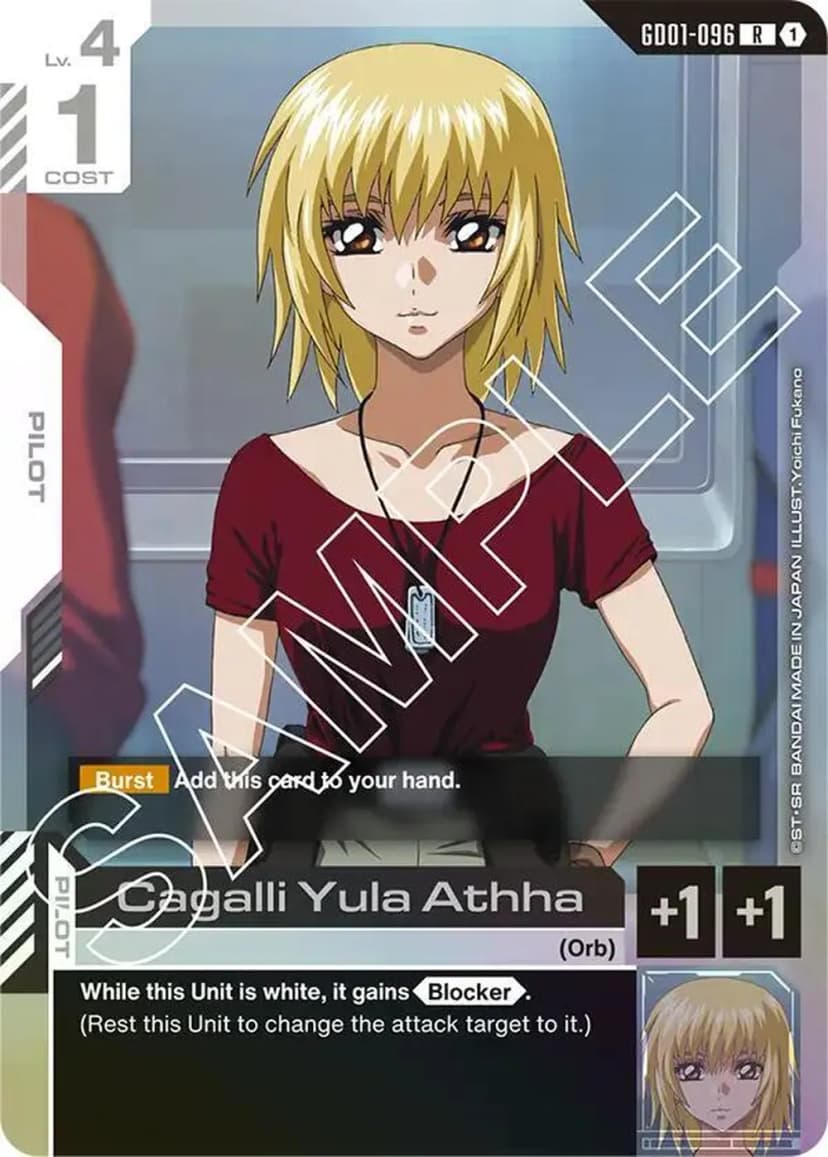
A Pilot card pairs underneath a Unit and hands it that Pilot's AP, HP and ability. When the pair meets the Unit's link requirement, it becomes a Link Unit and can attack the turn it is deployed instead of waiting a turn. That is a real advantage in play, and it is also why so many of the game's most wanted cards depict a specific pilot with their specific machine: the pairing the rules reward is the pairing the artwork celebrates. Collectors who chase by character rather than by set tend to end up here.
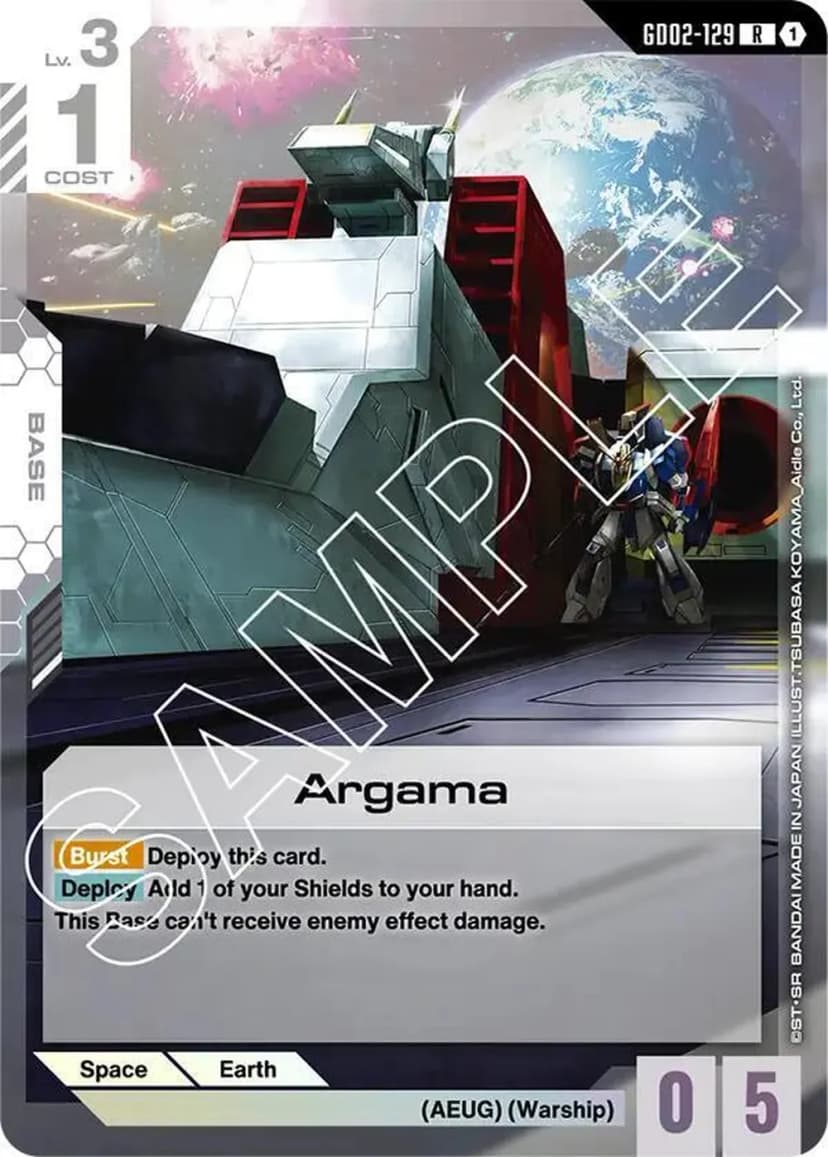
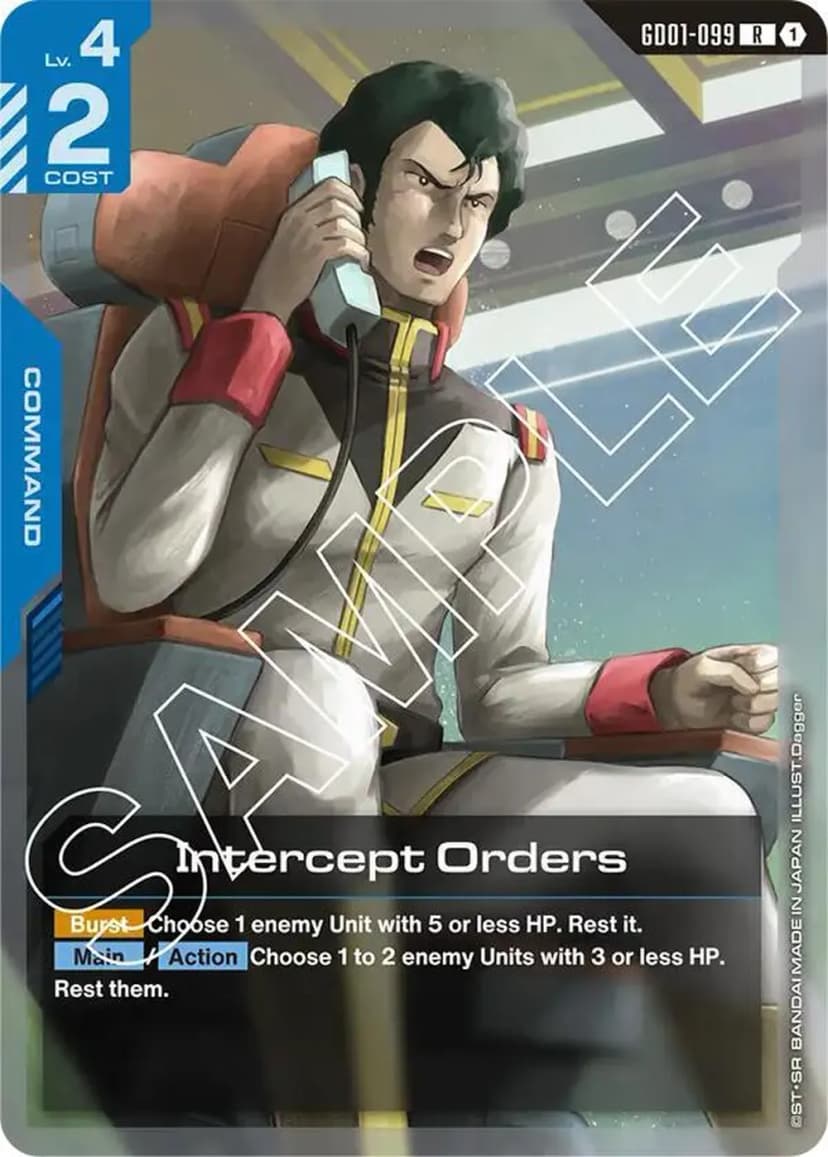
Units are the mobile suits, deployed into the battle area up to six at a time, and they cannot attack the turn they arrive unless they link. Pilots pair under a Unit, one each. Commands are one-shot cards that resolve and go, and some can be played during your opponent's turn or used as a Pilot instead. Bases sit in your shield area to absorb damage and support your plan, and you can only have one. On top of those the catalogue also holds the Resource, EX Resource and EX Base tokens the game uses, which are collectable in their own right even though they are not deck cards.
| Type | Where it goes | Limit |
|---|---|---|
| Unit | Battle area | Up to 6 deployed |
| Pilot | Paired under a Unit | 1 per Unit |
| Command | Played and trashed | One-shot |
| Base | Shield area | No more than 1 |
You start with six shields, taken face down off the top of your deck, and a Base can be deployed to help protect them. You win by dealing battle damage to an opponent who has no shields left, or by emptying their deck. Resources come from a separate ten-card resource deck, one per turn, and a card can be played once you hold as many resources as its level, resting that many to pay for it. The turn runs through five phases: ready your cards, draw, take a resource, act, then pass.
The line splits three ways. Boosters are the main run and carry the parallels. Starter decks are numbered ST01 upward and are unusually consistent, each a small fixed checklist with its own parallels inside, which makes them satisfying to complete one at a time. Promotional cards form their own set and are where a lot of the harder-to-find pieces sit, alongside the resource and base tokens. All three are catalogued together, so a complete collection has one obvious home rather than three.
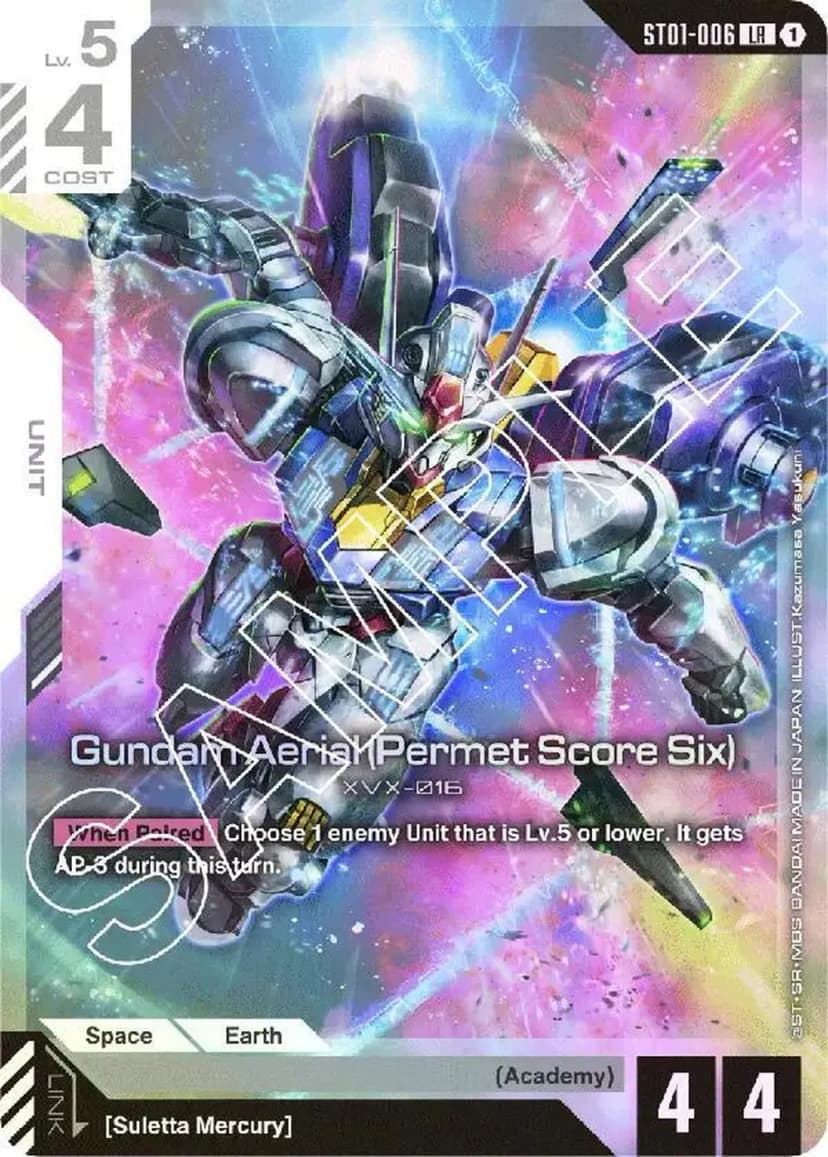
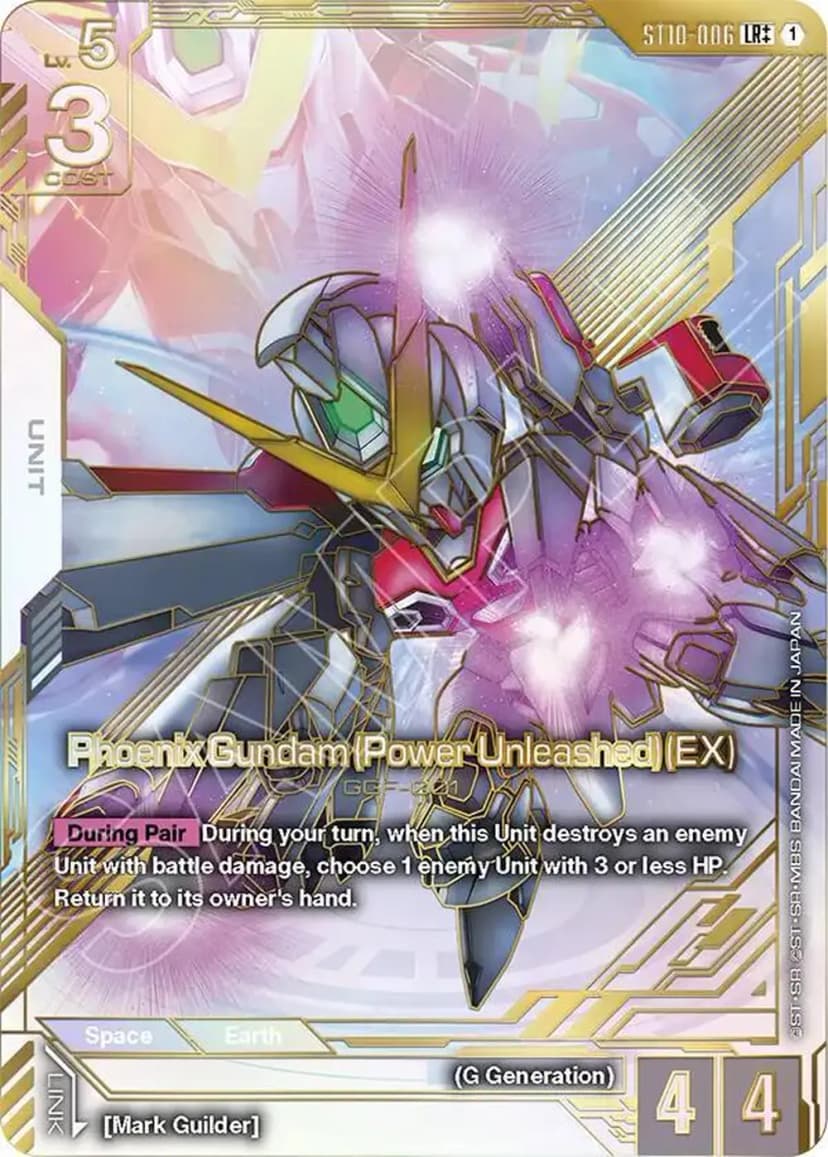
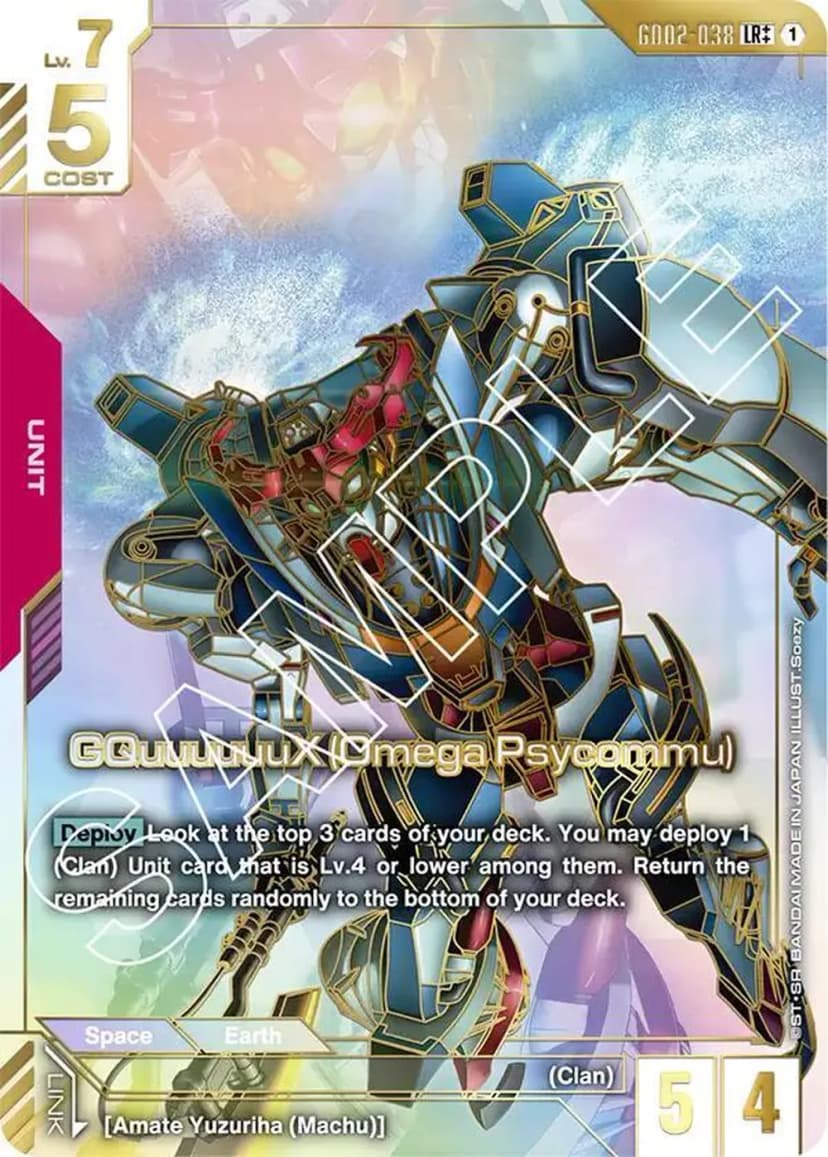
The whole catalogue is already built, from the first starter decks through the newest booster, so starting means marking what you own rather than typing cards in. Collections hold what is in your hands, set completion tells you how close each set is to done in each finish, and lists carry intent: a want list for the parallels you are still hunting, a trade list for the duplicates a booster box produces. As sets keep arriving, the newest one appears in the same place as the rest. Start with the Gundam card list.
A 50-card deck in up to two colours, with as many as four copies of any card number, means most Gundam collections belong to someone who plays. What you own and what you want move constantly as a result. Deck lists sit alongside your collection and can hold cards you have not picked up yet, so a build you are working toward stays connected to what is actually in the binder, and they share as a link when you want another opinion on it.
Cards with enough market activity behind them carry a daily value estimate, and the rest show as not valued yet rather than a made-up figure. Values appear as you browse, so you can see what a parallel is doing without opening it, and your collection totals from the same numbers. That matters most on the plus tiers, where two versions of the same card can sit a long way apart. See Gundam Card Game values.
Start your collection, free
No account needed to browse. Create one to track and value your cards.