Guide
Divorced Dads started as a joke. Creator Graeme Barrett made a parody of the trading card games everyone already knew, the internet decided it wanted the cards to be real, and they became real. What makes the line unusual to collect is that the joke did not get replaced when the game arrived: the original cards are still their own thing, with no gameplay attached at all, while the playable game that grew out of them runs under the name Court of Chaos. Two different collecting propositions under one roof, joined by a handful of cards that crossed from one to the other. This guide covers how the line is built, what the serial numbers mean, and how to keep track of it.
349 cards across 7 sets, catalogued and ready to track.
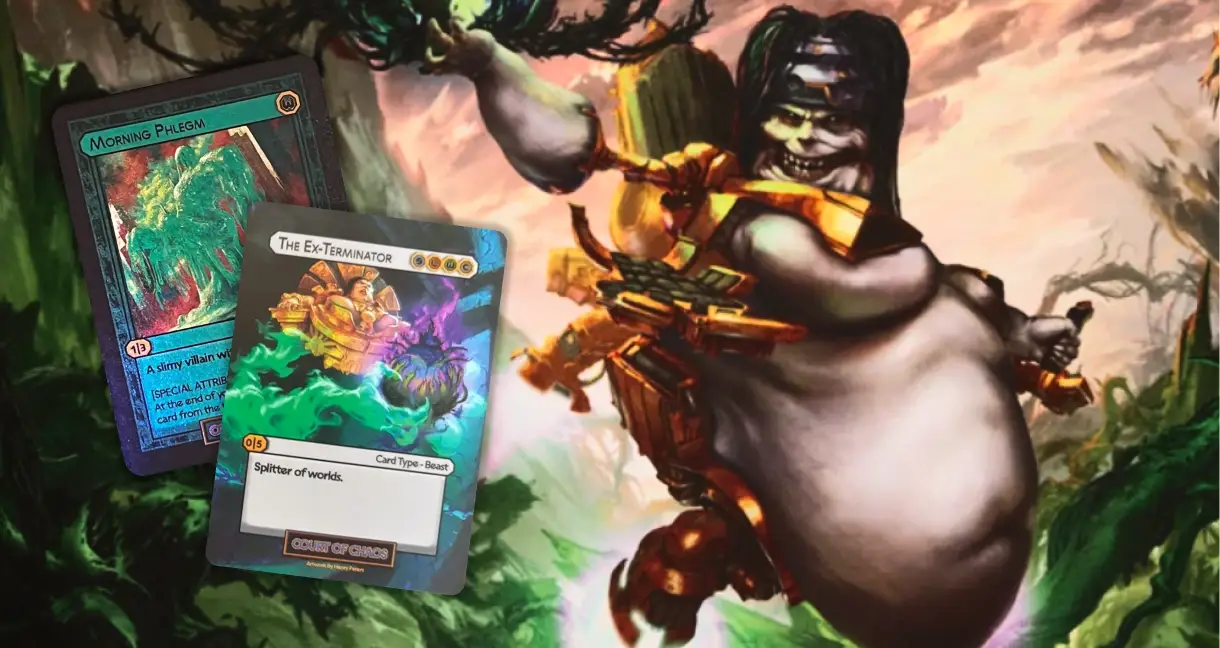
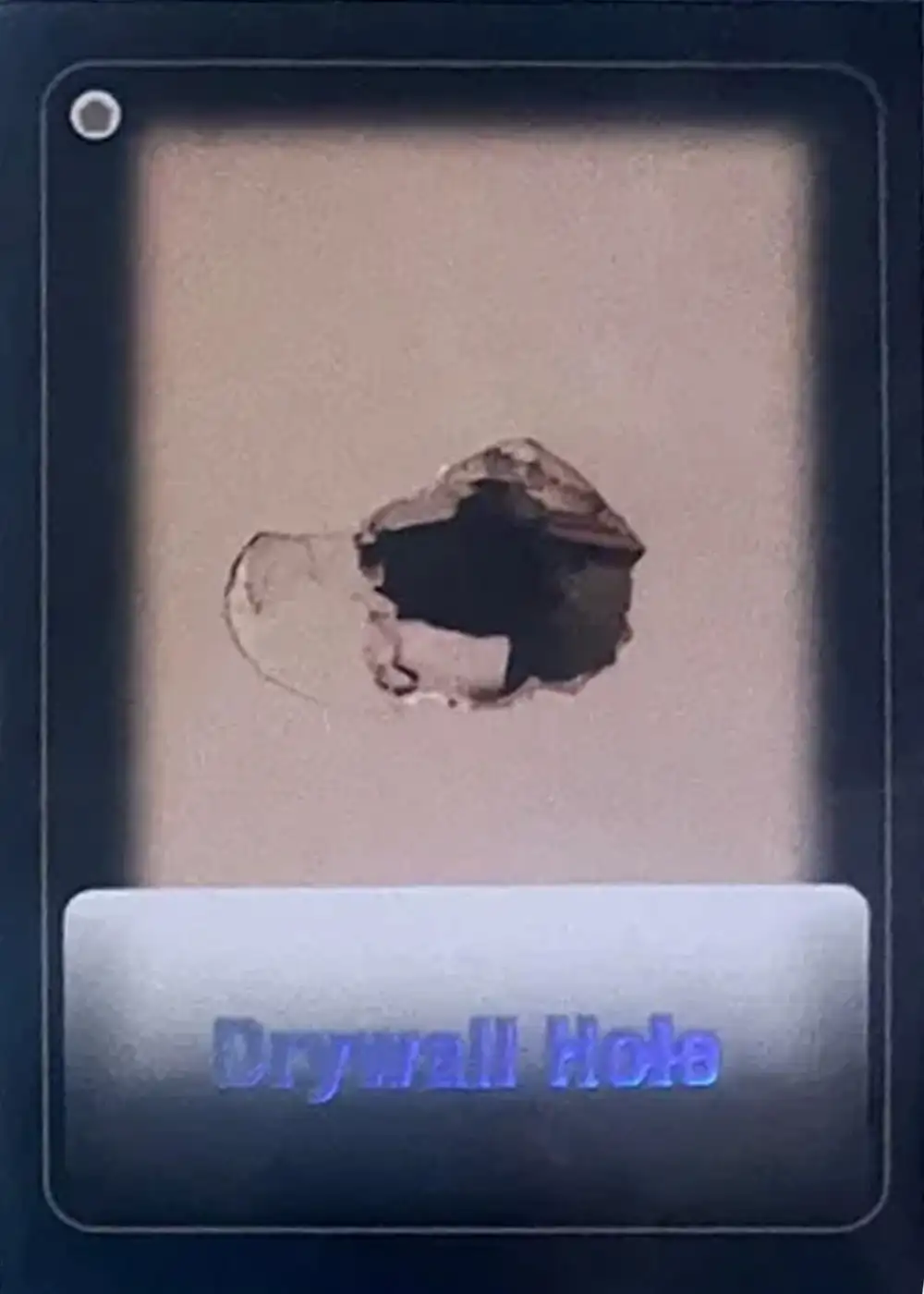
The originals are the meme, printed. They lean all the way into middle-aged dad life and post-divorce absurdity, and they are the reason anyone knows the name.
This is the thing to understand before you start, and the catalogue shows it plainly: not one card in Original Cards carries a card type. No Beast, no Terrain, no Tool, no attack or defence numbers. They were never built to be played with, and they are still not. Everything in the later sets is typed, because that is the actual game. So a complete Divorced Dads collection is really two collections: the originals, valued as the artefacts of a joke that got out of hand, and Court of Chaos, valued as a card game.
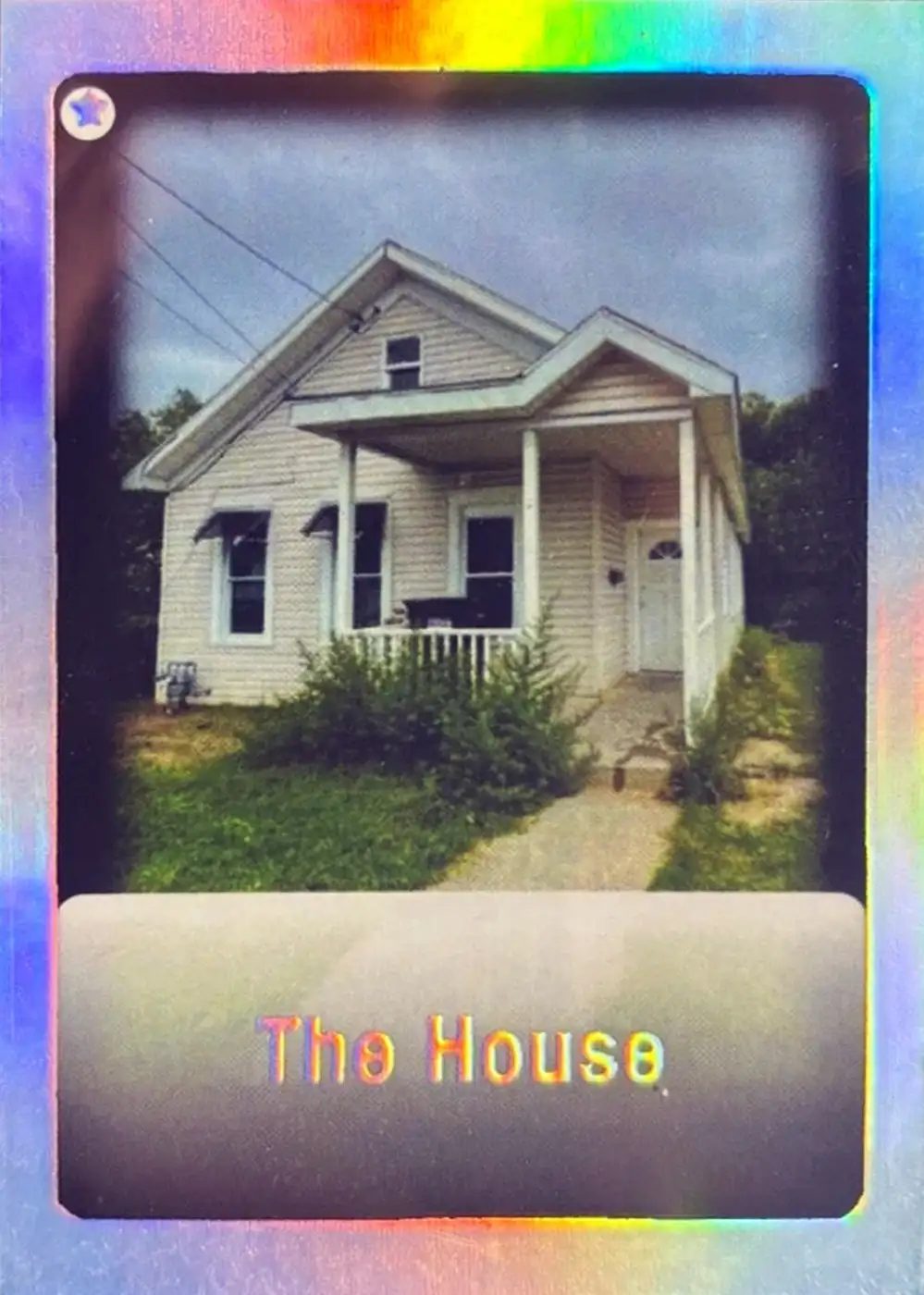
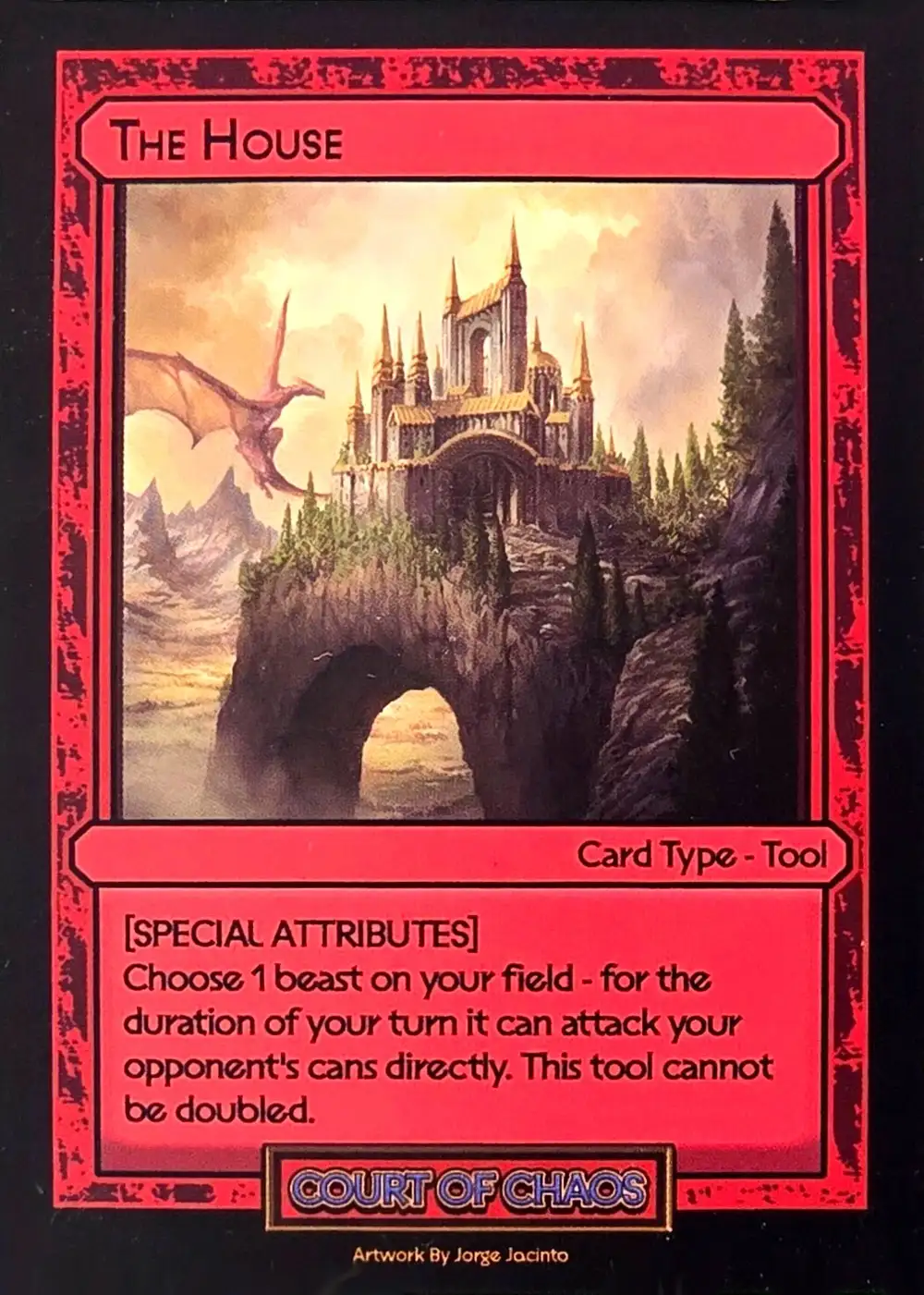
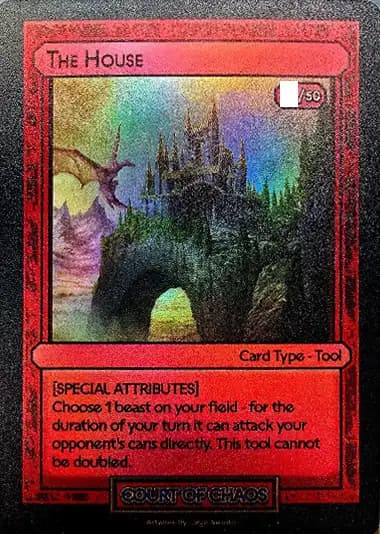
The House is the chase card and the punchline at once: the thing a divorced dad loses, printed as the rarest thing in the set. It began in the originals as a holographic with no card number, because there was no game for it to have a number in. It has since been printed as a real, playable card three separate times, in the Court of Chaos booster set, in Age of Alimony and in Seed of Separation, each time numbered and each time with a serialised run of 50 alongside the ordinary version. Pulling The House meant something before the game existed, and it still does.
| Where | Form |
|---|---|
| Original Cards | Holographic, unnumbered, no card type |
| Court of Chaos booster | Playable Tool, numbered, with a serialised run of 50 |
| Age of Alimony | Playable Tool, numbered, with a serialised run of 50 |
| Seed of Separation | Playable Tool, numbered, with a serialised run of 50 |
There is no long parallel ladder here and no need for one. Cards come as base or holographic, and above them sit serialised runs printed to a fixed number, with the print run on the card itself. Those runs are 999, 500, 250, 100 and 50, and the 50s are where the line's most wanted cards live. Because the number is printed rather than estimated, you always know exactly how many exist, which is rarer in this hobby than it should be. HoloHoard tracks each serialised run as its own entry, and you can record the individual serial on your copy.
| Run | What tends to sit there |
|---|---|
| /999 | The widest commemorative runs |
| /500 | Limited singles and event cards |
| /250 | Scarcer chase pieces |
| /100 | Tighter still |
| /50 | The top of the line, The House included |
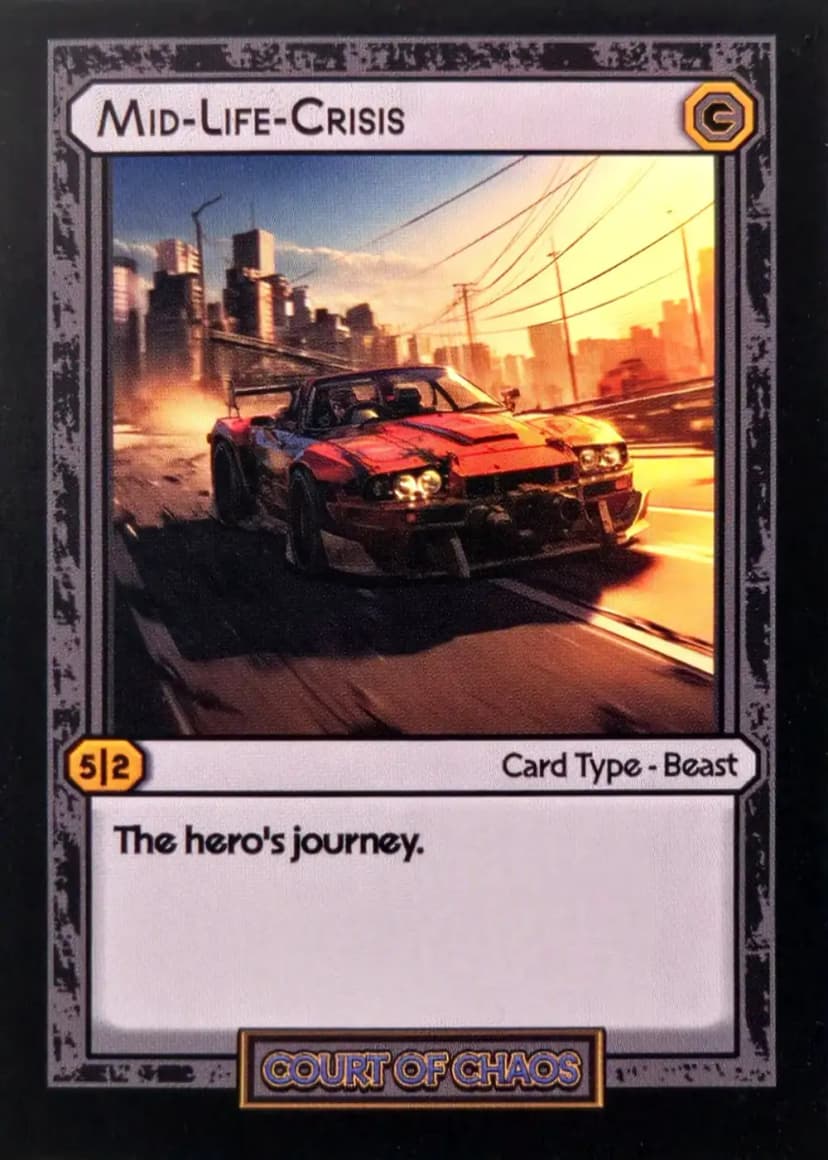
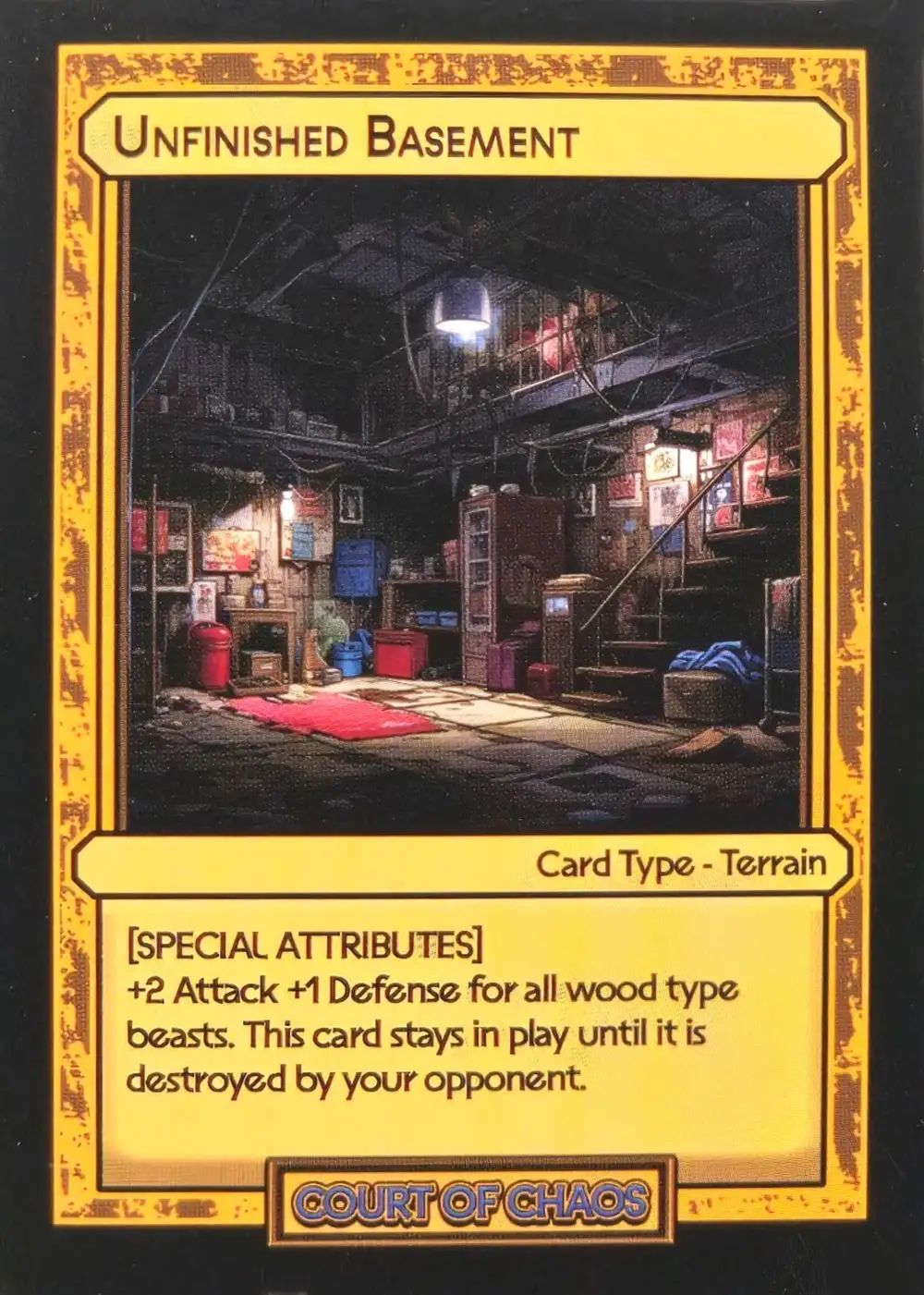
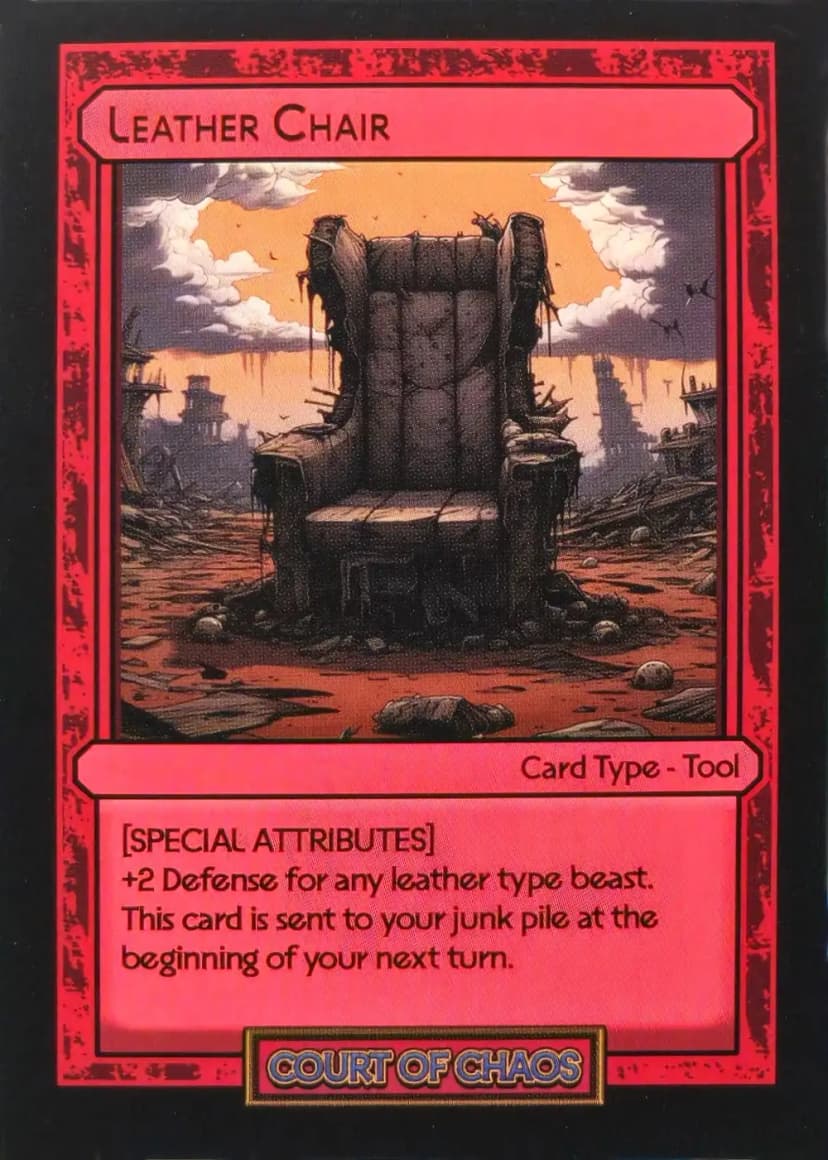
The playable game is built around depleting your opponent's cans, and you start with a 24 pack of them. Decks run to no more than 50 cards with no duplicates allowed, you open on seven, and the player with the least hair on their head goes first. Beasts do the fighting and come in Wood, Leather, Concrete and Steel. Terrains sit in their own slot and buff only your own beasts, staying until something destroys them. Tools last a single turn unless the card says otherwise. You can play two cards a turn, you have to clear your opponent's beasts before you can go for their cans, and anything left over from an attack carries through. Running out of cards does not lose you the game; running out of cans does.
| Type | How long it stays | What it does |
|---|---|---|
| Beast | Until destroyed or sacrificed | Attacks beasts and cans |
| Terrain | Until destroyed | Buffs your own beasts only |
| Tool | One turn unless stated | A one-off or attachable effect |
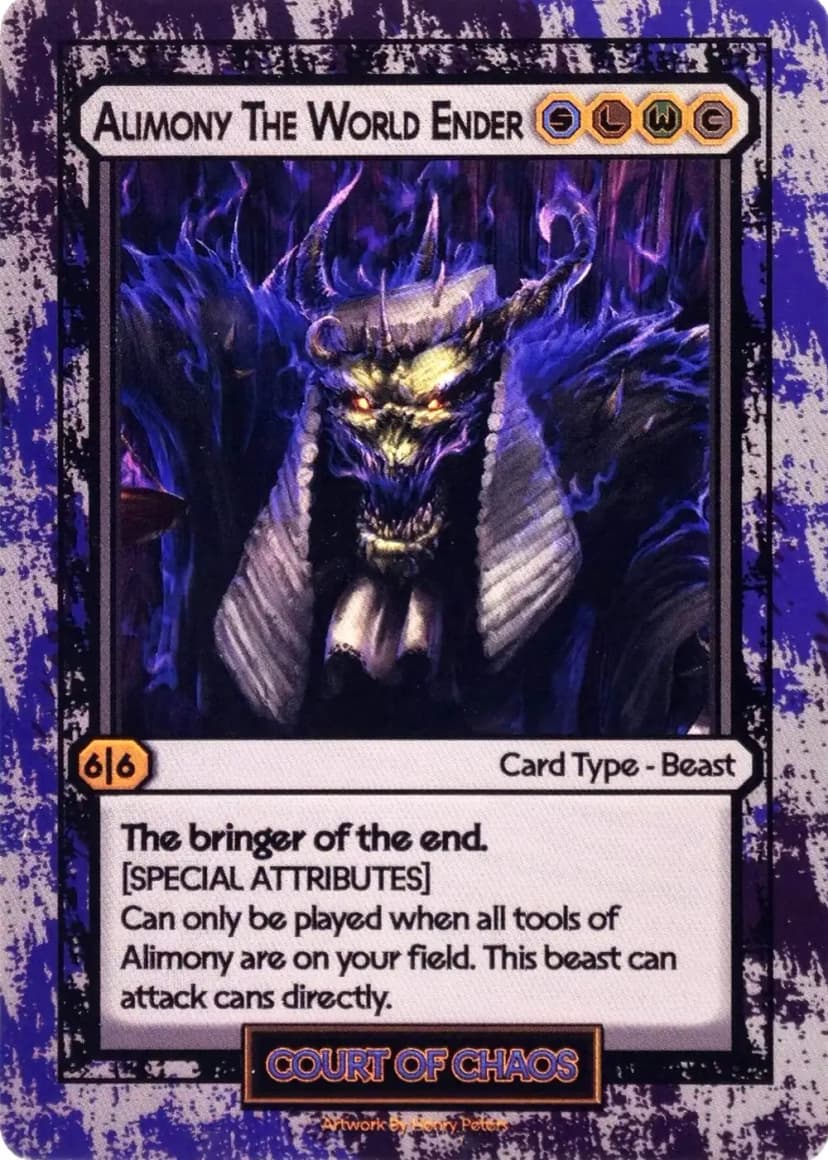
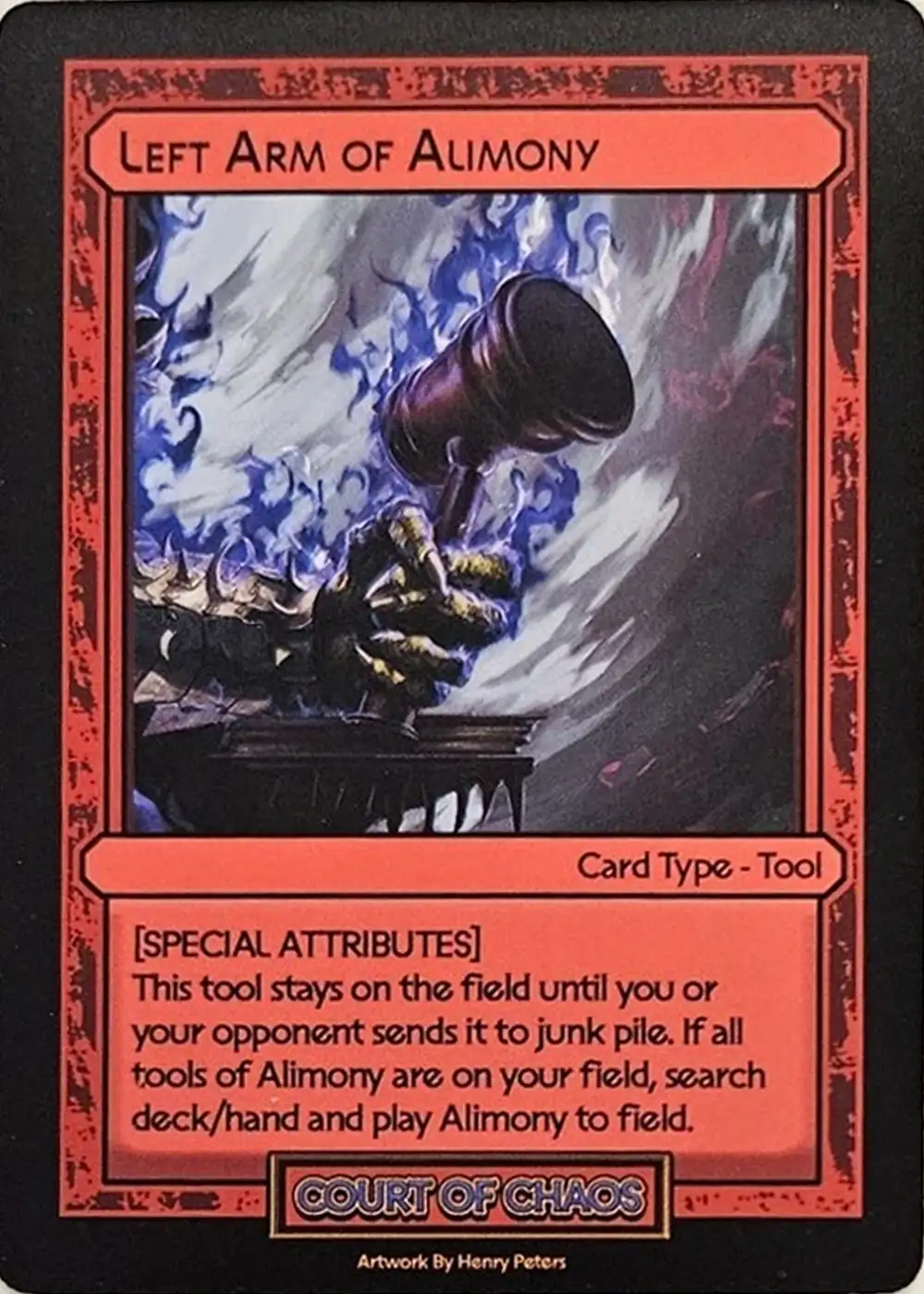
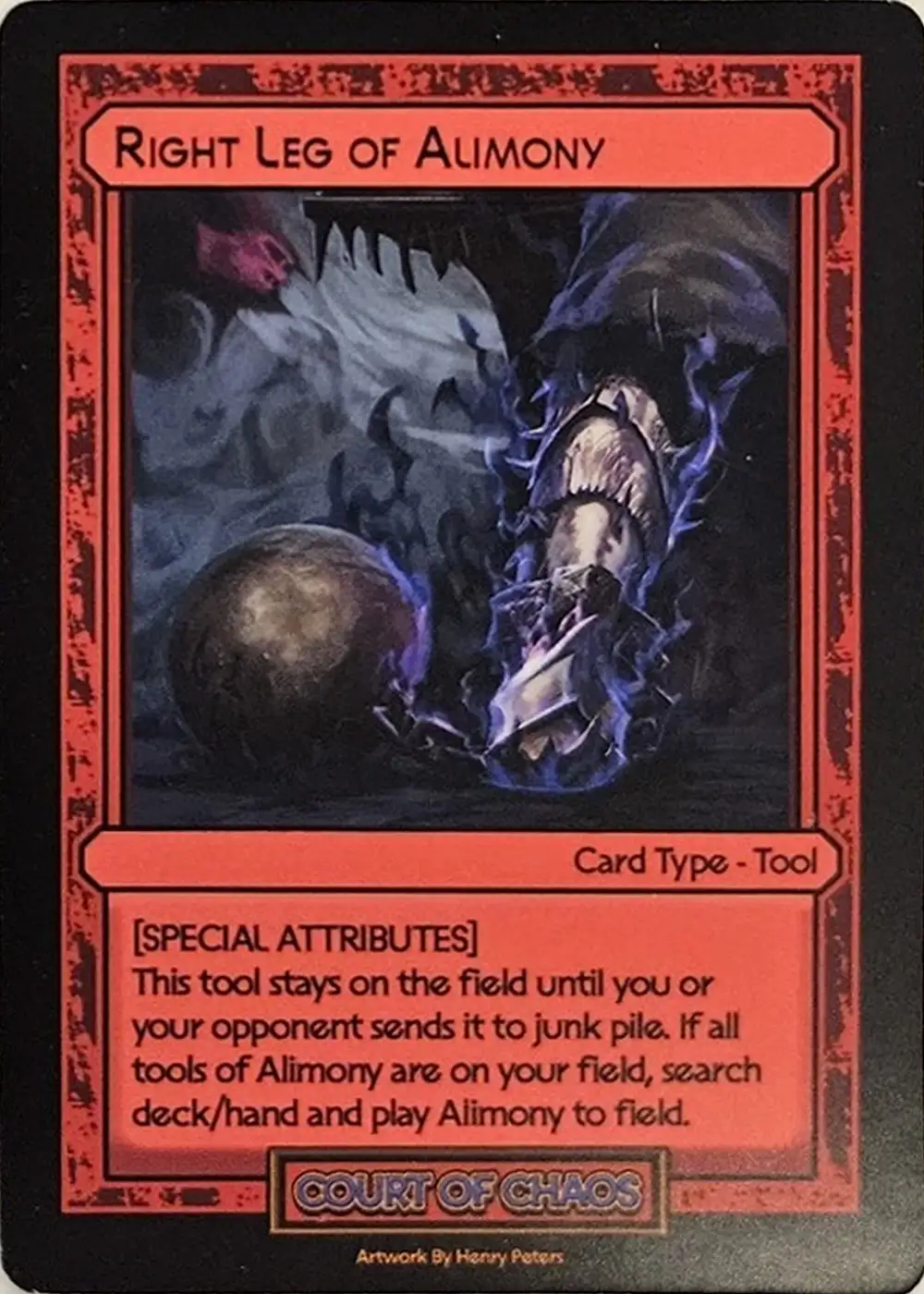
Age of Alimony gives the line its boss card. Alimony The World Ender is a beast built to bleed a divorced dad dry, and around it sit four separate cards for its left arm, right arm, left leg and right leg. Assembling the set is its own collecting goal on top of owning the beast itself, and it is the clearest example of the game doing something a straight parody would not have bothered with.
The line splits three ways. Originals and Singles are the pre-game material, collectible only. Court of Chaos is the game itself, arriving as a starter pack, a booster pack and later a master beta deck. Then the expansions, Age of Alimony and Seed of Separation, which are where most of the serialised chases sit. All of it is catalogued together, so one collection covers the joke and the game without you keeping two lists.
The whole catalogue is already built, so you mark what you own rather than typing it in. Collections hold what is in your hands, set completion runs per set and per finish, and lists cover intent: a want list for the serialised runs you are chasing, a trade list for the spares. Cards with enough market activity behind them carry a daily value estimate and the rest show as not valued yet, which matters here more than in most lines, because a card printed to 50 and the same card printed to 999 are not remotely the same object. See Divorced Dads card values.
Start your collection, free
No account needed to browse. Create one to track and value your cards.