Guide
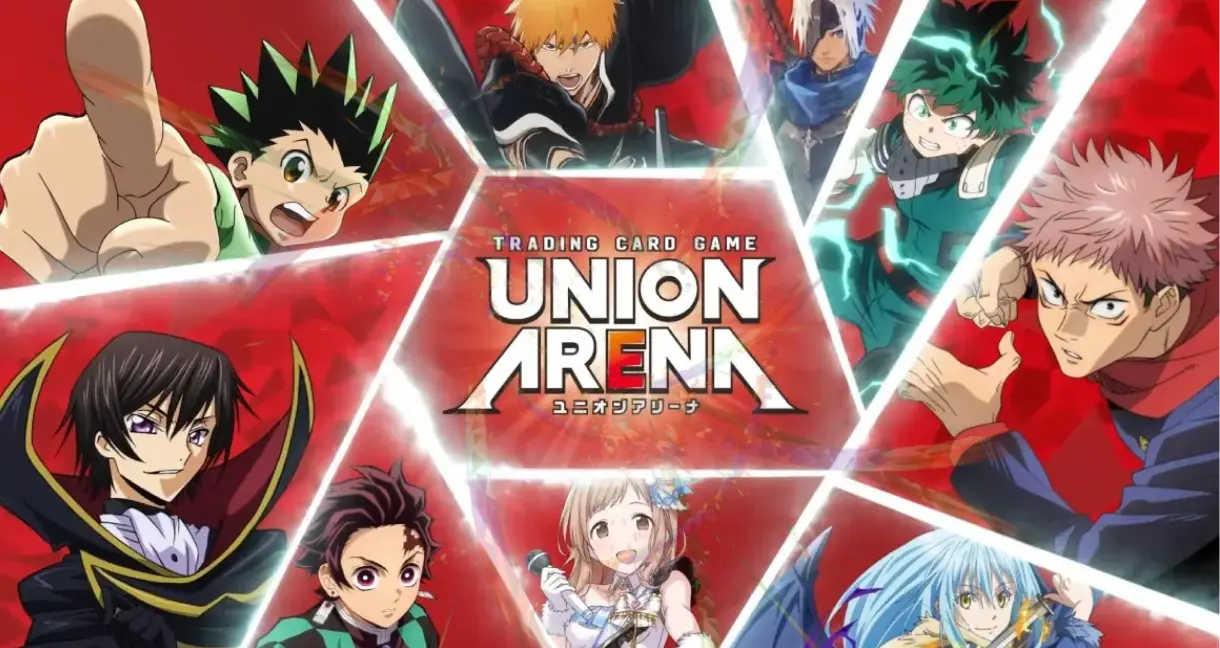
Union Arena is Bandai's common rules card game: one rulebook, and behind it a long line of anime, manga and game series that all play each other. A deck comes from a single series, which quietly decides what collecting it looks like. You are not filling one checklist, you are filling one per series you care about, and they keep growing as new sets land. HoloHoard already has the whole catalogue built and shelved by series, so you mark the cards you own instead of typing them in.
6,927 cards across 82 sets, catalogued and ready to track.
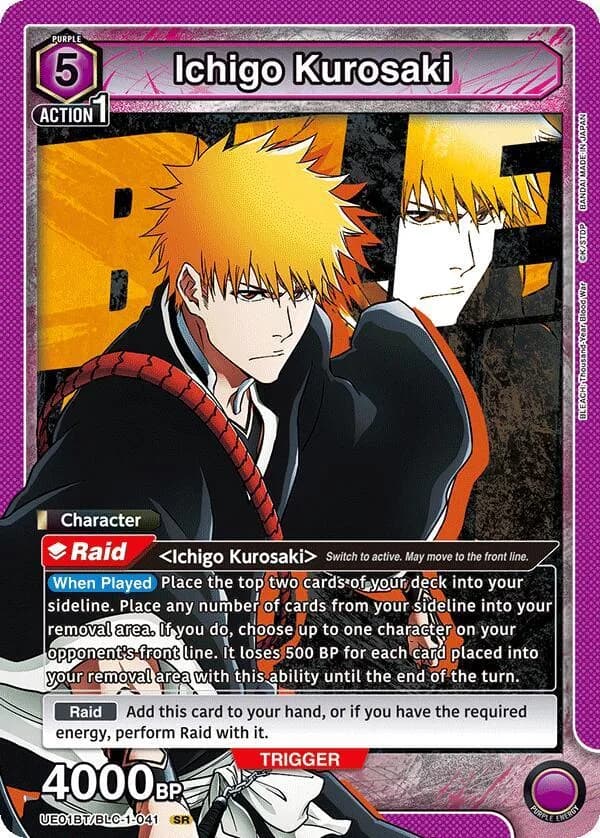
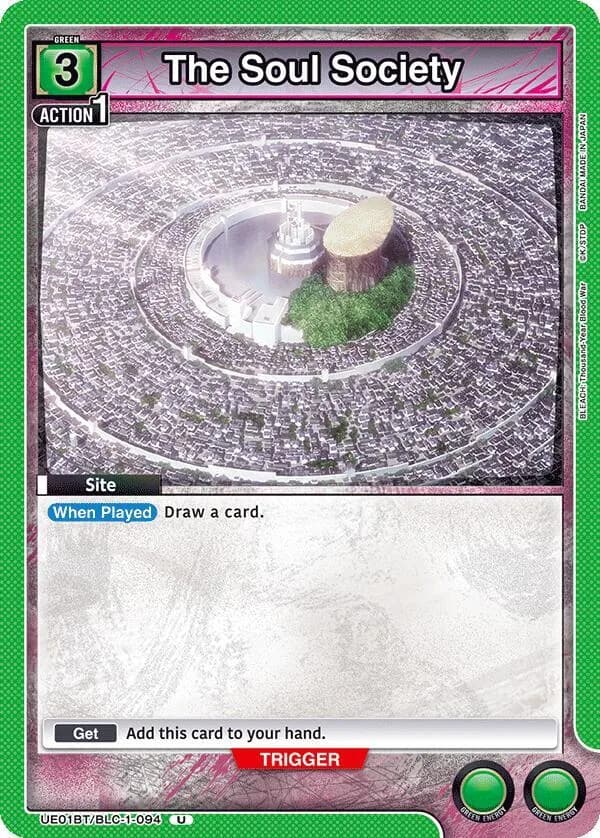
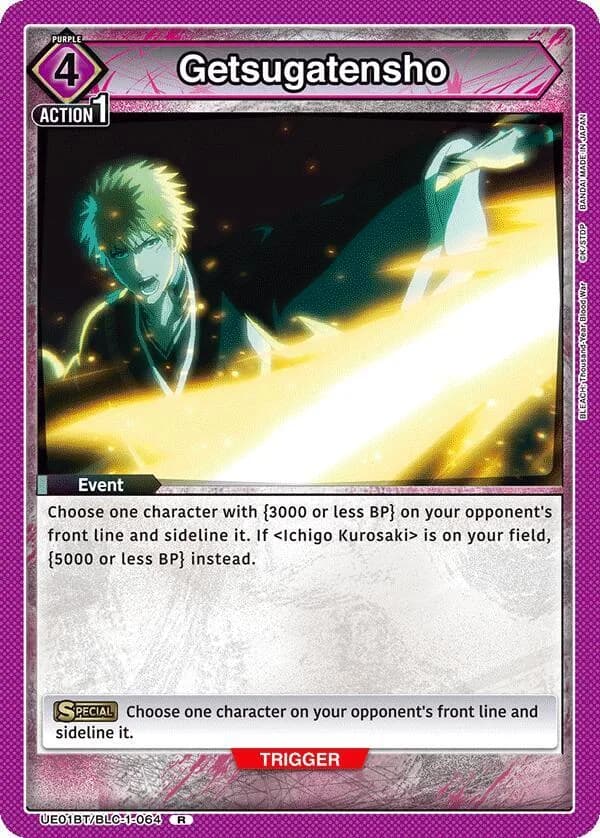
Characters do the fighting, Sites sit on your energy line and support them, and Events fire once and are spent. Here are three worth knowing.
This is the fact that shapes everything else. Every Union Arena card carries a three letter series code in its number, just after the slash, and a deck has to be built from cards that all share it. BLEACH plays BLEACH, Jujutsu Kaisen plays Jujutsu Kaisen, and the two decks meet on the same table under the same rules. For a collector that means your run is per series rather than per set: a series gathers its booster, its starter deck, the release event cards that came with its launch and any later volume, and a finished BLEACH collection spans all of them. HoloHoard shelves the catalogue exactly that way, so you can see a whole series in one place instead of hopping between set codes.
Bandai's own product pages describe a set the simple way: Common, Uncommon, Rare, Super Rare and the Action Point cards, plus alt art cards included in the product. What you actually pull is a little richer than that, because the alternate art versions are recorded as their own rarities with a star grade on top. A card marked with one star is a parallel of a base card, and the higher grades sit above it. Union Rare sits at the top of a set's run, and a handful of cards across the line are rarer still. The practical version: a plain rarity is the base card, a star means you are holding the parallel, and both count as separate cards on your checklist.
| What it says | What it is |
|---|---|
| Common, Uncommon, Rare, Super Rare | The base run of a set, exactly as Bandai lists it |
| Action Point | The AP cards every deck needs, collected like any other card |
| Anything with a star | A parallel of a base card, with its own art and its own place on your checklist |
| Union Rare | The top of a set's own run |
| Special, Precious Secret Rare | The rarest markings in the line, a handful of cards |
Most Character cards carry affinities: Thirteen Court Guard Squads, Hashira, Black Bulls, the 104th Cadet Corps. They read like flavour and they are not, because Raid cards can demand a character with a given affinity rather than a specific name. That makes them a real axis to collect along, whether you are chasing a squad, a faction or a single team from your favourite arc. Some cards carry more than one. Filtering by affinity is the quickest way to see what a set gave your corner of a series.
Union Arena spreads its cards across more than one kind of product, and the ones outside boosters are the easiest to miss. Starter decks carry cards of their own. Release event sets land alongside a booster's launch and are small on purpose. Super pre release products came out ahead of the first two sets. Promo cards arrive from events and campaigns, and the winner cards from those events sit in the same place. HoloHoard lists each of these as its own set under the series it belongs to, so they show up in your completion rather than quietly sitting outside it.
Every set has a checklist page listing each card against every printing it comes in, built from the live catalogue rather than typed up by hand. Tick cards off as you go, print the lot to paper or PDF for a binder, or export it as an XLS or CSV and work with it however you like. It is the fastest way to see what a complete set looks like next to what is actually in your box.
Because the catalogue is already built, adding a card is a tap rather than a form. Collections hold what you own, with a count per card so duplicates are not a problem, and lists cover the rest: what you still need from a series, what you will trade at the next event, and what you are selling. As the collection grows it is the dashboard that changes, showing set completion per series, what you own against what exists, and where the gaps really are.
HoloHoard puts a daily value estimate on cards with enough market activity behind them, and totals your collection from those. Cards that are too quiet show as not valued yet rather than guessing. You can follow how a card has moved over time and keep an eye on your collection value as new sets land. See Union Arena values.
Every Union Arena set is catalogued on HoloHoard, organised by the series shelf each one belongs to, so the sets for a single anime or game sit together rather than scattered through a release-date list. You can browse any set's full card list for free without an account.
Yes. HoloHoard tracks Union Arena collections for free, with the full catalogue already built in, so you mark the cards you own rather than entering them by hand. A free account covers collection tracking, wishlists and set completion; a Premium tier adds deeper value analytics and higher limits.
Because that is the deck building rule: every card in a deck has to share the three letter series code printed in its card number, just after the slash. The rules are shared across every series, so any deck can play any other, but the cards themselves do not mix. For collecting it means each series you follow is its own run, which is why HoloHoard shelves the catalogue by series and reports completion the same way.
Yes. A star graded parallel is recorded as its own card with its own rarity rather than as a finish on the base card, so owning the plain version does not quietly mark the parallel as collected. Foil and non foil printings of the same card are tracked as printings of that card, which is a different thing again, and both are visible on the checklist.
HoloHoard shows a daily value estimate for cards with enough market activity behind them and totals your collection from those. Cards without enough data show as not valued yet. Values are estimates blended from real market activity, not appraisals.
Yes. The HoloHoard app is a free download on Google Play for Android. It suits a collection that runs across several Union Arena series at once: open the one you are buying for, mark what you pulled at a shop or a locals event, and every other series stays exactly where you left it. Same account as the web, so the gaps update everywhere. Store links are on the HoloHoard app page.
Start your collection, free
No account needed to browse. Create one to track and value your cards.