Guide
Cardsmiths Currency main series releases are arranged in a base set and various mini-sets (aka inserts). Every card of the base set is printed in different unnumbered finishes (aka parallels). These are: Rainbow Holofoil, Iced Foil and the box-exclusive Crystal Sparkle and Matrix Foil. Sitting above them is the Gemstone Refractor family: serialised tiers with the print run stamped on the card, climbing from Tanzanite at 299 copies to Onyx and Diamond at a single copy. Series 5 also added four Topaz refractors, Mystic, Imperial, Pink and Twilight, which are gems in every way that matters except that Cardsmiths has never published how many were made. Then there are the cards that sit outside both systems: the Cold Foils, the Meta-Rares, the double-sided holofoils (DSHF) and the redemption cards, and several of them are worth more than gems.
702 cards across 16 sets, catalogued and ready to track.

Onyx and Diamond lead, which is no surprise: both are single-copy tiers, and a serialised line is built to put its rarest printings on top. Below them the order broadly follows the print run, with a few tiers sitting away from where their run alone would place them. The rest of this page works through the three groups behind that list: the unnumbered finishes, the serialised gems, and the inserts and short prints that belong to neither.
| # | Card | Rarity | Est. Value |
|---|---|---|---|
| 1 | Genesis Block · 61 | Not listed | $2,900.00 |
| 2 | Bitcoin · 1 | Not listed | $2,000.00 |
| 3 | May 22nd · 19 | Not listed | $1,999.00 |
| 4 | Inverted Jenny · 11 | Not listed | $1,999.00 |
| 5 | Crypto Winter · 27 | Not listed | $1,999.00 |
| 6 | Roaring Kitty · 43-SP | Not listed | $1,500.00 |
| 7 | Redemption · - | Not listed | $1,500.00 |
| 8 | Roaring Kitty · 43-SP | Not listed | $1,250.00 |
| 9 | Ethereum · MR7 | Not listed | $1,000.00 |
| 10 | Banksy Di-Faced Tenner · DSHF | Not listed | $1,000.00 |
| 11 | Roaring Kitty · 43-SP | Not listed | $1,000.00 |
| 12 | Keith Gill (6000) · CF6000 | Not listed | $900.00 |
| 13 | Chupacabra (Green) · CPT-2 | Not listed | $750.00 |
| 14 | Elon Musk · 39 | Not listed | $700.00 |
| 15 | Bitcoin Conference 2026 Promo Refractor · BC-1 | Not listed | $700.00 |
This ranking is generated from current values and updates daily: cards enter and leave it as the market moves, so it is never a fixed list. Last refreshed October 7, 2026. Estimates are blended from real market activity, not appraisals.
See every Cardsmiths Currency valueA Series 5 card exists in several finishes before a serial number is involved at all, and this is where most of a collection ends up. The two common foils sit close together, both a few times the price of a plain base card. The interesting part is what sits above them: the two box exclusives are the dearest unnumbered finishes in the set, and neither is a matter of luck. Crystal Sparkle only comes out of Collector Boxes and Matrix Foil only out of Mega Boxes, so which one you can pull at all is decided before you open anything, by the product you bought.
| Finish | Typical value | Where it comes from |
|---|---|---|
| Crystal Sparkle | $5.00 | Collector Box only |
| Matrix Foil | $4.50 | Mega Box only |
| Rainbow Holofoil | $3.50 | Either box |
| Iced Foil | $3.50 | Either box |
| Base | $1.00 | Either box |
The four Topaz are a different proposition entirely. Mystic, Imperial, Pink and Twilight arrived together in Series 5, the first time several Topaz colourways have appeared in one Currency release, and they are Gemstone Refractors in everything but the serial number. Cardsmiths has never published how many were made, so treat any print run you see quoted for a Topaz as somebody’s guess. The market has formed its own view regardless, and the useful way to read it is against the gems that DO carry a number: three of the four trade level with the gems numbered in the forties, and Imperial Topaz sits well above all of them. That is the closest thing to a scarcity estimate anyone can honestly give you. Only a dozen or so cards per colourway have been priced so far, so read the figures as a band rather than a settled number. Watch the name too: Blue Topaz is a separate card, serialised to 199, and it belongs to the ladder in the next section.
| Tier | Print run | Typical value |
|---|---|---|
 Aquamarine Aquamarine | 15 copies | $275 |
 Imperial Topaz Imperial Topaz | Not disclosed | $127 |
 Amethyst Amethyst | 49 copies | $80 |
 Citrine Citrine | 40 copies | $74 |
 Pink Topaz Pink Topaz | Not disclosed | $71 |
 Mystic Topaz Mystic Topaz | Not disclosed | $70 |
 Twilight Topaz Twilight Topaz | Not disclosed | $70 |
 Opal Opal | 45 copies | $70 |
 Jade Jade | 45 copies | $70 |
This is the serialised half of the line laid out by print run, with a median, a range and a coverage figure for each tier. It is the fastest way to price a card you have just pulled: find the gem, read the row. At the time of writing it runs from Onyx at a single copy near 2,900 dollars down through Ruby at 25 copies around 200, Amethyst at 49 near 80, Emerald at 99 around 50 and Tanzanite at 299 near 23. The shape is a clean curve, and that curve is the reason this line is easy to collect deliberately rather than hopefully.
| Tier | Print run | Typical value | Priced |
|---|---|---|---|
 Onyx Onyx | /1 | $2,900.00 | 1 of 140 |
 Sapphire Sapphire | /5 | $498.00 ($416.69 to $550.00) | 3 of 135 |
 Gold Gold | /10 | $379.00 ($285.90 to $770.00) | 9 of 140 |
| Aquamarine | /15 | $275.00 ($199.99 to $679.20) | 9 of 135 |
 Ruby Ruby | /25 | $189.99 ($86.80 to $386.67) | 15 of 140 |
| Amethyst | /49 | $59.00 ($29.00 to $175.60) | 19 of 135 |
 Emerald Emerald | /99 | $36.00 ($20.60 to $67.75) | 43 of 135 |
 Beryl Beryl | /149 | $25.00 ($16.60 to $49.20) | 49 of 135 |
 Tanzanite Tanzanite | /299 | $17.84 ($8.00 to $30.00) | 58 of 135 |
| Base | Unnumbered | $1.00 ($0.99 to $5.00) | 74 of 135 |
Median of the priced cards in each tier, with the typical range in brackets. Estimates blended from real market activity, not appraisals, and a tier with few priced cards is a thinner signal than one with many.
Open the Cardsmiths Currency market pageThe curve is clean for most of its length, but two tiers sit a little away from where their print run alone would put them. At the time of writing Sapphire at five copies sits around 524 dollars while Sol at three copies sits near 500, and Gold at ten sits around 435 while the Snowflake Refractor at three sits near 375. The likely reason is how those two tiers reach collectors. Snowflake arrives through the holiday sets and Sol through the summer sets, and both are applied afterwards to main series cards, so you cannot pull a Series 5 Snowflake from a Series 5 pack. Sol has also turned up as an insert in Cardsmiths' own summer convention packs, which is a far more direct route to a three-copy card than the main product offers. Worth treating as a tendency rather than a rule, though: both tiers are thin in the data, and a single sale moves them.
The clearest version of the same effect is the holiday and seasonal ladder, which trades well below the gem ladder at matching print runs. At the time of writing Star at twelve copies sits near 55 dollars while Aquamarine at fifteen sits around 275, five times more for a slightly larger run. Snowman at twenty is close to 47, Candy Cane at thirty near 50, Wreath at forty around 30 and Gingerbread Man at fifty-five near 15. If you are buying, that is the value corner of the line. If you are selling, do not price a Snowman against a gem of the same run and expect it to move. Browse every Cardsmiths Currency set.
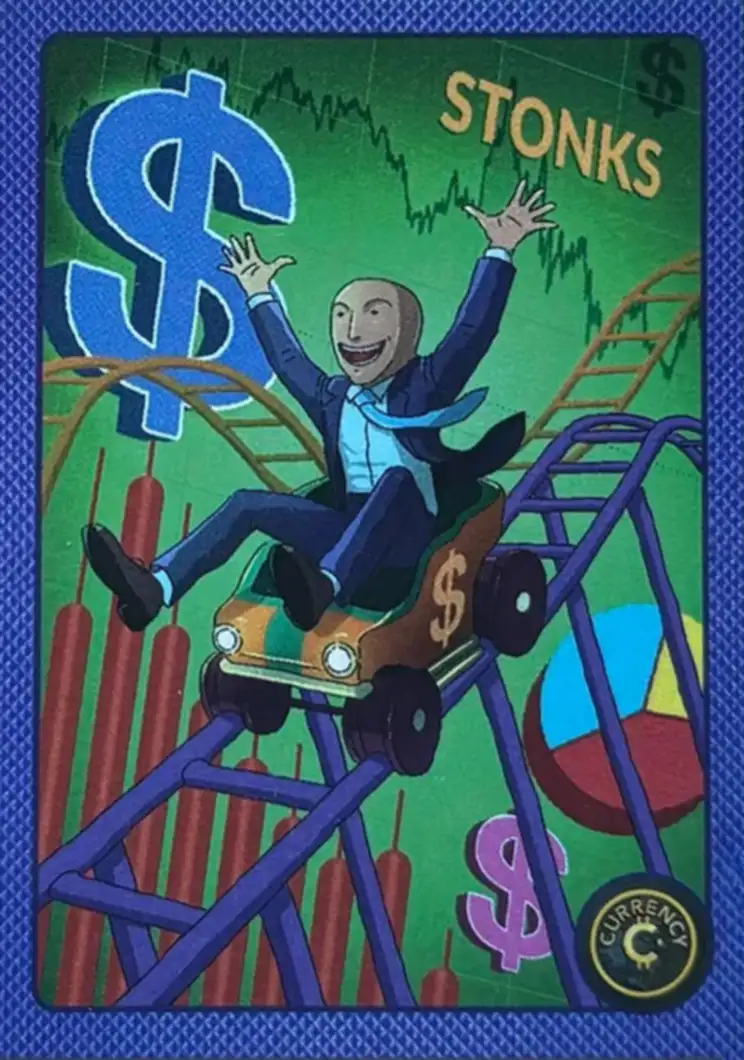
Every series holds a handful of short prints, numbered with an SP after the base number, and they are part of the base set rather than a separate subset: Series 1 had two, Series 3 and 4 ten each, and Series 5 fifteen. They are easy to miss on a checklist because an SP is an alternate take on a card number that already exists, and the pair almost always tells a joke. Card 11 is Stocks and 11-SP is Stonks. Card 39 is Asset and 39-SP is Liability. Card 23 is When Lambo? and 23-SP is Lambo Now. Card 113 is Public Address and 113-SP is Private Key. Card 43 is Keith Gill and 43-SP is Roaring Kitty, the same person under the name the internet knows. Ross Ulbricht on card 89 goes further and carries two, a No-Mask SP and the line's first ever SP2 with the mask on. Short prints do carry a premium, and it lands in a specific place. They run the same serialised ladder as everything else, and print runs in this line are set by tier rather than by card, so an SP Ruby is numbered to 25 exactly like any other Ruby. The premium therefore sits on the unnumbered copies: at the time of writing an ordinary Series 5 base card sits near 1 dollar while a short-print base card sits close to 3, and the Rainbow Holofoil and Iced Foil short prints point the same way. Read that as a direction rather than a multiplier, because only a handful of short prints have been priced so far, and the serialised tiers cannot be compared at all yet since almost none of their short-print copies have traded.
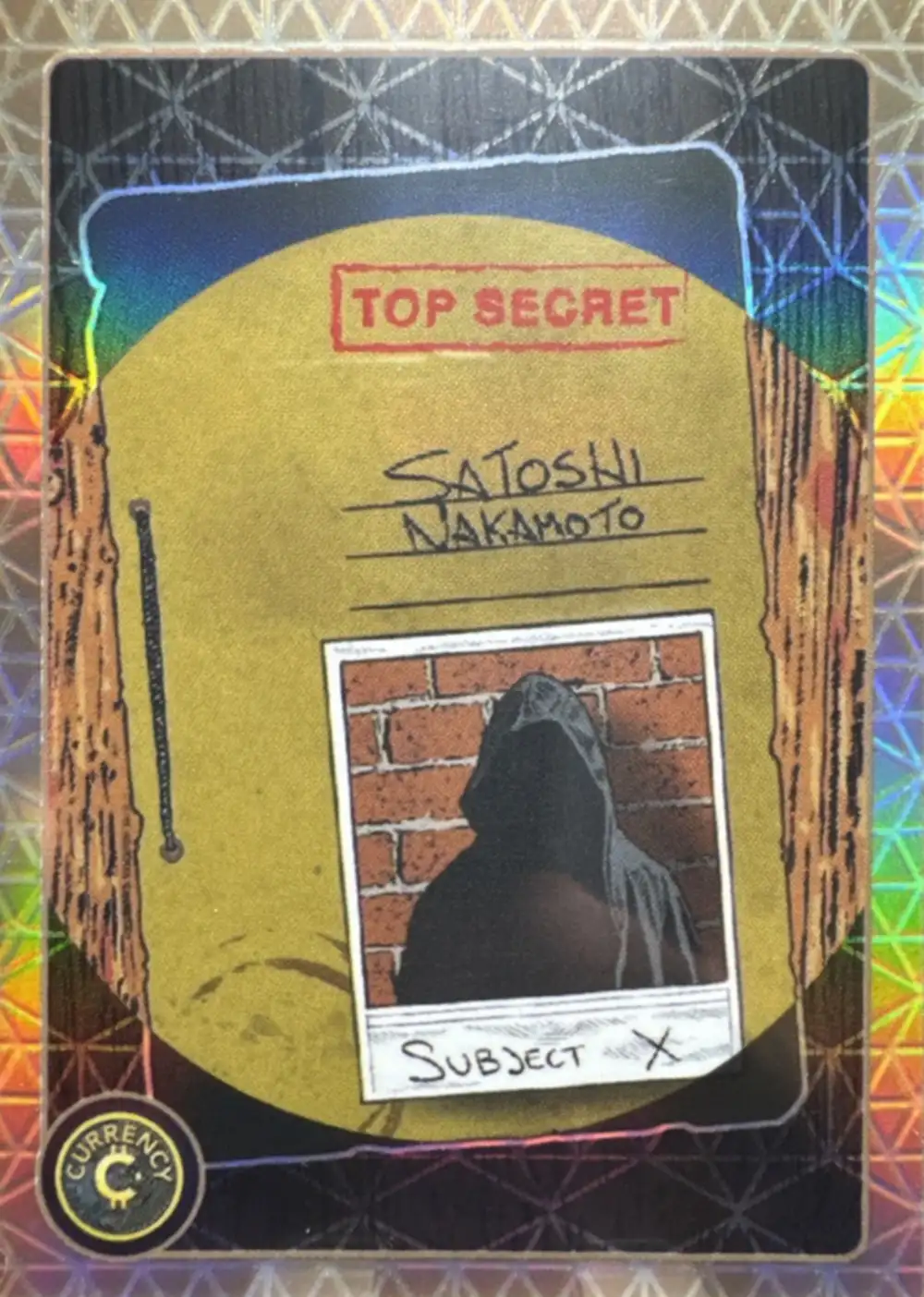
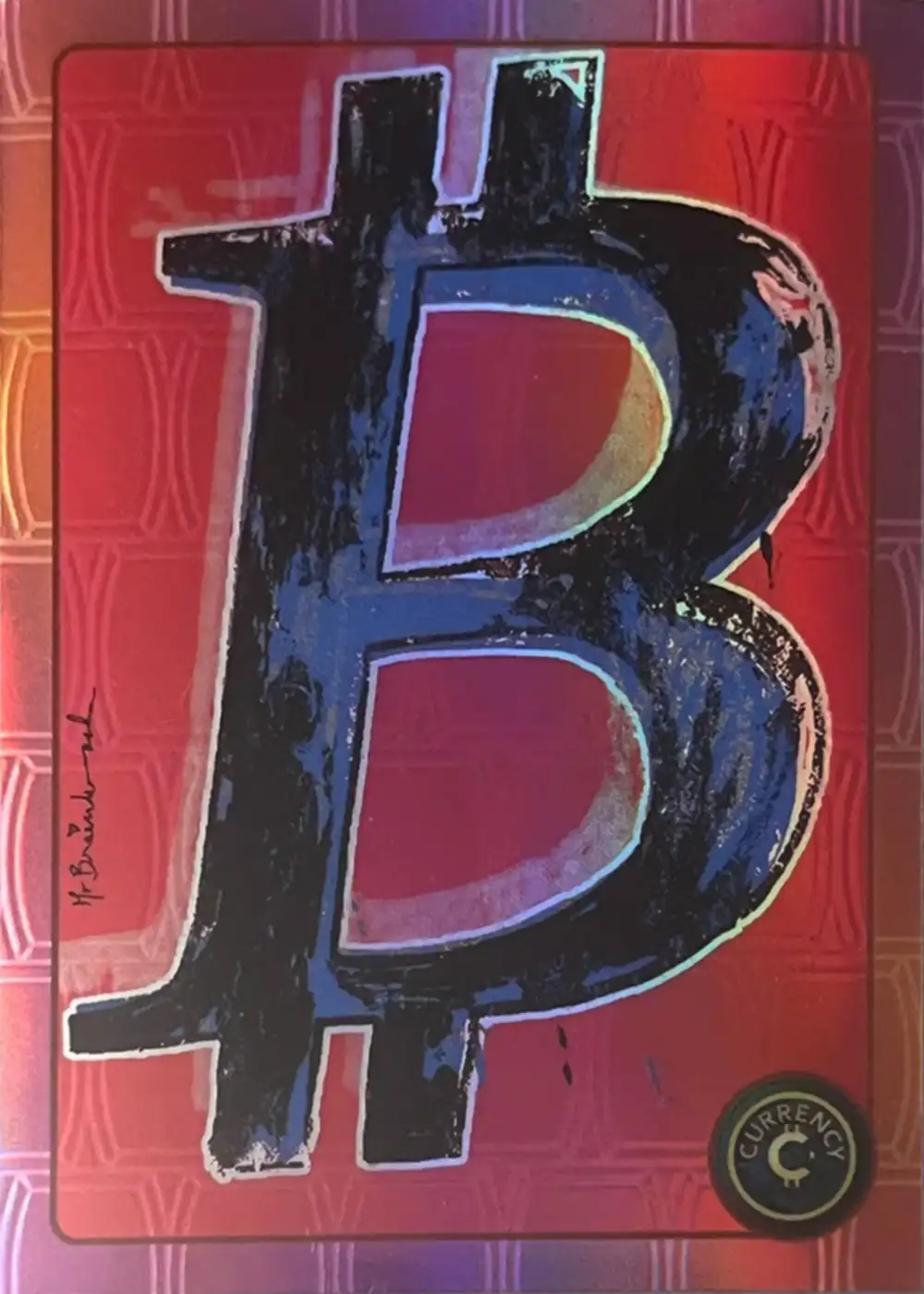
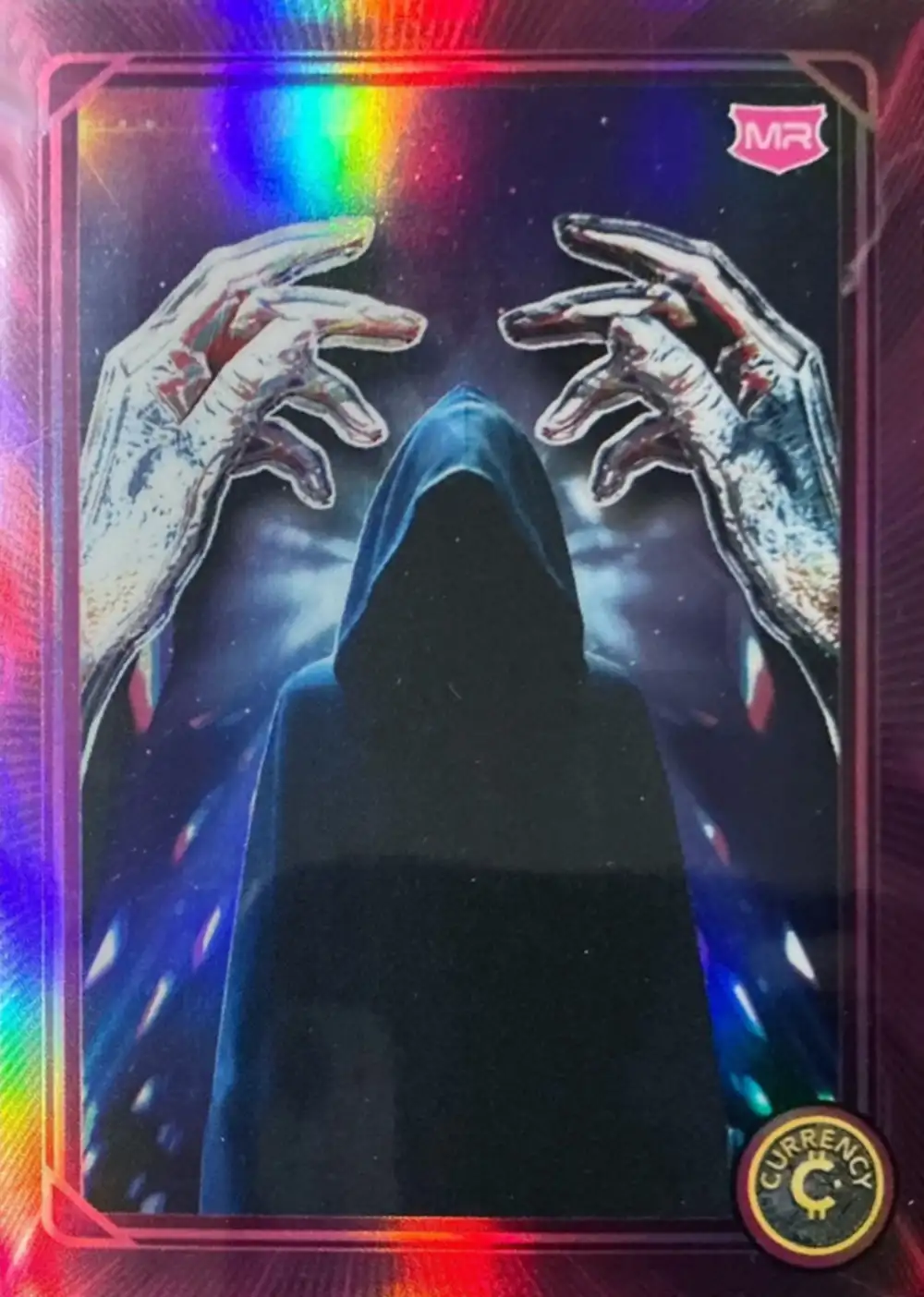
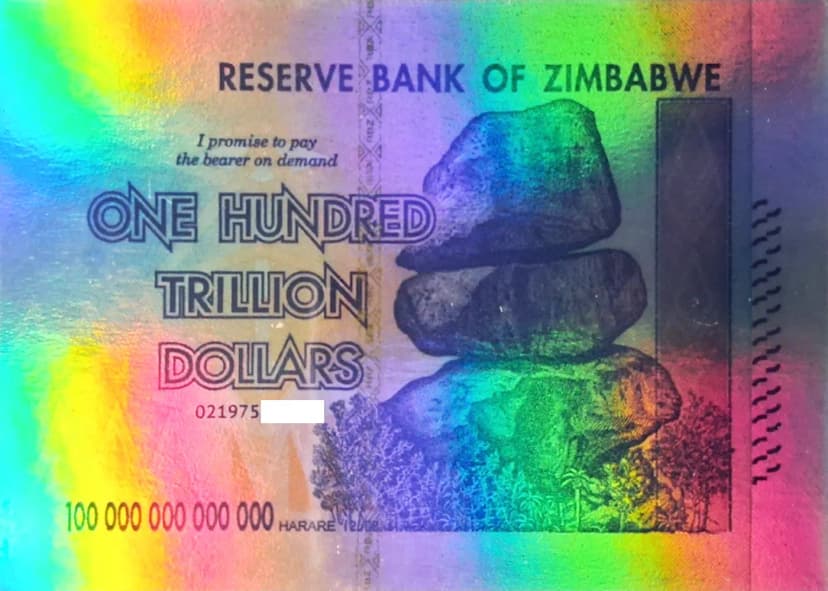
Three insert families sit outside the serialised system, and they are some of the most wanted cards in the line. Each exists in exactly one printing rather than climbing eighteen tiers, which makes every family a small, finite set: a realistic completion goal for a collector who would never chase 135 cards across eighteen gem tiers, and a premium one, because none of them can be found by working down a ladder. Meta-Rare Refractors are the headline chase, seven of them in Series 5, and they return to the same subjects each year so the line reads as a set you build across releases: Bitcoin and Ethereum have appeared in every series so far, as has the zodiac animal of the year, which was the Snake for Series 5 after the Rabbit, Dragon and Tiger before it, and Satoshi Nakamoto comes back regularly. Cold Foils are the portrait cards, running from Cleopatra and Mansa Musa in Series 4 to Queen Elizabeth II, Andy Warhol and Keith Gill in Series 5, and plenty of collectors rate them the best-made cards in the line. Double-Sided Holo Foil banknotes are the quiet favourite, reproducing real currency front and back, including the Zimbabwe one hundred trillion dollar note and Banksy's Di-Faced Tenner. Series 5 holds eight Cold Foils and nine banknotes. The pull odds are what sets the price: a Meta-Rare runs about one in ninety-six Collector Box packs and one in a hundred and ninety-two Mega Box packs, against roughly one in ten for any gemstone refractor at all.
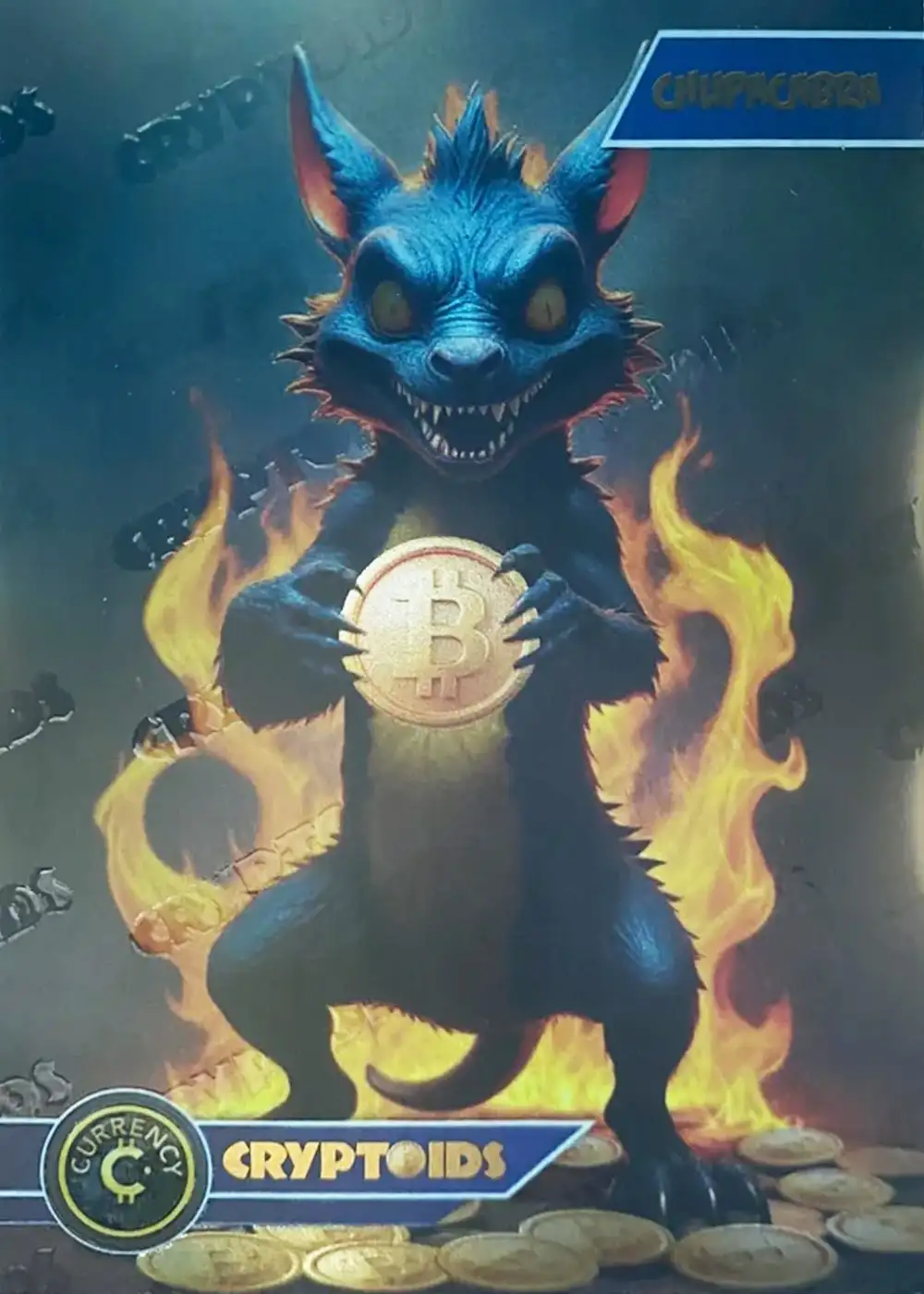
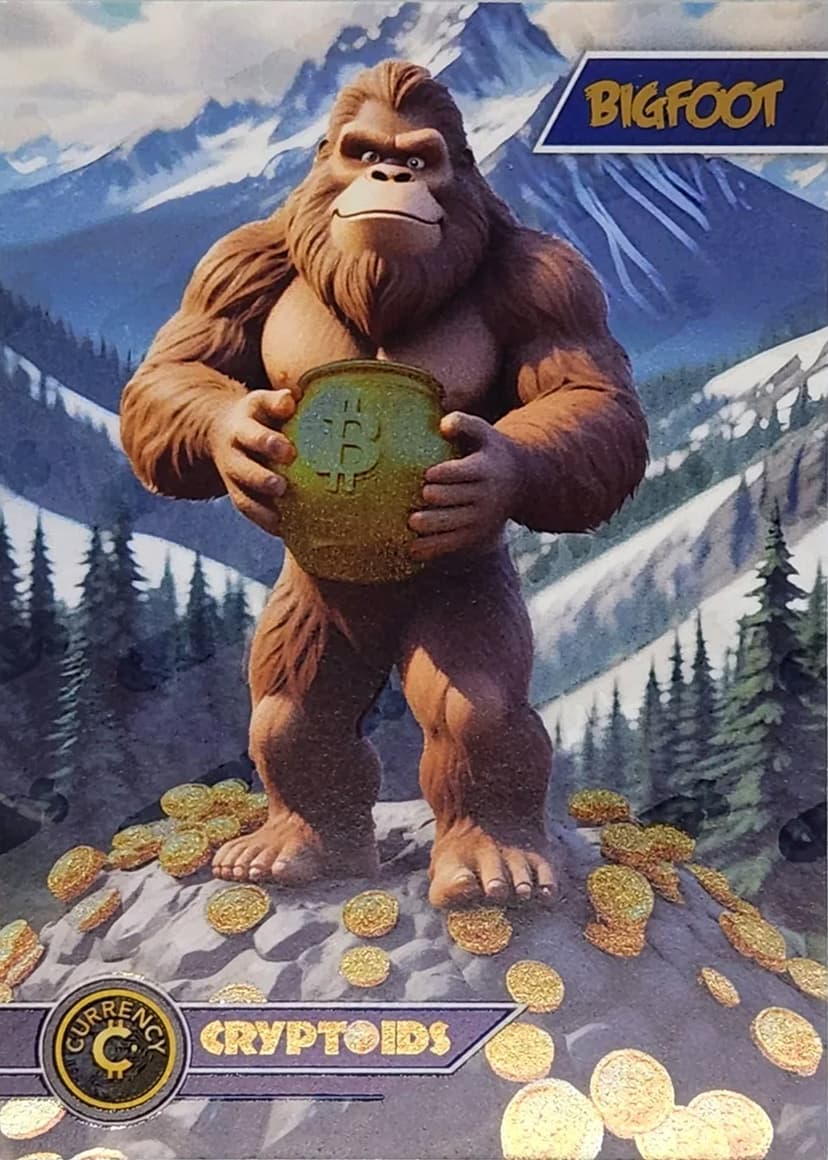
Two more chases refuse the ladder completely. Cryptoids are the easter egg of the line, cryptid artwork catalogued as its own set and shared with Cardsmiths SPACE, with Series 5 delivering the biggest wave yet at eight creatures including the Chupacabra and the Wendigo. They run a four-form ladder that has nothing to do with gems: Regular, Artist Proof, Prototype and Test Card, told apart by a golden etching that the Regular does not carry. Redemption cards are stranger still, because they are the one card here with a value that is not a collector's opinion. They are redeemable for real cryptocurrency, Bitcoin, Ethereum, Litecoin and Dogecoin, with full one Bitcoin and one Ethereum hits confirmed, and they appear at roughly the same rate as a Meta-Rare. They are tracked in two states, unredeemed and redeemed, and that matters: once a card has been cashed in it is a different object with a different price, so the state is part of the card's identity rather than a note about it.
The biggest numbers on this page are also the least settled, and it is worth knowing why before you price anything against them. Single-copy tiers barely ever trade, so the figure beside one is closer to a last known sale than to a market rate, and the next sale can land a long way from it. Treat the top of the ladder as a wide band, not a price. Two things widen it. On a card that exists once, the gap between what a seller will accept and what a buyer will pay is genuinely large, and the number ends up being settled between those two people rather than by a market. And the subject matters as much as the tier: a one-of-one of a card collectors actually chase, a Bitcoin, a Satoshi Nakamoto, a Keith Gill, clears far more than a one-of-one of a card nobody is hunting, on an identical print run. Further down the ladder the tiers change hands often enough for their medians to settle, and those are the rows to price against. Every row above prints its coverage beside its median for exactly this reason: a high number with thin coverage is a data point, and a middling number with deep coverage is a price. When a figure actually matters, because you are about to buy a card or list one for sale, the Cardsmiths Currency market pages are where to check it: they carry the price history behind each tier, so you can see whether a number has held for months or arrived with a single sale last week. Open Cardsmiths Currency price history.
A Currency collection is a pile of near-identical cards separated by a number stamped in the corner, and that is precisely the collection a spreadsheet handles worst. Two Rubies of the same card are not interchangeable, one of them might be the 1 of 25, and the value of what you hold changes daily whether or not you look. HoloHoard has the whole line catalogued down to the tier, short prints, inserts, Cryptoid forms and both redemption states included, so you record the exact printing and the serial you actually pulled, and your total is priced against the same daily values this page is built from. Set completion counts tiers rather than guessing, and lists cover what you are still chasing and what you would trade. See Cardsmiths Currency values.
An Onyx, which is the one-of-one tier, with Diamond just behind it as the other single-copy gem. Those two sit far above everything else in the line. Which specific card leads depends on which one last traded, because a one-of-one changes hands rarely, and the live ranking at the top of this page carries the current figures.
As a rule yes, and the ladder is a clean curve from Onyx at a single copy down to Tanzanite at 299. A couple of tiers sit slightly out of order, mainly Sol and the Snowflake Refractor at three copies each, and the likely reason is how they are distributed: both arrive through seasonal sets applied to main series cards rather than from the series' own packs, and Sol has also appeared in convention packs. Print run sets the ceiling, distribution decides how close a card gets to it.
Short prints. They live inside the base set rather than in a separate subset, numbered with SP after an existing card number, and they are usually an alternate take on that card: 11 Stocks and 11-SP Stonks, 39 Asset and 39-SP Liability, 43 Keith Gill and 43-SP Roaring Kitty. Series 5 has fifteen of them and introduced the first SP2. They run the same serialised ladder as every other card, so an SP Ruby is still numbered to 25, and the short-print premium shows up on the unnumbered copies instead: a short-print base card has been trading at a few times an ordinary one.
Five, and only one of them is serialised. Series 5 introduced four unnumbered Topaz refractors, Mystic, Imperial, Pink and Twilight, the first time several Topaz colourways have shipped together in a Currency release. They are Gemstone Refractors in every respect except the serial number, and they are priced like it, but Cardsmiths has never published a print run for any of the four, so nobody can put a figure on how scarce they are. Blue Topaz is the separate one: serialised to 199 copies, and part of the gem ladder alongside Tanzanite and Beryl.
They sit outside the gem ladder, so a print run will not tell you. Each exists in a single printing rather than across eighteen tiers, and they are considerably harder to pull than a gemstone refractor: a Meta-Rare appears at roughly one in ninety-six Collector Box packs against about one in ten for any gem. Meta-Rares are the headline chase, Cold Foils are the portrait cards, and the Double-Sided Holo Foils reproduce real banknotes front and back. The live values on this page are the place to check any individual card.
Because far fewer people collect them. The seasonal tiers such as Star, Snowman, Candy Cane, Wreath and Gingerbread Man appear in holiday sets rather than in the main gem ladder, so a Star at twelve copies can trade at a fraction of an Aquamarine at fifteen. It is the value corner of the line if you are buying, and a trap if you are pricing to sell.
Yes, and the card is tracked in both states for that reason. An unredeemed card still carries a claim on real cryptocurrency, Bitcoin, Ethereum, Litecoin or Dogecoin, while a redeemed one has had that claim taken off it and is collected as an artefact instead. They are separate entries rather than one card with a note, so you can record which one you actually hold.
Because it almost never trades. When only a handful of cards in a tier have ever been priced you are looking at a last-sale figure rather than a market rate, and the next sale can move it sharply. On a card that exists once the spread between buyer and seller is wide, the subject of the card matters as much as the print run, and the final number is agreed between two people rather than set by a market. Every tier on this page shows how many of its cards are priced beside its median, so you can tell a well-supported figure from a thin one.
HoloHoard catalogues Cardsmiths Currency down to the individual gem tier, so you record the tier and the serial number of the copy you actually own rather than a generic entry for the card. Your collection total is priced daily against the same values this page uses, set completion counts the tiers you hold, and want and trade lists cover the rest. A free account covers all of it.
Start your collection, free
No account needed to browse. Create one to track and value your cards.