Guide
The hololive OFFICIAL CARD GAME, holoca to the people who play it, is a two player game where you are cast as a fan. You pick one Oshi holomem, fill a stage with other holomem, and send them Cheers so they can perform. Collecting it works the same way round: the line is organised by talent as much as by set, and a complete collection tends to mean every card of the people you follow rather than every number in a booster. HoloHoard already has the whole catalogue built, so you mark what you own instead of typing it in.
1,968 cards across 26 sets, catalogued and ready to track.

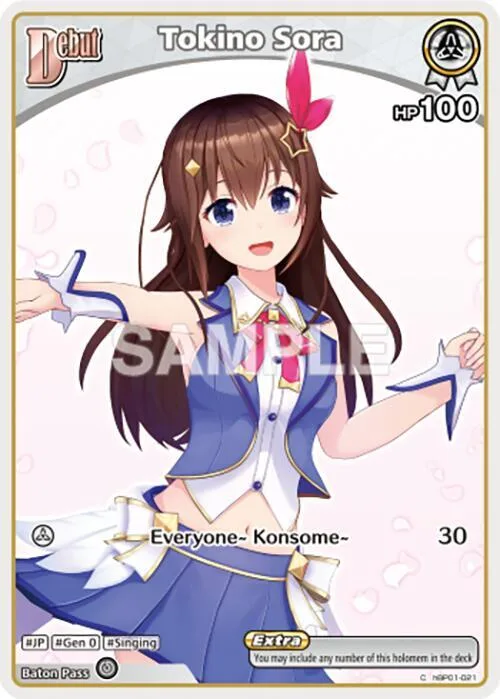
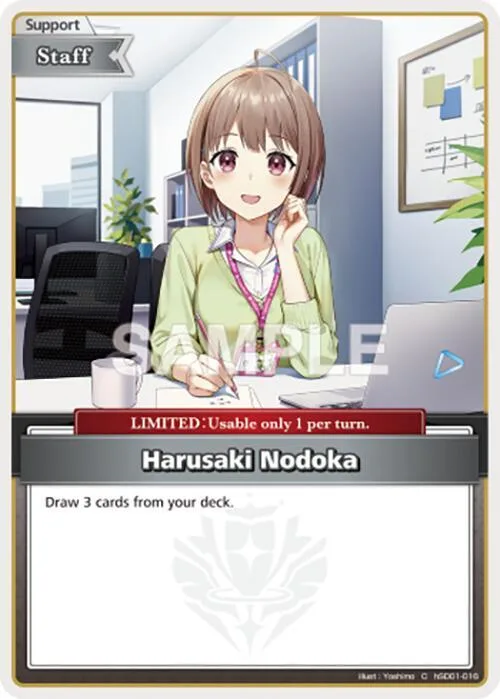
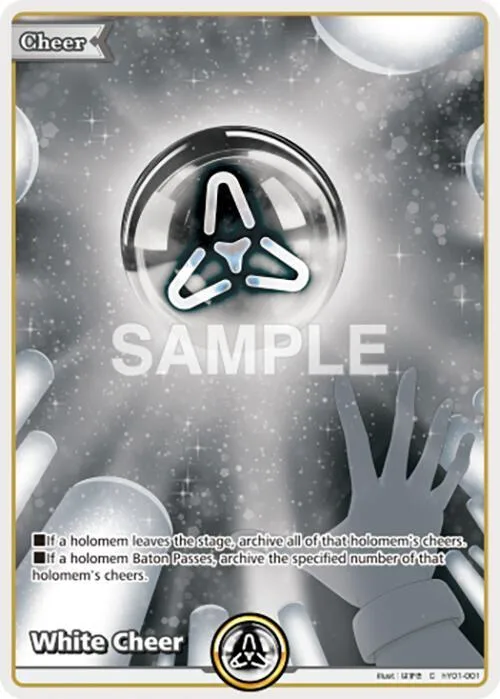
Five card types share the two decks. Your Oshi holomem sits outside the deck for the whole game and carries the skills you spend holo Power on. holomem are the cards you actually stack: each one carries a Bloom Level, and you grow a holomem by playing a same named card on top of it, Debut into 1st into 2nd, carrying everything attached along with it. buzz holomem are their own type. Support cards are sorted into Events, Mascots, Fans, Items, Tools and Staff. Cheer cards are the resource, and they are also your life total, which is the detail most worth knowing: life is made of cheer cards, so every time one of your holomem is downed you hand the card back to the stage as a Cheer.
| Card type | What is printed on it |
|---|---|
| Oshi holomem | Colour, LIFE, an Oshi skill and a once per game SP Oshi skill |
| holomem | Colour, Bloom Level, HP, Arts, Baton Pass and Tags |
| buzz holomem | The same, as its own card type |
| Support | Its sub type: Event, Mascot, Fan, Item, Tool or Staff |
| Cheer | Its colour. These are also your life cards |
This is the thing to know before you start ticking numbers off. The publisher splits every set into a standard run and a parallel run, and a parallel is not a new number: it is the same card number again, with a different rarity and a different treatment. So hBP01-010 is an Uncommon and hBP01-010 is also a Special, and both of them exist. The consequence is that a list of card numbers is not a list of cards, and finishing the numbers in a set is not the same as finishing the set. The publisher's own card list carries a Parallels only and No parallels filter for that exact reason. HoloHoard catalogues each one as its own card, so holding both shows as both rather than as one box ticked twice.
Most card games print one back. holoca prints two, because it is played with two separate decks and they are never shuffled together. Your fifty card main deck of holomem and Support cards carries one back; the twenty card cheer deck carries its own. That is not decoration, it is how the game stays honest: a cheer card face down in your life row has to be unmistakably a cheer card, because those life cards come back into play as cheers the moment one of your holomem is downed. Two backs mean you can never accidentally draw a cheer into your main deck, and you can see at a glance which pile is which across the table. The three cards below are fronts from either side of that divide: an Oshi holomem and a holomem from the main deck, and a Cheer card from the cheer deck. HoloHoard stores the right back against every card, so flipping a card over in the app shows the back it actually has.
Read as one list the ladder looks odd, because Super Rare and Ultra Rare sit in the parallel half rather than above Double Rare. Split it in two and it is straightforward. The standard run is what fills the set: Common, Uncommon, Rare, Double Rare, and the Oshi holomem Super Rare that heads it. Everything else is a parallel of a card already in that run, including Special, Super Rare, Ultra Rare, Secret Rare, the holomem Rare that arrived with Enchant Regalia, and Special Cheer, which is the parallel treatment of the cheer cards themselves. A master set is the standard run plus its parallels, which is why a full checklist runs a good deal longer than the headline card count.
| Code | Rarity | Half of the set |
|---|---|---|
| OSR | Oshi holomem Super Rare | Standard run |
| RR | Double Rare | Standard run |
| R | Rare | Standard run |
| U | Uncommon | Standard run |
| C | Common | Standard run |
| SEC | Secret Rare | Parallel |
| OUR | Oshi holomem Ultra Rare | Parallel |
| UR | Ultra Rare | Parallel |
| HR | holomem Rare | Parallel |
| SR | Super Rare | Parallel |
| S | Special | Parallel |
| SY | Special Cheer | Parallel of a cheer card |
| Rarity | Typical value |
|---|---|
| Secret Rare | $1,025.00 ($745.00 to $1,305.00) |
| Oshi holomem Ultra Rare | $280.00 ($128.70 to $373.10) |
| Ultra Rare | $46.29 ($16.25 to $97.60) |
| Oshi holomem Super Rare | $17.36 ($3.80 to $40.75) |
| Super Rare | $4.64 ($1.93 to $13.74) |
| Special | $1.88 ($0.73 to $7.10) |
| Double Rare | $0.65 ($0.39 to $2.20) |
| Uncommon | $0.21 ($0.13 to $0.29) |
| Rare | $0.19 ($0.15 to $0.25) |
| Common | $0.16 ($0.12 to $0.79) |
Median of the priced cards in each rarity, with the typical range in brackets, built from the 247 of 248 cards in this set that currently carry a value. Estimates are blended from real market activity, not appraisals, and a rarity with only a few priced cards is a thinner signal than one with many.
Open the hololive card game market pageEvery holomem card carries printed Tags naming the talent's branch and generation, and card effects read them, so a tag is rules text and fandom taxonomy at the same time. That is what makes collecting by talent a real goal here rather than a nice idea: the cards themselves say who belongs with whom. It also means a collection tends to run sideways across the line instead of set by set. A talent picks up new cards in boosters years apart, appears again in a Start Deck, and turns up once more as a promo, and following one person means following all of those at once. The other half of that is reprints: when a later booster reprints an earlier card it keeps its original number, so the same number can sit in more than one set. Each printing is catalogued in the set that actually contains it, so a set you are completing shows its own copy rather than pointing you at a different one.
The catalogue is already built, set by set, so adding a card is a tap rather than a form. Collections hold what you own, with a count per card so duplicates are not a problem. Lists cover everything else: what you still need to finish a booster, what you are chasing for one talent, what you will trade at the next shop tournament. As the collection grows the useful view changes: set completion per booster, what you own against what exists, and where the gaps actually sit once parallels are counted as their own cards.
HoloHoard shows a daily value estimate for cards with enough market activity behind them, and totals your collection from those. Cards without enough data behind them show as not valued yet rather than as zero, which matters on a line this size: the standard run of a recent booster moves far less than its parallels do. Values are estimates blended from real market activity, not appraisals. See hololive card game values.
Yes. HoloHoard tracks hololive OFFICIAL CARD GAME collections for free, with the full catalogue already built in, so you mark the cards you own rather than entering them by hand. A free account covers collection tracking, wishlists and set completion; a Premium tier adds deeper value analytics and higher limits.
Every set has its own page on HoloHoard with the full card list, and its own printable checklist alongside it. That covers the boosters from Blooming Radiance onward, the Start Decks, the Start Cheer Set and the promo cards, and sets that have been announced but not released yet are already listed so they fill in as the cards appear. Because parallels share a card number with the card they parallel, each one is listed separately rather than folded into a single numbered row, so the list matches what you can actually own.
Yes, and on this line that is the difference between a checklist that works and one that does not. A parallel carries the same card number as the card it is a parallel of, so counting numbers would merge the two and hide half of what you own. HoloHoard catalogues each one as its own card, with its own rarity and its own value, so a Common and the Special that shares its number are two separate things you can own, need or trade.
Yes. Cards carry the talent's branch and generation as printed Tags, and every card is catalogued with the set it came in, so the cards for one talent can be followed across boosters, Start Decks and promos rather than only set by set. That is how most collections on this line are actually built, because a talent picks up new cards in sets released years apart.
The standard run is what fills a set: Common, Uncommon, Rare, Double Rare and the Oshi holomem Super Rare. The parallels are alternative treatments of cards already in that run, and they include Special, Super Rare, Ultra Rare, Secret Rare, holomem Rare and Special Cheer. A set's own product announcement lists the two halves separately. A master set means both halves, which is why the full checklist is longer than the headline number of cards.
HoloHoard shows a daily value estimate for cards with enough market activity behind them and totals your collection from those. Cards without enough data show as not valued yet. Values are estimates blended from real market activity, not appraisals.
Yes. The HoloHoard app is a free download on Google Play for Android. It fits the way this line is actually collected, which is by the talent rather than by the set: pull up who you are chasing, see every card of theirs you still need across every set, and mark one off at a shop tournament. Same account as the web, so a hololive card you add at a shop is on the desktop when you get home. Store links are on the HoloHoard app page.
Start your collection, free
No account needed to browse. Create one to track and value your cards.