Guide
SPACE: Galactic Edition takes the Cardsmiths system, the gemstone ladder, the serial numbers, the foil treatments and the crypto redemptions, and points it at the universe. The subjects run from our closest neighbours out to the far edge of the observable universe, taking in astronomers, physicists, mathematicians, spacecraft, elements, Greek mythology and the search for life beyond Earth on the way. It is a set built to be collected in layers: a manageable base list, five finishes on every card, thirteen serialised gemstone tiers above that, and a run of subsets and hidden inserts that most collectors never see in person. This guide covers what is actually in the release, what the chases are, and where the value sits. Every card and every treatment is already catalogued on HoloHoard.
150 cards across 4 sets, catalogued and ready to track.
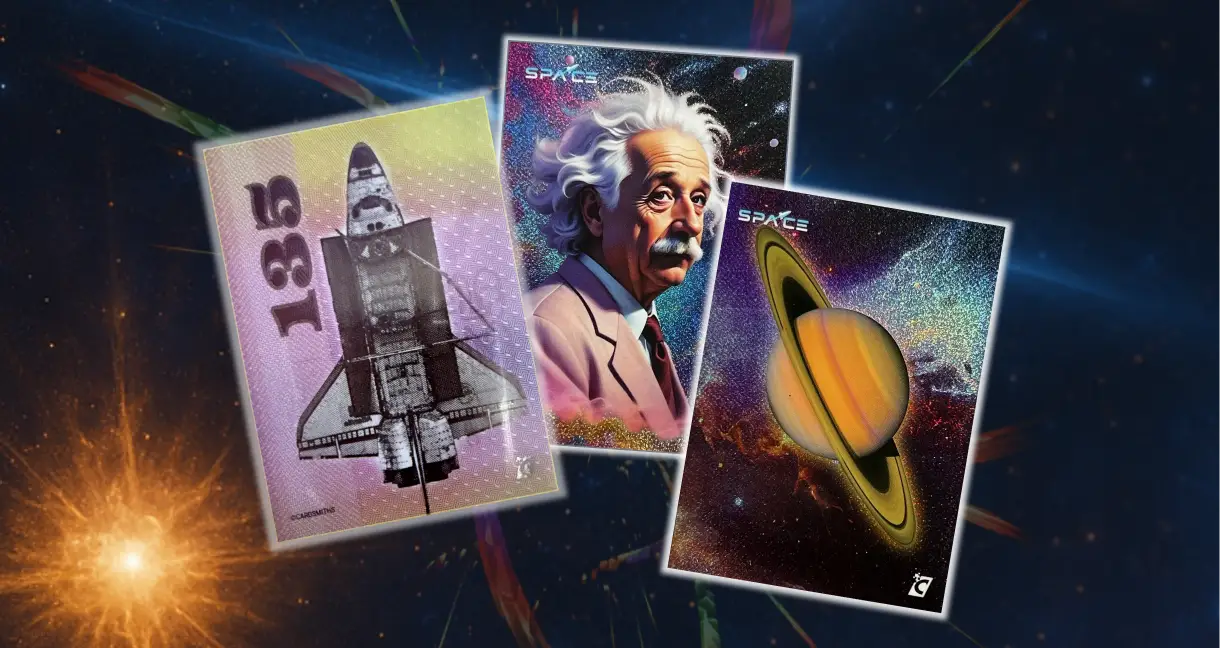
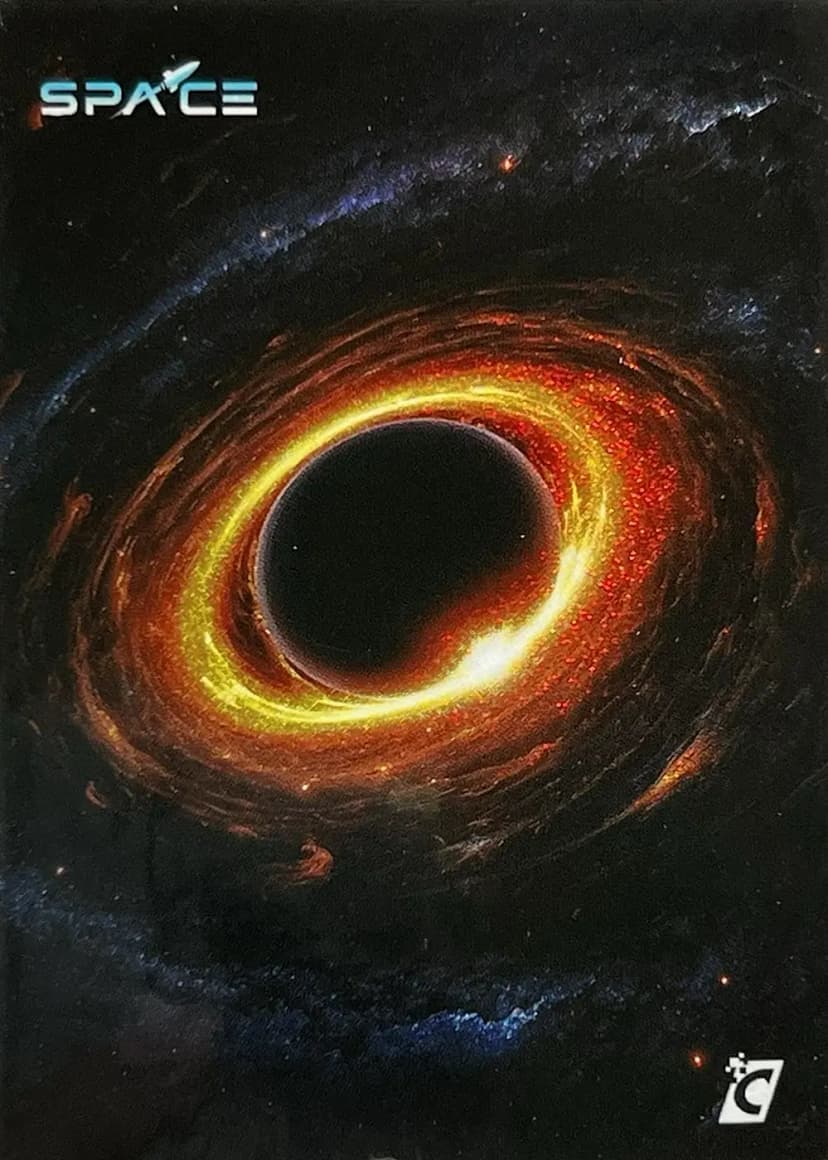
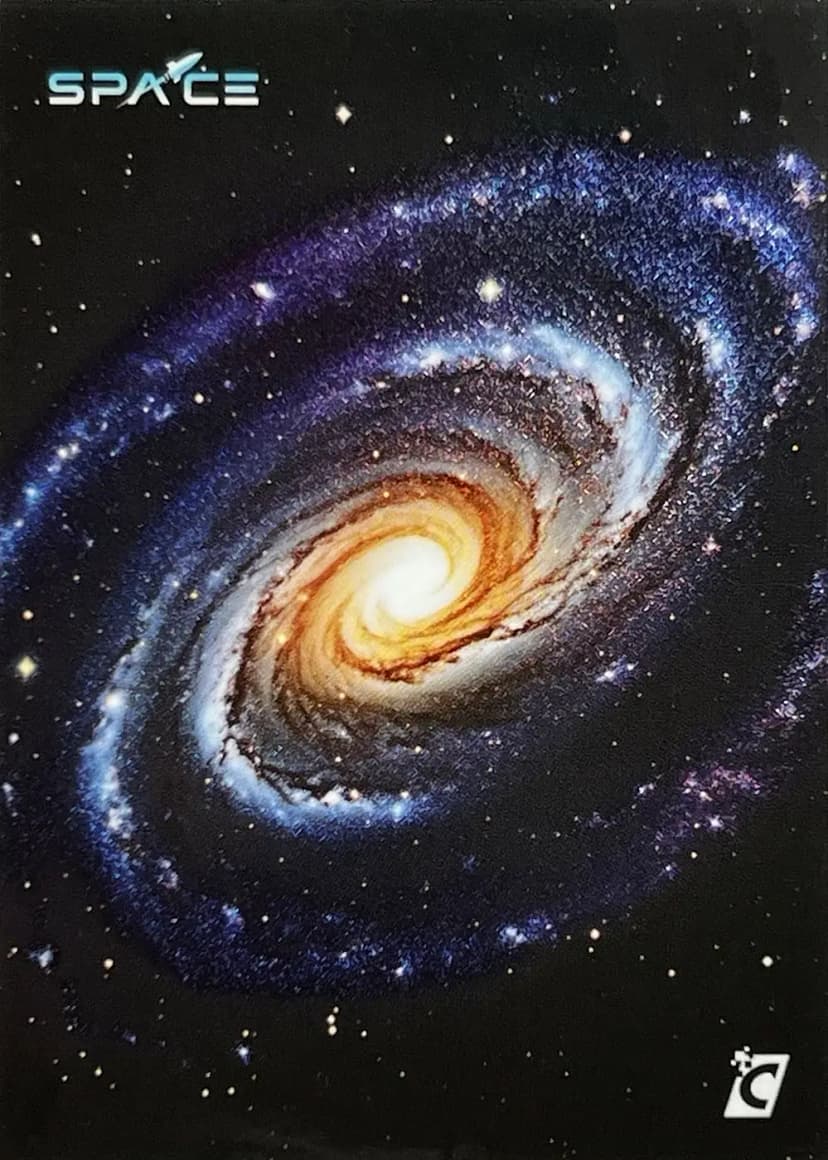
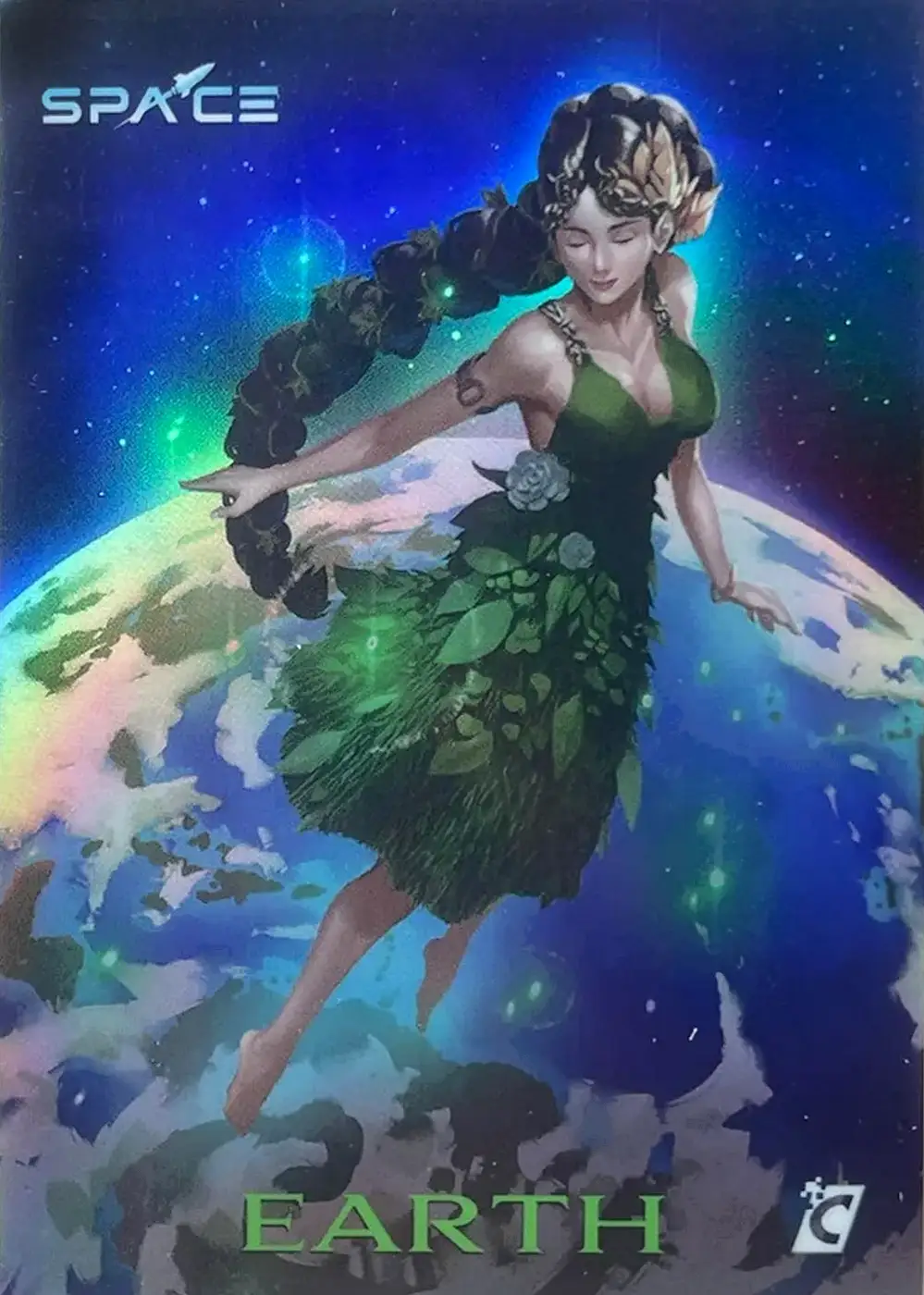
The main set runs to 80 Collector Cards, and the subject list is the reason people pick the release up: Earth, the Moon and the planets sit alongside Carl Sagan, Einstein, Kepler, Vera Rubin and Stephen Hawking, then keep going into black holes, quasars, dark matter, string theory and gamma-ray bursts. The art direction shifts with the subject, from photographic space imagery to portraiture to abstract physics, and the Crystal Sparkle treatment below drops the border entirely so the artwork runs to the edge of the card.
Plenty of collectors file SPACE under Cardsmiths Currency, and the instinct is a fair one: it runs the same gemstone ladder, the same foil treatments and the same crypto redemptions, Blue Topaz debuted here before crossing into Currency, and there is a Currency Series 5 preview insert sitting in the packs. HoloHoard catalogues it as its own line anyway, the same way Cardsmiths Killer Klowns, Dragon's Lair and Project Hail Mary each get their own home. Each is a separate licence with its own checklist and its own ladder, so a SPACE Ruby is a SPACE Ruby, a SPACE rainbow completes against the SPACE list, and your set completion means the thing you would expect it to mean. The crossovers are still there, and the preview insert below is the clearest one.
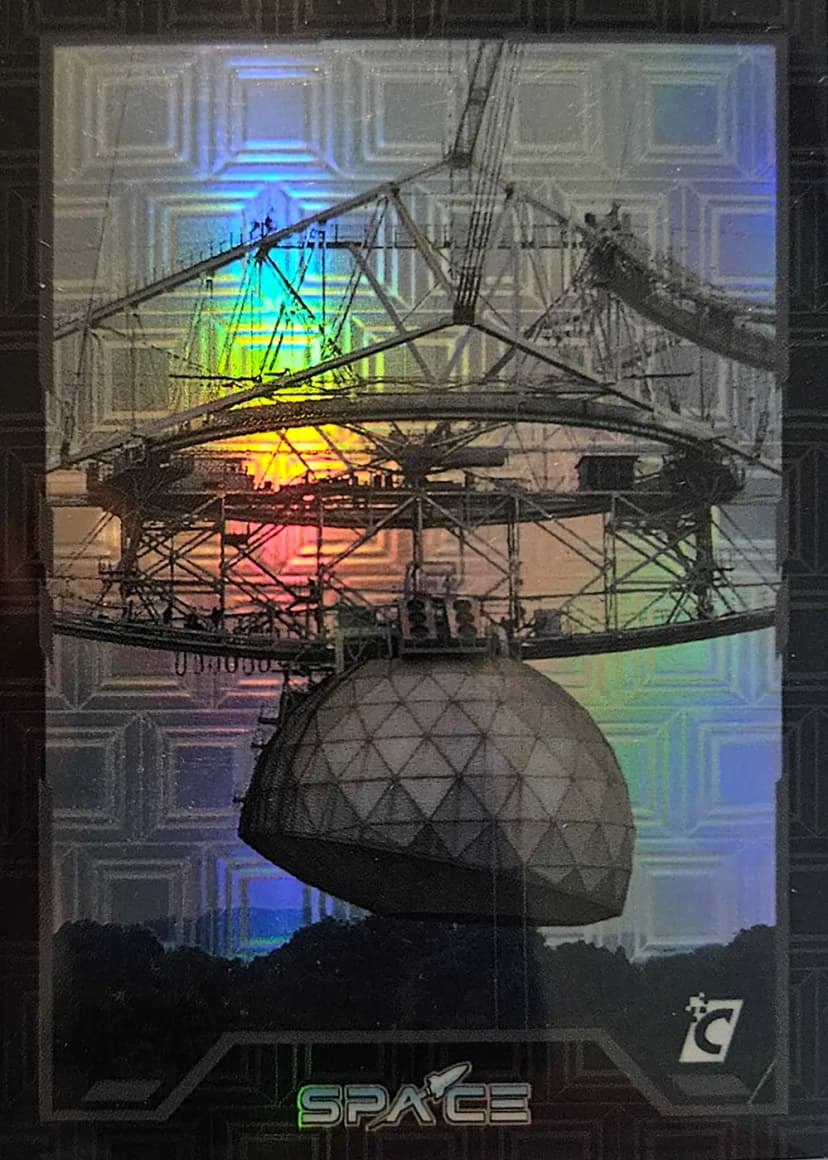
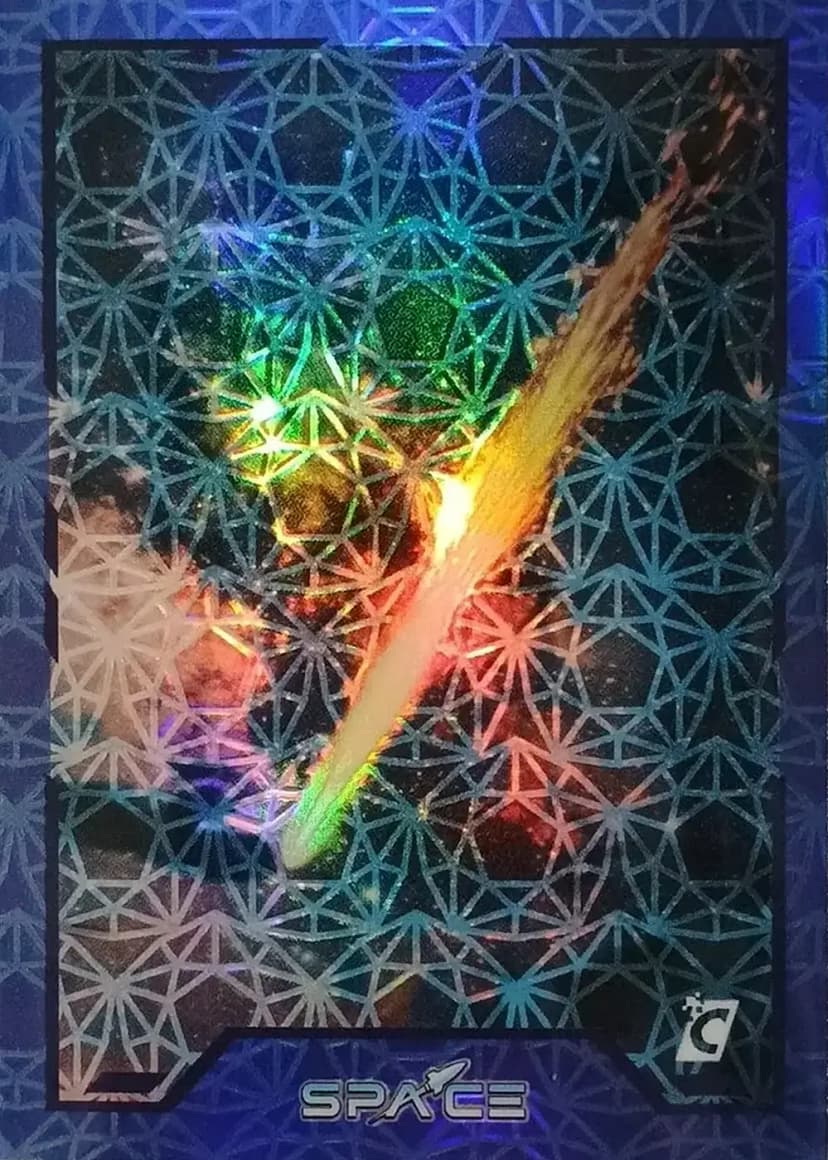
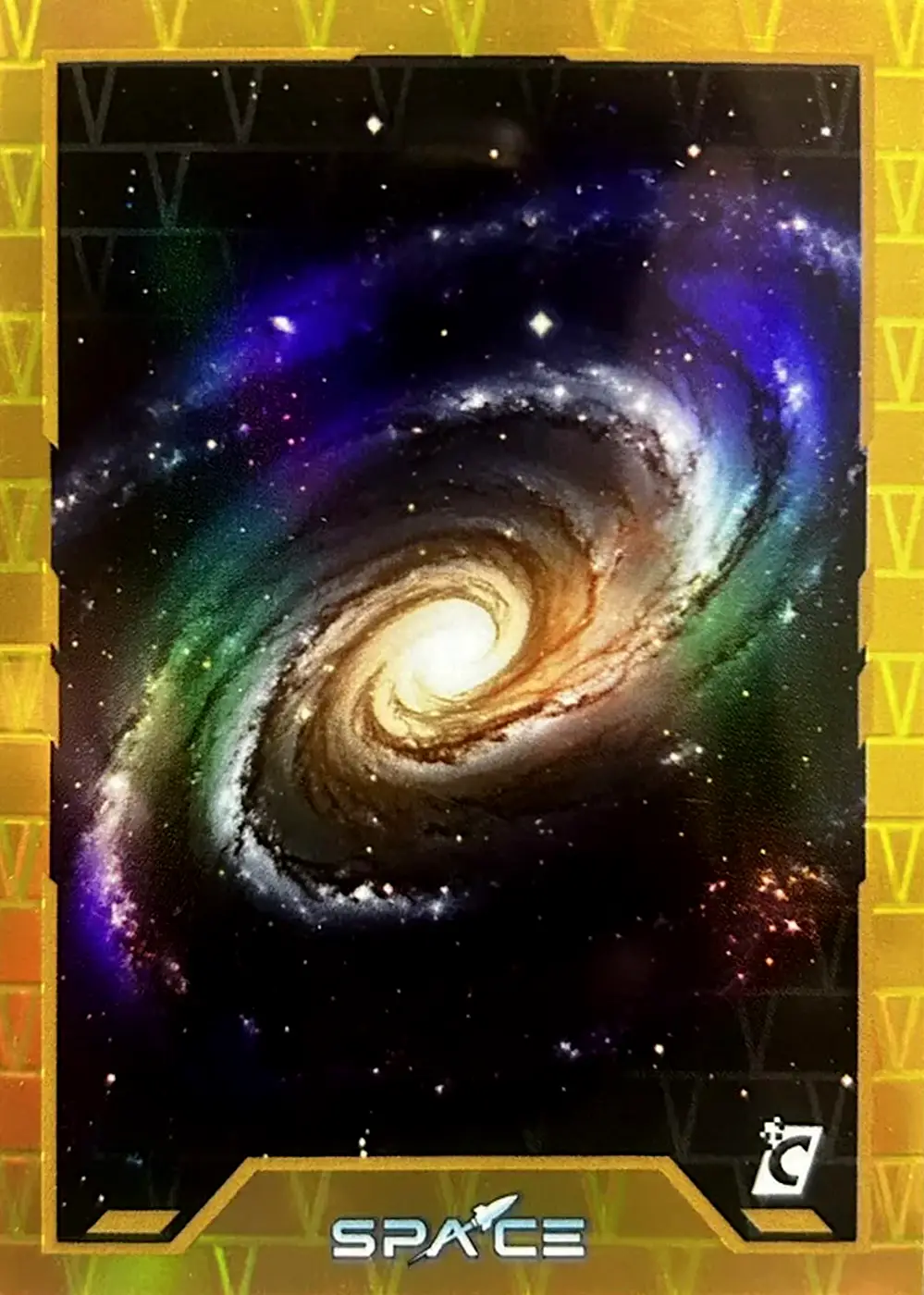
Every card in the main set exists in five finishes, which is the first completion goal most collectors set themselves. Base and Rainbow Holofoil come out of either box configuration. Iced Foil is the one to learn by sight: a coloured border with SPACE printed diagonally across it. The last two are box-locked, so which box you open decides which rainbow you can finish. Crystal Sparkle only comes from Collector Boxes and Matrix Holofoil only from Mega Boxes, and Cardsmiths' own odds panel lists them in one table each rather than both.
| Finish | Where it comes from |
|---|---|
| Base | Collector Boxes and Mega Boxes |
| Rainbow Holofoil | Collector Boxes and Mega Boxes |
| Iced Foil | Collector Boxes and Mega Boxes. Coloured border with SPACE set diagonally |
| Crystal Sparkle | Collector Boxes only. Borderless, full-bleed artwork |
| Matrix Holofoil | Mega Boxes only |
Gemstone Refractors are the serialised heart of the chase: one card per gemstone per subject, with the serial number on the back and a fixed run per tier. SPACE runs its own ladder rather than reusing the Currency one. Silver and Citrine are not part of it, and Blue Topaz was introduced here as the entry tier at 199 copies before it crossed over into Cardsmiths Currency Series 5. Two tiers are box-locked the same way the finishes are: Jade only comes from Collector Boxes and Opal only from Mega Boxes. Because every run is a fixed number, a tier is a countable target rather than an open question, right up to the single Onyx at the top.
| Gemstone | Print run | Notes |
|---|---|---|
 Blue Topaz Blue Topaz | /199 | New for SPACE, replaced Silver |
 Beryl Beryl | /149 | |
 Emerald Emerald | /99 | |
 Garnet Garnet | /75 | |
 Amethyst Amethyst | /49 | |
 Opal Opal | /45 | Mega Boxes only |
 Jade Jade | /45 | Collector Boxes only |
 Ruby Ruby | /25 | |
 Aquamarine Aquamarine | /15 | |
 Gold Gold | /10 | |
 Sapphire Sapphire | /5 | |
 Snowflake Snowflake | /3 | Arrives with the holiday release |
 Onyx Onyx | /1 | One copy in existence per card |
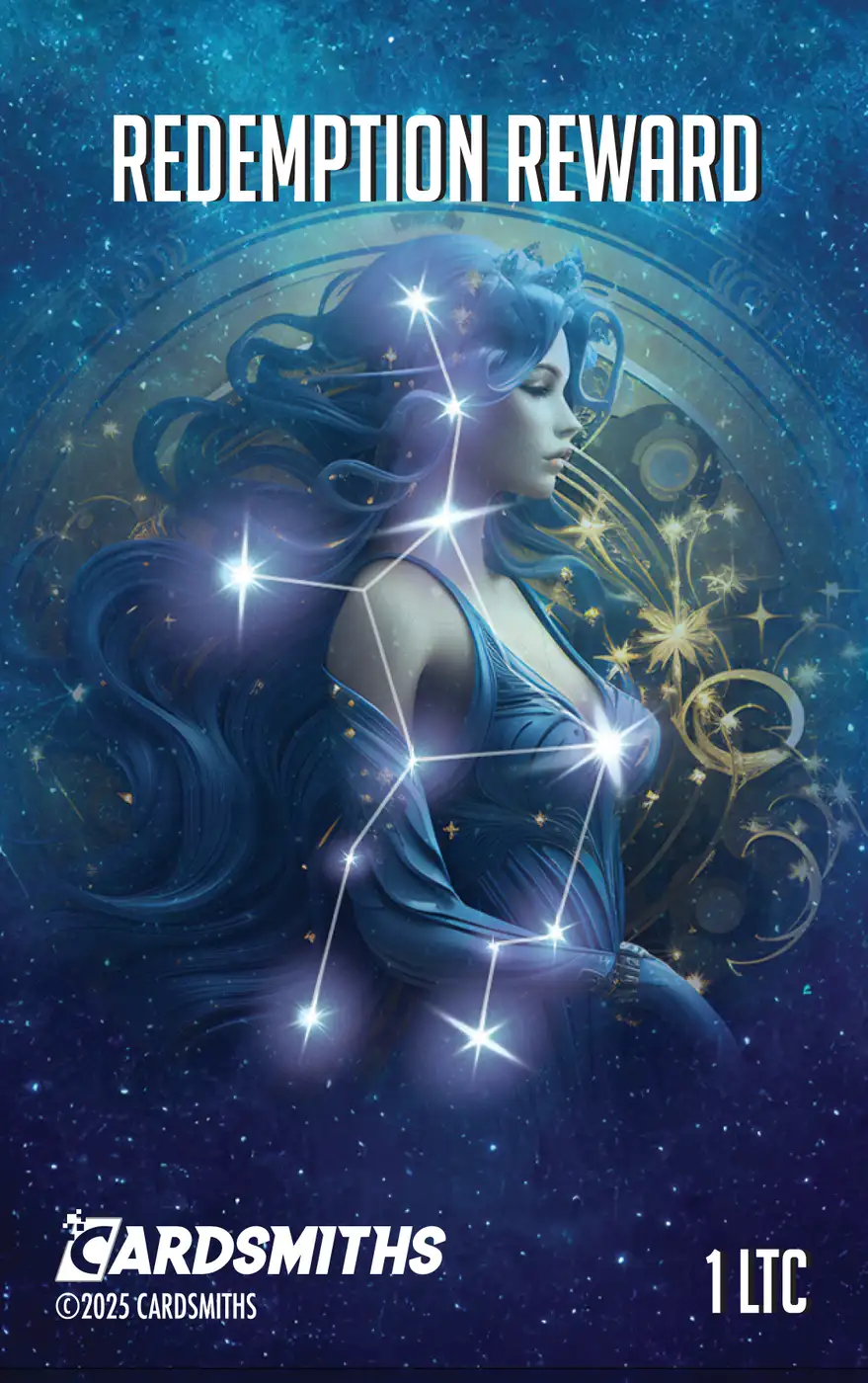
One tier on that ladder works differently from the rest. Snowflake at 3 copies is issued through the Cardsmiths holiday release rather than Galactic Edition packs, and then applied back to the SPACE checklist, so a SPACE Snowflake cannot be pulled from a SPACE box at all. It is worth knowing when you are judging how close a master set really is, because a tier can land months after the set itself. The same mechanic runs across the Cardsmiths catalogue, and the Currency guide covers it in full.
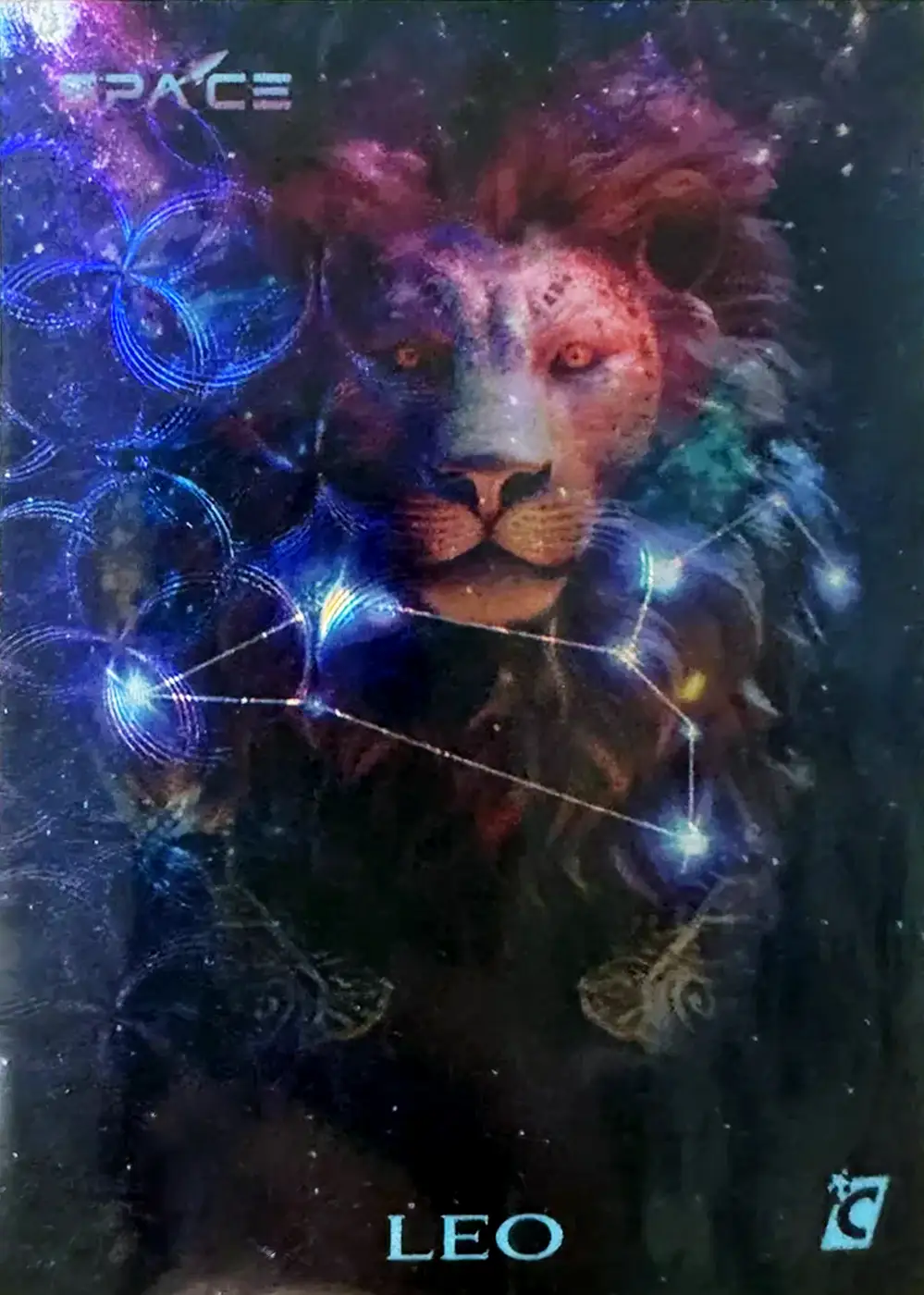
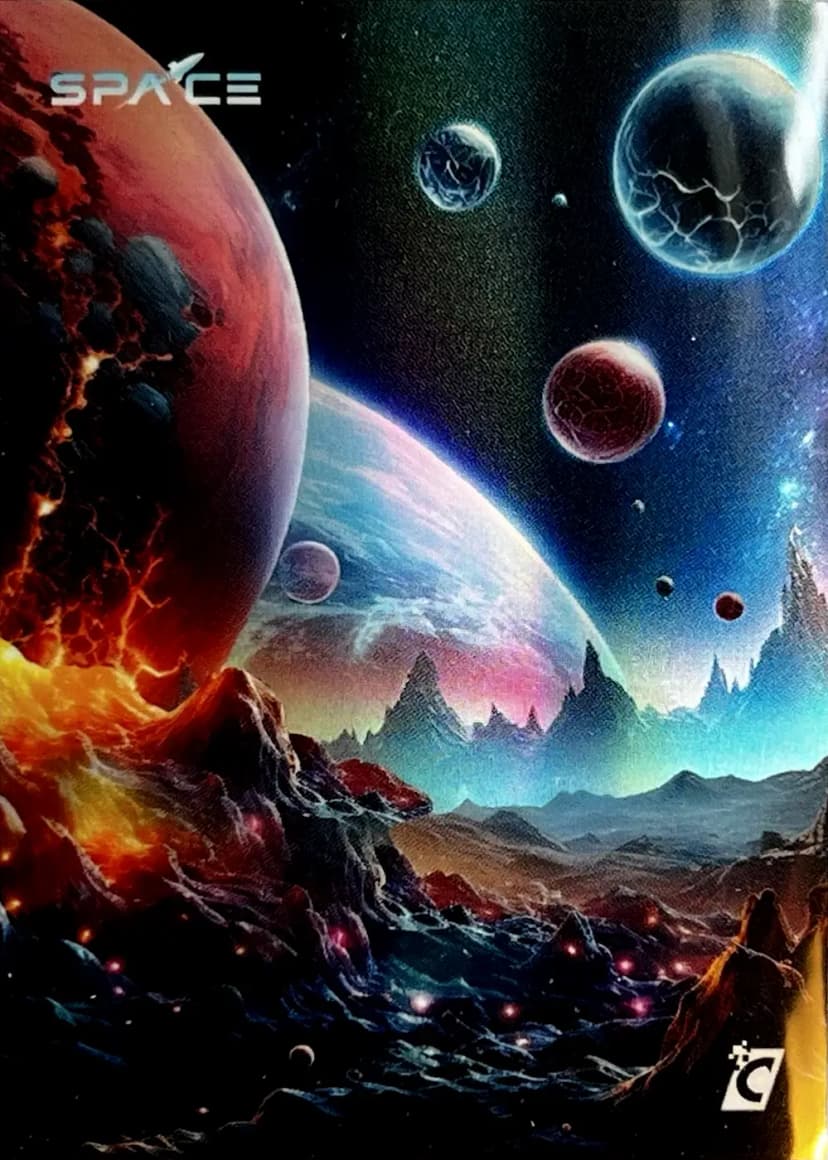
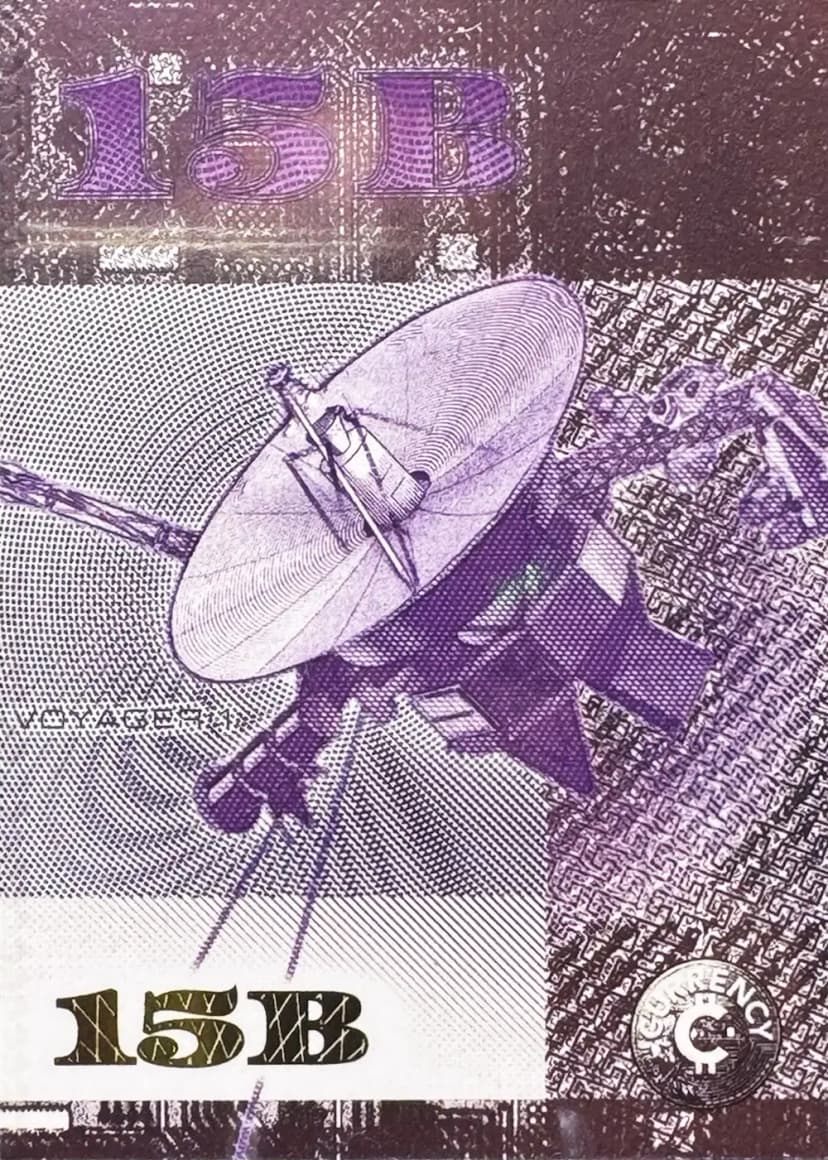
Above the main set sit four inserts, each numbered in its own sequence so they are easy to track separately. Solar System Refractors run SS1 to SS9, one per planet plus Pluto. Constellations Refractors run CT1 to CT12 across the zodiac. Deep Space Refractors are the largest of the three at DS1 to DS21, and they are pure concept art: alien biospheres, terraforming, worlds colliding. Cold Foils are the fifth and scarcest layer, six text-free cards on Albert Einstein, Pythagoras, Leonardo da Vinci, the Space Shuttle, Elon Musk and Jeff Bezos, all of which have now surfaced. A seventh cold foil, Voyager, was never in packs at all: it was given with master case purchases direct from Cardsmiths.
| Subset | Numbering | Cards |
|---|---|---|
| Solar System Refractor | SS1 to SS9 | 9 |
| Constellations Refractor | CT1 to CT12 | 12 |
| Deep Space Refractor | DS1 to DS21 | 21 |
| Currency Series 5 Preview | C5P-1 to C5P-10 | 10 |
| Cold Foil | Unnumbered | 6, plus the Voyager case promo |
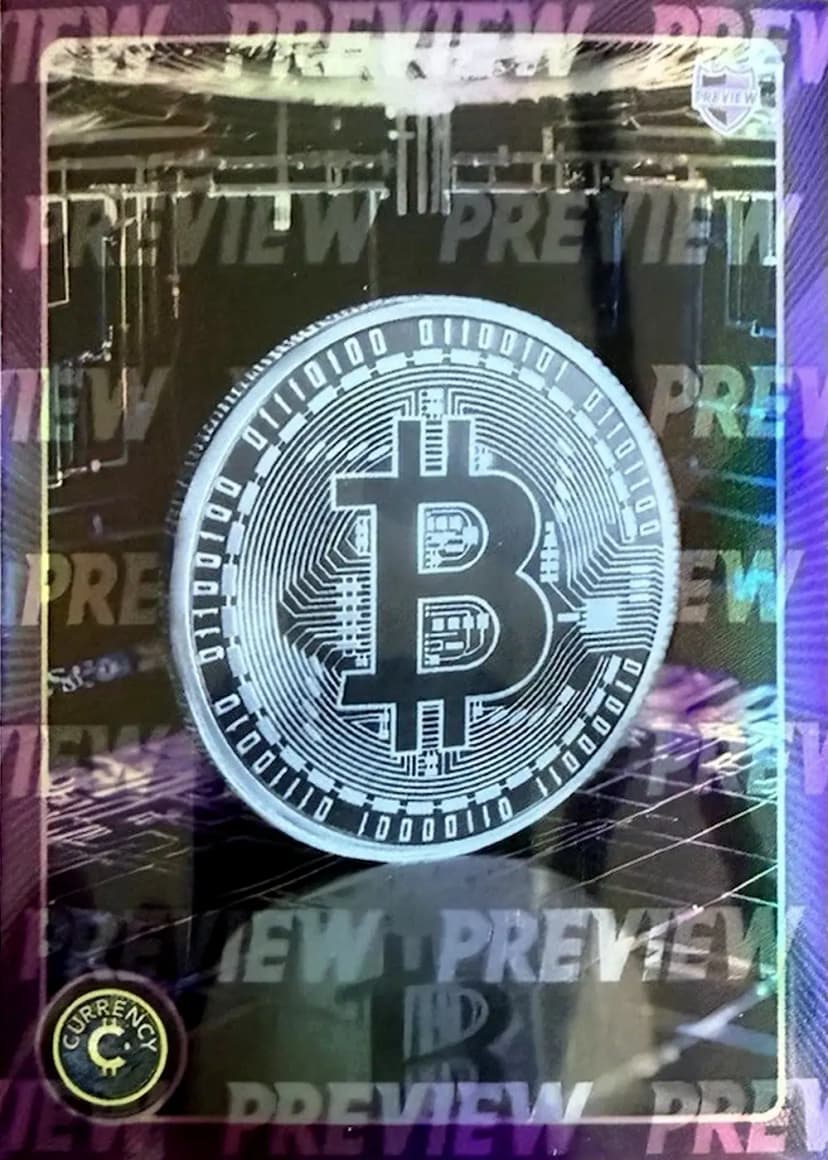
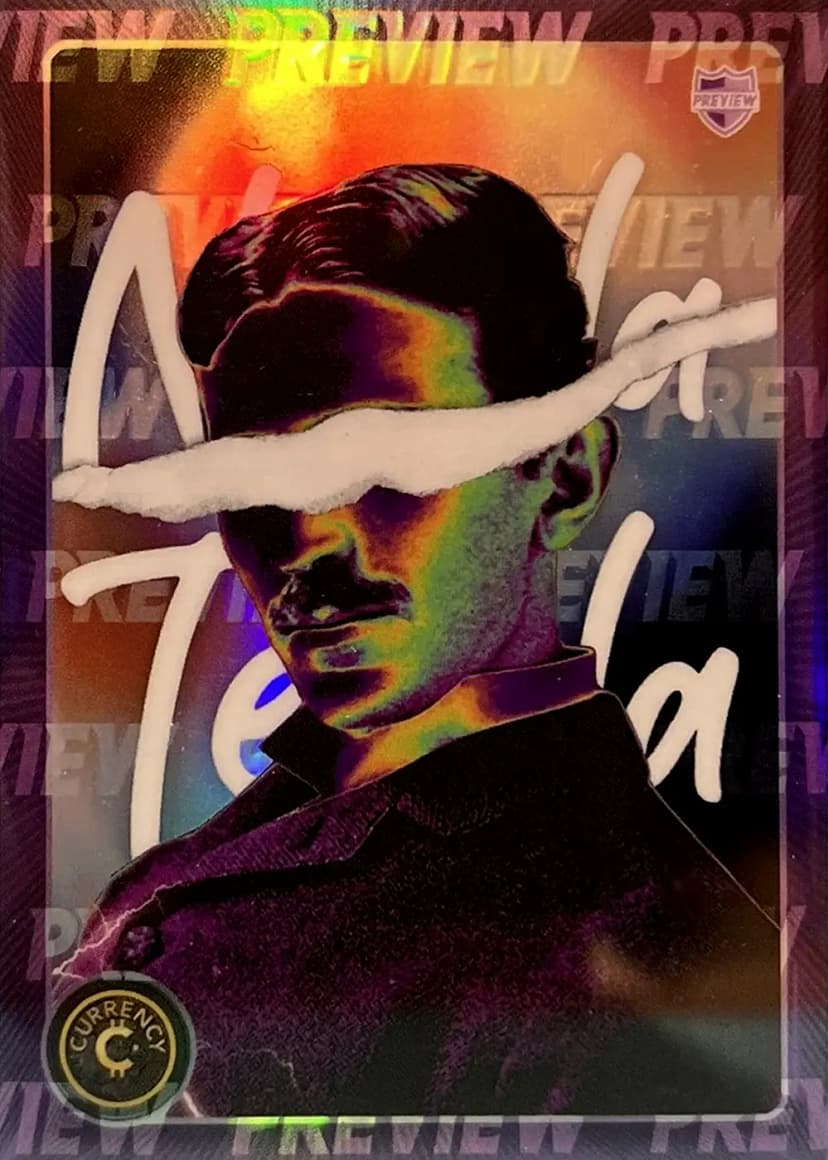
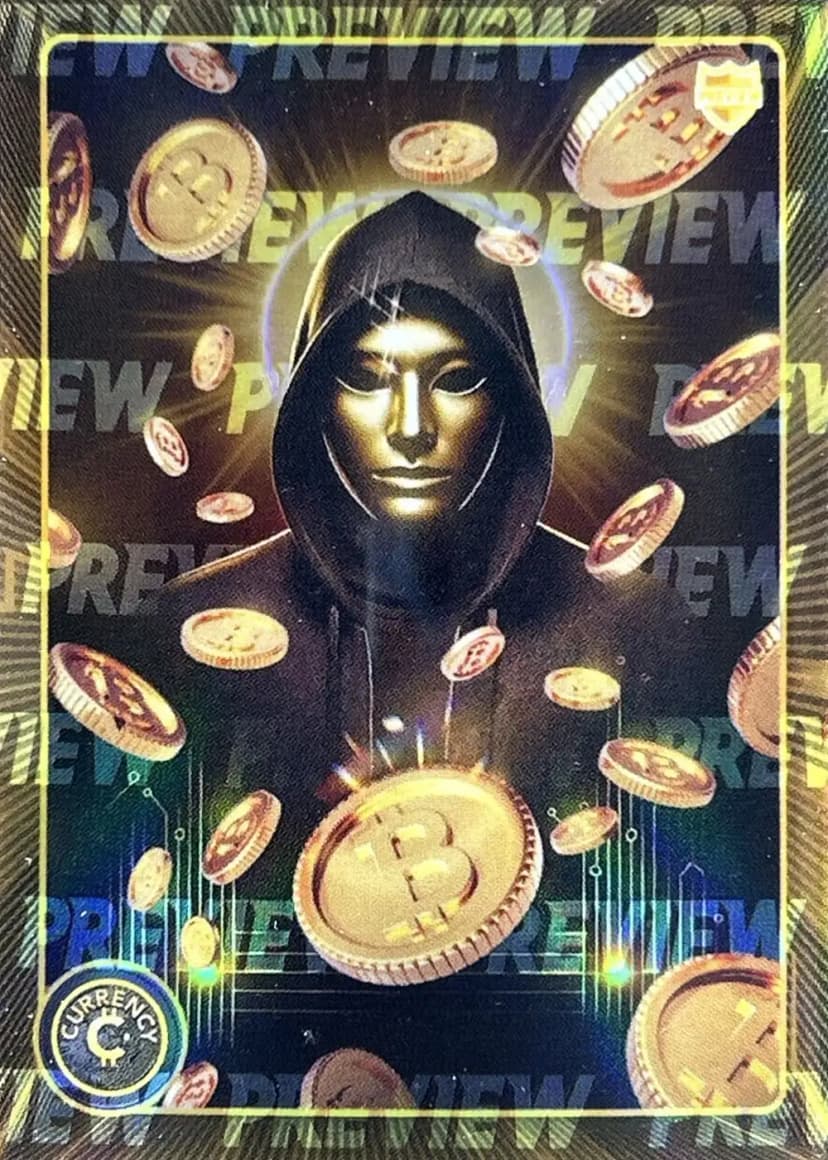
The fourth insert is the odd one out, and the most interesting if you collect both Cardsmiths lines. C5P-1 to C5P-10 are a ten-card mini series previewing Cardsmiths Currency Series 5, published inside a SPACE product months before that set arrived: Bitcoin, Ethereum, Litecoin, Solana and Dogecoin alongside Nikola Tesla, Satoshi Nakamoto and the Degens card. They sit on the SPACE checklist rather than the Currency one, so this is where the two lines actually touch, and the same cross-promotion is why Blue Topaz ended up on both ladders. Read the Cardsmiths Currency Series 5 guide.
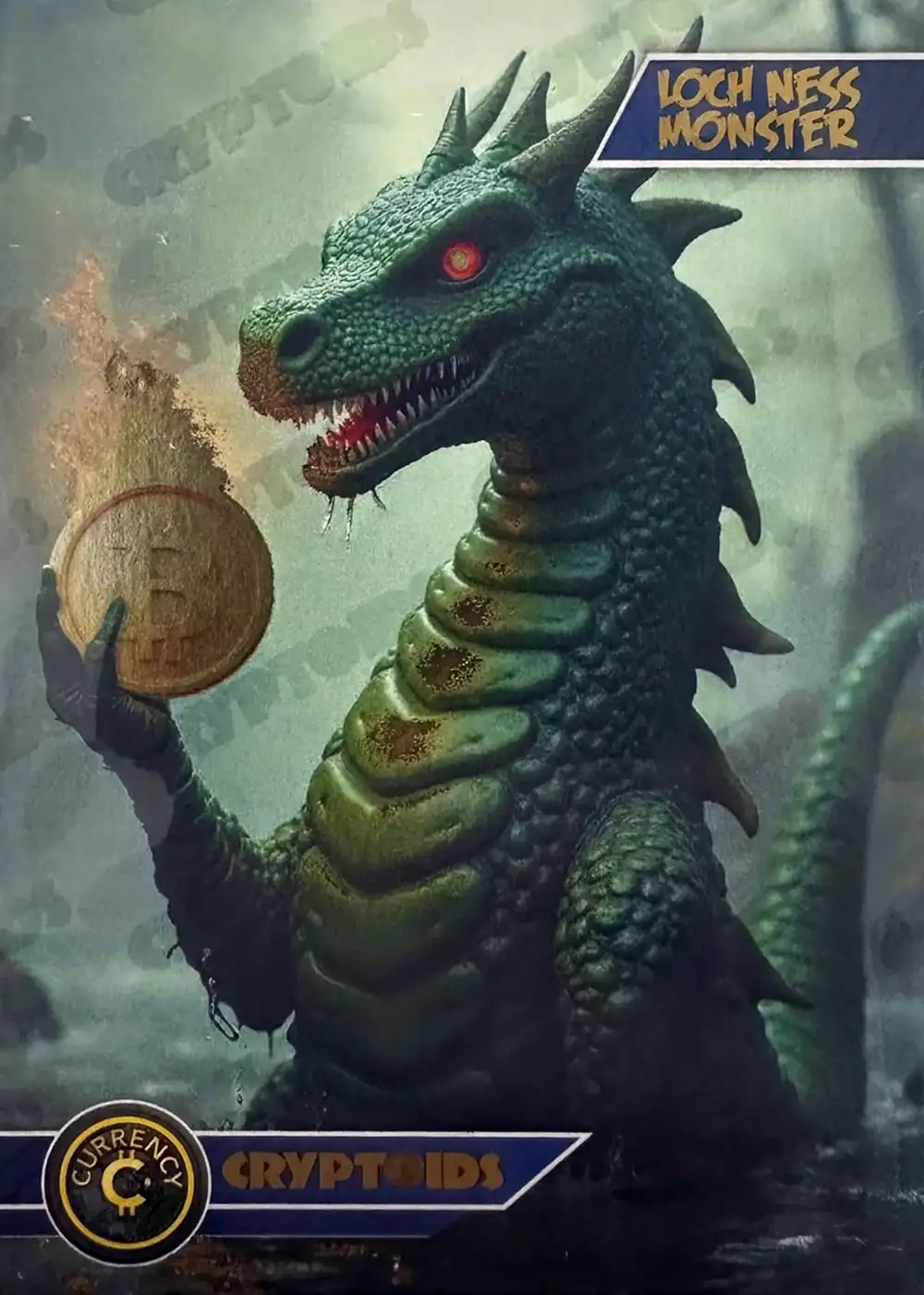
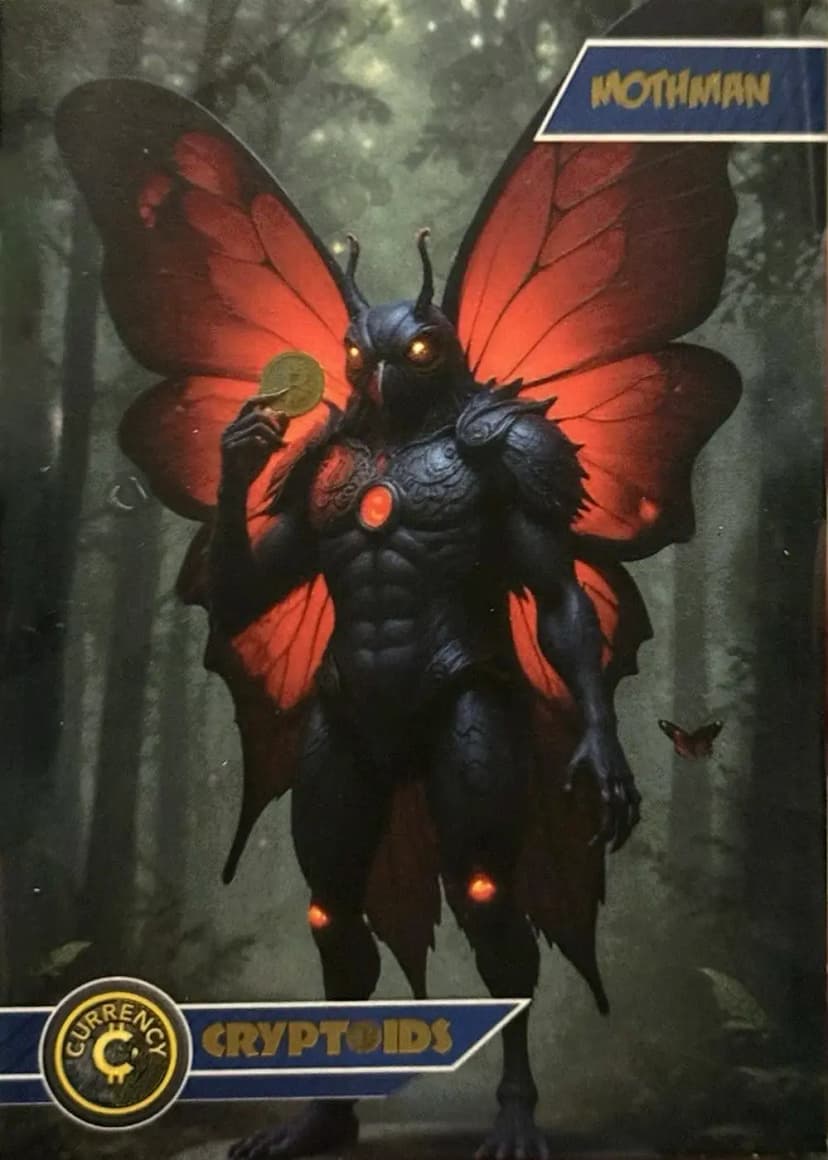
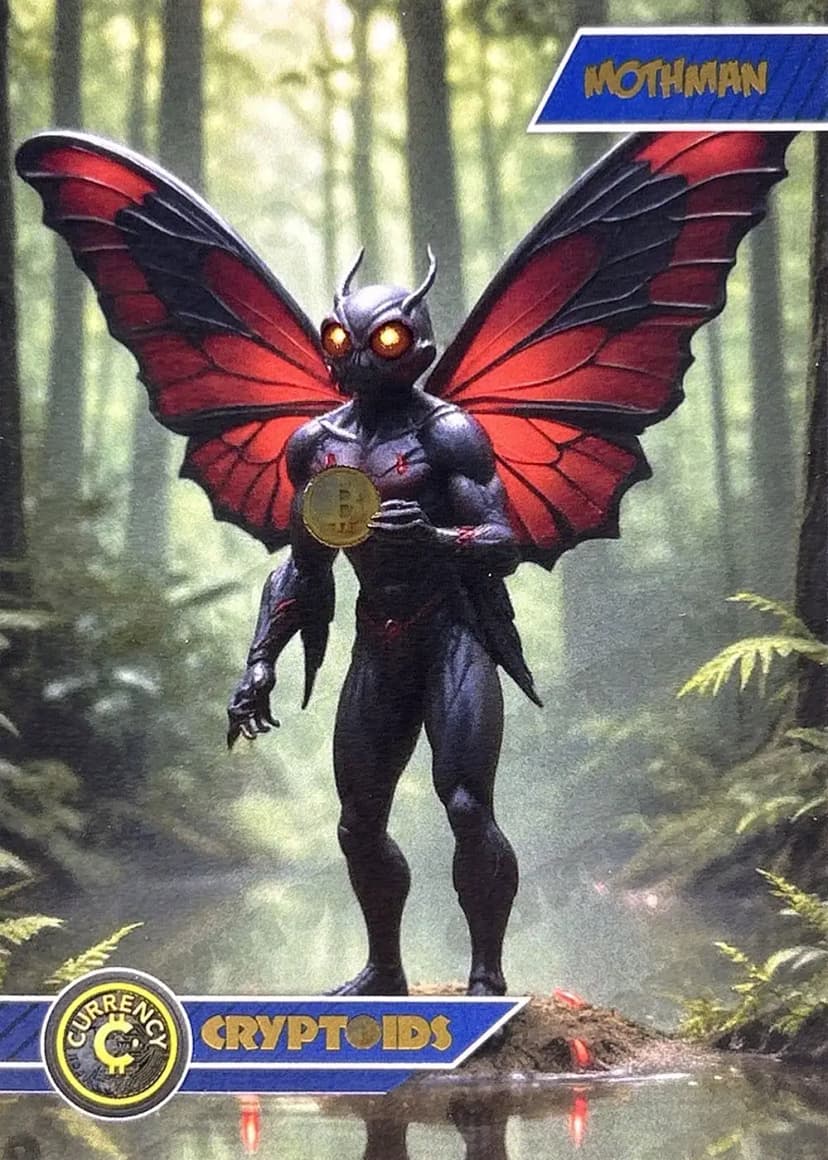
The Cryptoids are the release's hidden layer, and they were community sightings before they were documented. Two characters, the Loch Ness Monster and Mothman, appear across eight artworks numbered CPT-01 to CPT-08, and each artwork exists in four treatments: Regular, Artist Proof, Prototype and Test Card. That makes 32 distinct cards, told apart by the colour of the back, blue, green, yellow and red. They are catalogued as their own set, so you can work through them without them getting lost inside the main checklist.
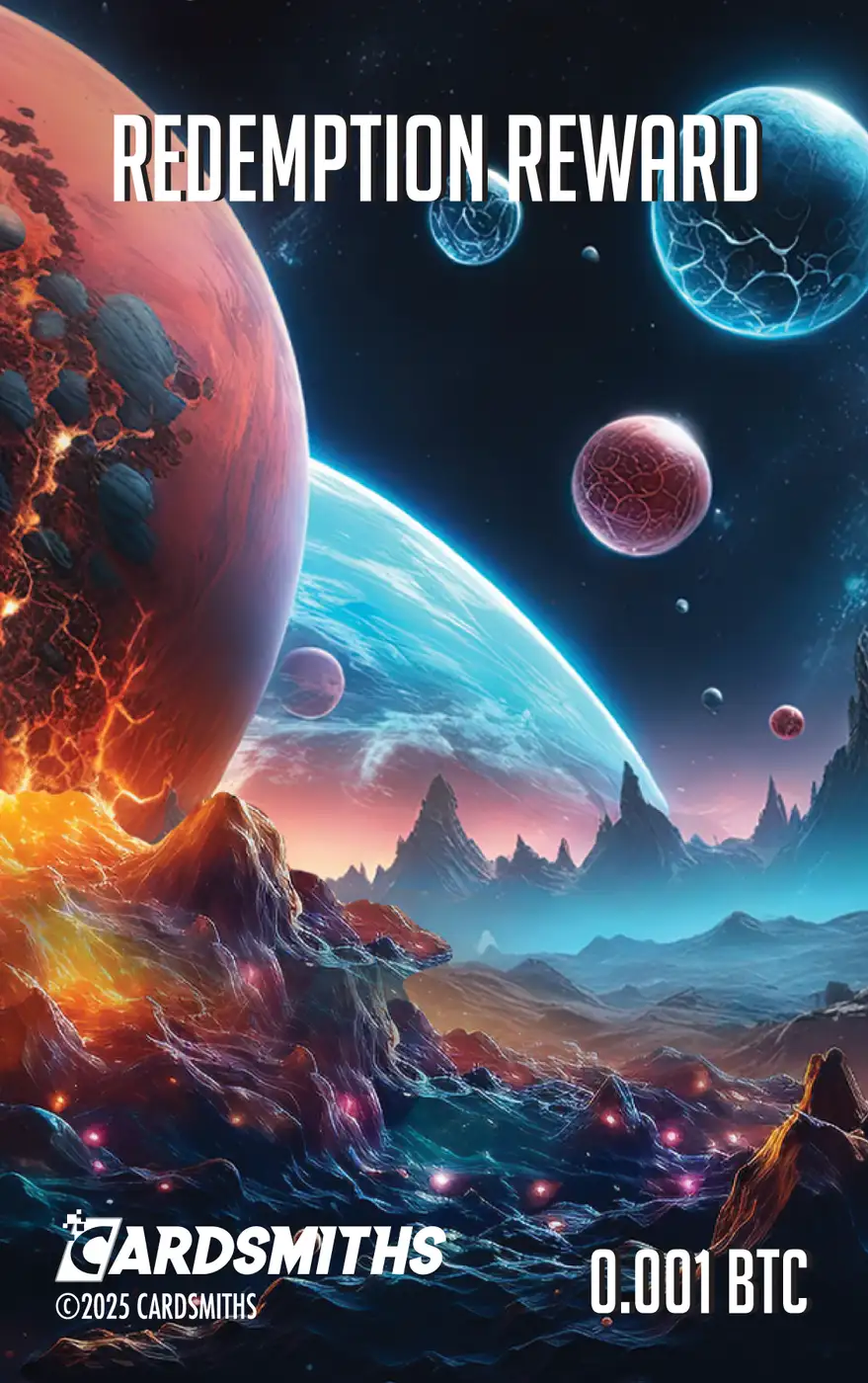
Randomly inserted through the print run are specially marked redemption cards, exchangeable for real cryptocurrency in various denominations of Bitcoin, Ethereum, Litecoin and Dogecoin. They are tracked in two states, unredeemed and redeemed, because a card that has been cashed in is a different collectible from one that has not. The wallet cards issued against those redemptions are catalogued separately as well, which is where a card like Brave New Worlds at 0.001 BTC lives.
Cardsmiths publishes two separate odds tables, one per box configuration, and they pull very differently. Collector Box packs hit parallels more often and reach the Deep Space Refractors twice as often. Mega Box packs, sold 8 packs of 5 cards, carry a serial-numbered Gemstone Refractor in every single pack, which is what makes that configuration the one for gem hunting. Read the gemstone line next to the print runs above, because the odds are the same whether the gem that lands is a Blue Topaz at 199 copies or the single Onyx. Cardsmiths notes on the same panel that final set contents and pack odds may vary on the final product, so treat these as published rates rather than guarantees.
| Card | Collector Box | Mega Box |
|---|---|---|
| Collector Parallel Rainbow Holofoil | 1:2 | 1:3 |
| Collector Parallel Crystal Sparkle Holofoil | 1:2 | Not included |
| Collector Parallel Matrix Holofoil | Not included | 1:3 |
| Collector Parallel Iced Foil | 1:2 | 1:3 |
| Serial-numbered Gemstone Refractor | 1:10 | 1:1 |
| Deep Space Refractor | 1:48 | 1:96 |
| Constellation Refractor | 1:96 | 1:192 |
| Solar System Refractor | 1:96 | 1:192 |
| Cryptocurrency Redemption | 1:96 | 1:192 |
Five finishes, thirteen gemstone tiers, four inserts and the Cryptoids add up quickly, and the whole thing is already built out in the catalogue, so you mark what you pull instead of typing cards in by hand. Completion counts each treatment separately, which is what makes a rainbow a real target rather than a guess. Record the serial numbers on your gemstone cards so you know which copy you hold, keep a want list for the tiers and inserts still missing, and the dashboard shows how SPACE is filling up next to everything else you collect.
Value follows the ladder, and the steps between tiers are large. The table below is live: it takes the priced cards in each tier and shows the median with a typical range, updated daily. A few tiers are shown rather than all of them, because the shape is the point. One row is worth reading twice: the Solar System Refractors sit between the mid gemstones on value, which is a reminder that the inserts are not a sideshow to the serialised ladder. Watch the coverage column too, since a median built on a handful of priced cards is a thinner signal than one built on a whole tier. The scarcest tiers are always the thinnest, and right at the top the one-of-one Onyx has no sales behind it at all, so the table stops short of it rather than inventing a number.
| Tier | Print run | Typical value | Priced |
|---|---|---|---|
| Base | Unnumbered | $0.99 ($0.99 to $6.03) | 16 of 80 |
| Crystal Sparkle | Unnumbered | $5.00 ($2.59 to $5.00) | 17 of 80 |
| Blue Topaz | /199 | $19.00 ($9.80 to $20.00) | 9 of 80 |
| Jade | /45 | $22.50 ($6.99 to $55.00) | 3 of 80 |
| Solar System Refractor | Unnumbered | $27.49 ($19.99 to $50.00) | 4 of 9 |
| Ruby | /25 | $65.00 ($59.95 to $199.00) | 3 of 80 |
| Gold | /10 | $350.00 | 1 of 80 |
| Sapphire | /5 | $338.50 ($300.00 to $377.00) | 2 of 80 |
Median of the priced cards in each tier, with the typical range in brackets. Estimates blended from real market activity, not appraisals, and a tier with few priced cards is a thinner signal than one with many.
See every tier and its price historyStart your collection, free
No account needed to browse. Create one to track and value your cards.